Muscat: practical tips
1 h route4 stopsBest: November to March. The weekend is Friday and SaturdayUpdated July 2026
Oman’s majority Islam is neither Sunni nor Shia: it’s Ibadi, an ancient distinct branch that is a majority only here and practically nowhere else in the world. This isn’t an encyclopaedia fact: it explains a good deal about how the country works. Ibadism has a tradition of moderation, of tolerance towards the other branches and other religions, and of rejecting religious ostentation, and that shows in the street and in how you’ll be treated.
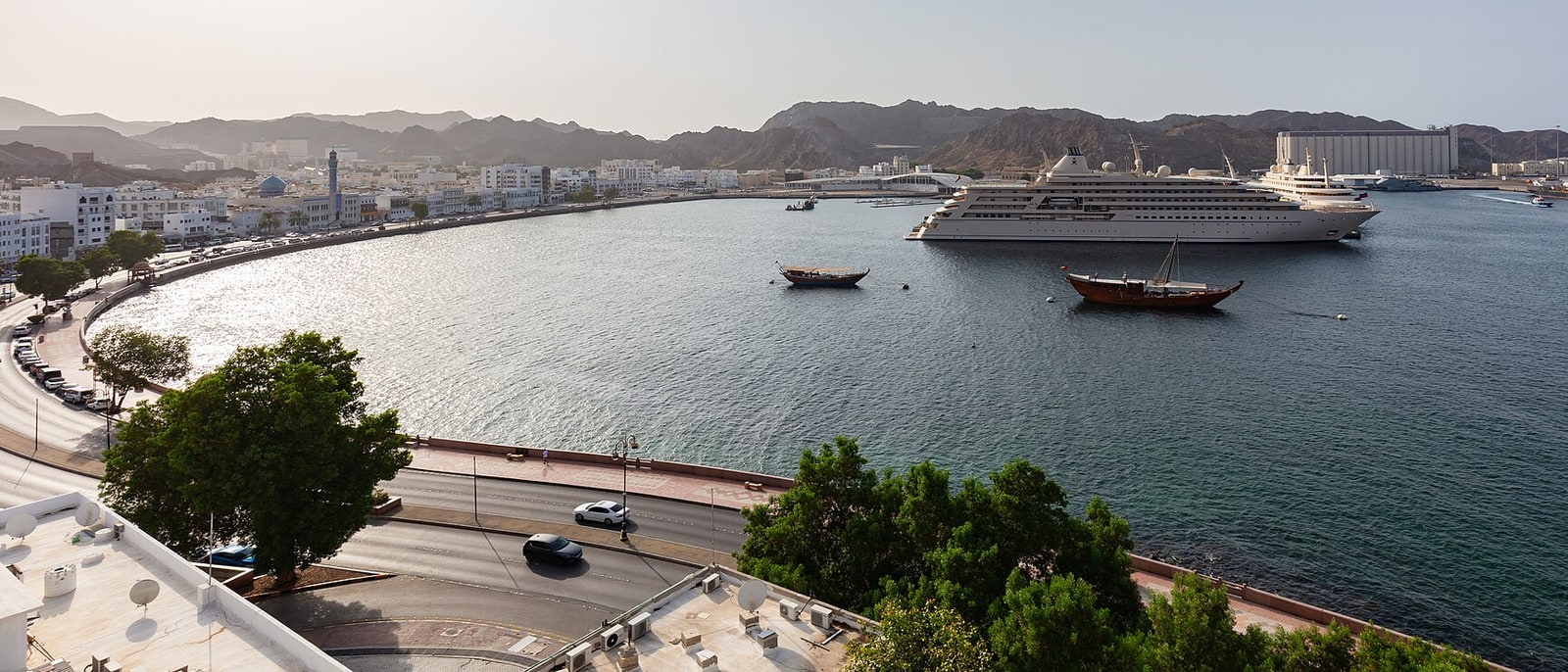
From it also comes Oman’s international position, which is unique in the region: it’s the country that talks to everyone. It maintains relations with Iran and the West at once, mediates between enemies, and in fact it was in Muscat that the secret talks leading to the Iranian nuclear deal were held. A country that professionally devotes itself to not falling out with anyone. And you, as a visitor, will notice it in the temperature of everything.
The route, stop by stop
4 STOPS- 01
How to dress and behave
Oman keeps to form more than its neighbours, and at the same time more relaxed in manner. Dress rules matter: shoulders and knees covered for everyone, men and women, in the street and anywhere public. It isn’t a brochure recommendation. People here follow it and it’s very noticeable who doesn’t. At the Grand Mosque, women also need a scarf covering their hair.
With that done, the rest is easy. You greet with the right hand. Between men and women, wait for the other person to offer a hand and if they don’t, a hand on the chest and a smile. No public displays of affection. And don’t photograph anyone without asking, especially women: here it’s considered a serious intrusion.
In exchange, and everyone who comes says this: the people of this country are extraordinarily kind, with no commercial agenda behind it. They’ll greet you, offer you coffee and help you without wanting to sell you anything. It’s the biggest difference from the rest of the Gulf.
- 02
The rial, which deceives
The Omani rial ranks among the world’s strongest currencies: it’s worth considerably more than a euro. And on top of that it divides into a thousand baisas, not a hundred. The combination makes prices look ridiculously small when they aren’t, and makes mental arithmetic hard until you get used to it. Look at the decimals before nodding.
On the rest of the money: cards are accepted in cities and hotels, but outside the capital, in villages, markets, small petrol stations and at the entrance to the wadis, you need cash. Withdraw at the airport or in the city before heading out on the road.
Tipping isn’t compulsory and isn’t expected. In restaurants with table service you round up if you enjoyed it, and many already include the charge.
And one thing that surprises pleasantly: Oman isn’t a cheap destination like Southeast Asia, but it’s notably more reasonable than Dubai in almost everything, above all food and petrol.
- 03
The heat and the calendar
Two dates to check. The first: the weekend in Oman is Friday and Saturday. It didn’t change when the Emirates changed theirs in 2022, so if you’re coming from there, the calendar shifts on you. On Friday mornings everything is closed and at midday comes the main prayer.
The second is the climate, which rules here: from May to September, the coast goes past forty degrees with humidity and the interior more still. Everything good in this country is outdoors (wadis, mountains, canyons, turtles) and in those months it isn’t done.
From November to March, by contrast, this is one of the best destinations in the world: twenty-five degrees, sun, and canyons with water. The only exception, and it’s an enormous one, is Salalah in the south: there summer is the season, because the monsoon arrives and everything turns green.
And Ramadan moves about eleven days a year: check the dates, because during that month many restaurants close by day and the country’s rhythm changes entirely.
- 04
Safety, and one real warning
Oman sits among the safest countries in the world for ordinary crime: you won’t have any problem, day or night, in the city or on the road. The tap water is potable in Muscat. Healthcare is good. In that sense, this is one of the easiest destinations there is.
The real warning is another and it’s about nature, not people: flash floods. The wadis are dry beds, and when it rains in the mountains, even if it’s sunny where you are, they can come down within minutes with a force that carries cars away. People die every year from this, almost always trying to cross a bed by car when it already has water in it.
The rule is absolute: if a wadi has water in it, you don’t cross, however little it looks. You wait or you turn around. Check the forecast before setting off on a mountain route and never camp inside a bed, however dry and pretty it looks.
Frequently asked
What religion is Oman?
Mostly Ibadi, which is neither Sunni nor Shia: an ancient distinct branch of Islam that is a majority only in this country and practically nowhere else in the world. It has a tradition of moderation, of tolerance towards other branches and religions and of rejecting religious ostentation, and that shows in how you’re treated. Oman’s international position comes from it too: it’s the country that talks to everyone, and Muscat hosted the secret talks that led to the Iranian nuclear deal.
Is Oman safe?
It’s one of the safest countries in the world for ordinary crime, day and night, and the tap water is potable in Muscat. The real danger is another: flash floods in the wadis. They’re dry beds that can come down within minutes if it rains in the mountains, even if it’s sunny where you are, and they carry cars away. People die every year. The rule is absolute: if a wadi has water in it, you don’t cross, however little it looks. And never camp inside a bed.