A weekend in Muscat
20 h route4 stopsBest: November to March. And the weekend here is Friday and SaturdayUpdated July 2026
Here the law limits building height and requires buildings to be white and in a traditional style. That, which looks like a planning footnote, is the most important decision this city has made, and it’s exactly the opposite of every one of its Gulf neighbours’. While Dubai bet on the height record and Abu Dhabi on buying prestige, Oman decided to do neither.
The result is a low, white, very long capital, fifty kilometres of coast instead of growing upwards, wedged between black rock mountains and the sea, which strikes plenty of people as dull on day one and then stays with them. A weekend here splits the same way: one day for the city, which is calm, and another to get out to the mountains or the desert, which is where this country’s real argument lies. And mind one practical detail: the weekend in Oman is Friday and Saturday, unlike in the Emirates.
The route, stop by stop
4 STOPS- 01
Friday: the city, early
A warning that reorganises the whole weekend: the Grand Mosque doesn’t open to non-Muslims on Fridays, and on other days only early in the morning. Which means if your weekend is Friday and Saturday, the mosque has to be done on Saturday first thing, or not at all. It’s the commonest mistake here.
So Friday goes to the rest: the Muttrah Souq, which opens in the morning, closes at midday and opens again in the afternoon, the corniche walk, the Portuguese forts seen from below, and the old quarter of Muscat proper, which is a tiny cove on the other side of the headland where the sultan’s palace and the old walls are.
That’s the original Muscat: a minuscule bay wedged between cliffs, with two forts and a gate. That the capital of a maritime empire fitted into that is the trip’s best geography lesson.
- 02
Friday night: the food and the coffee
Oman tightens up more than its neighbours in some things, and alcohol tops the list: it’s served only in hotels and a handful of licensed restaurants, and there are no shops to buy it save two authorised for residents. Going out to eat here doesn’t include wine, and that’s the whole story.
In exchange there’s a coffee and shisha culture occupying that social space. People go out late, eat late and end up on a terrace with tea, Omani coffee (with cardamom, served with dates) and conversation. In the inland neighbourhoods of the city there’s superb, very cheap Indian, Pakistani and Lebanese food, and on the coast, fish.
A tip that holds for the whole country: people here are friendly in a way that throws you, with no commercial agenda behind it. If someone invites you for a coffee, it’s a coffee. That’s the biggest difference from the rest of the Gulf and the reason people come back.
- 03
Saturday: the mosque and the wadi
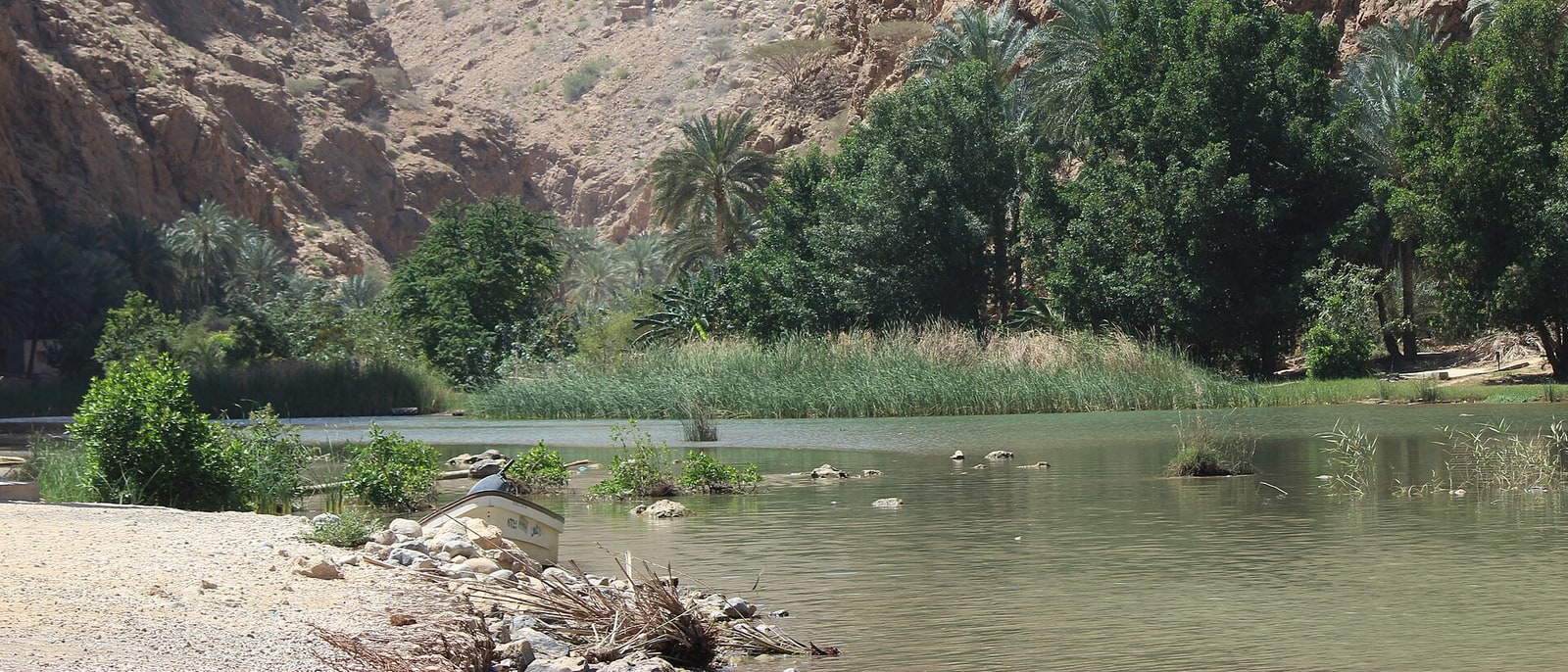
The mosque first thing, remember: mornings only, and then the car south along the coast, because one or two hours away is what genuinely justifies coming to Oman. The wadis. They’re canyons cut into the rock by water, with cold green pools, palms and hundred-metre walls, in the middle of a landscape that from outside is bare stone and sun.
The famous one is Wadi Shab, and to get in you cross by boat and then walk about forty-five minutes up the canyon, between pools.
At the end, and this is the good part, you have to swim through a series of pools to a narrow crack in the rock you pass through swimming, and inside is a cave with a waterfall falling from the ceiling. It isn’t a viewpoint outing: you get wet, and you need shoes that can get wet. The water is fresh, it comes from the mountain and it’s cold. After two hours of desert, that isn’t explained: it’s felt.
- 04
Saturday night: the turtles
At the easternmost tip of the Arabian peninsula there’s a beach where green turtles come out of the sea to lay, and not in one particular season: all year, every night. It’s one of the largest nesting areas for this species in the Indian Ocean and it’s protected.
The visit is at night or before dawn, with the centre’s wardens, in groups and under strict rules: no white torches, no flash, no touching. Those rules aren’t bureaucracy: light disorients the hatchlings, which leave the nest and navigate by the moon’s reflection on the water, and a torch sends them inland to die.
Watching a two-hundred-kilo turtle dig for an hour with her back flippers, lay a hundred eggs and return to the sea without noticing you’re there is one of the most serious things you can do on a trip. It’s three hours from Muscat, so you have to sleep in the area. It’s worth every minute.
Frequently asked
What to do on a weekend in Muscat?
Mind the order: the Grand Mosque doesn’t open to non-Muslims on Fridays and on other days only early in the morning, so do it Saturday first thing. On Friday, the Muttrah Souq, the corniche and old Muscat. And on Saturday, get out: Wadi Shab an hour and a half away, a canyon with pools where at the end you swim through a crack into a cave with a waterfall. The Omani weekend is Friday and Saturday.
Can you drink alcohol in Oman?
Only in hotels and a handful of licensed restaurants. There are no shops to buy it save two authorised for residents, and drinking in public is illegal. It’s more restrictive than the Emirates. In exchange there’s a coffee and shisha culture that occupies that social space: people go out late and end up on a terrace with Omani coffee, dates and conversation.