Lisbon: practical tips
1 h route5 stopsBest: All yearUpdated July 2026
Tram 28 is Lisbon’s postcard and also its best-known trap: it runs so full of tourists that it’s become the city’s prime pickpocketing ground. It isn’t dangerous, Lisbon is safe, but keep the bag on your front and the wallet away.
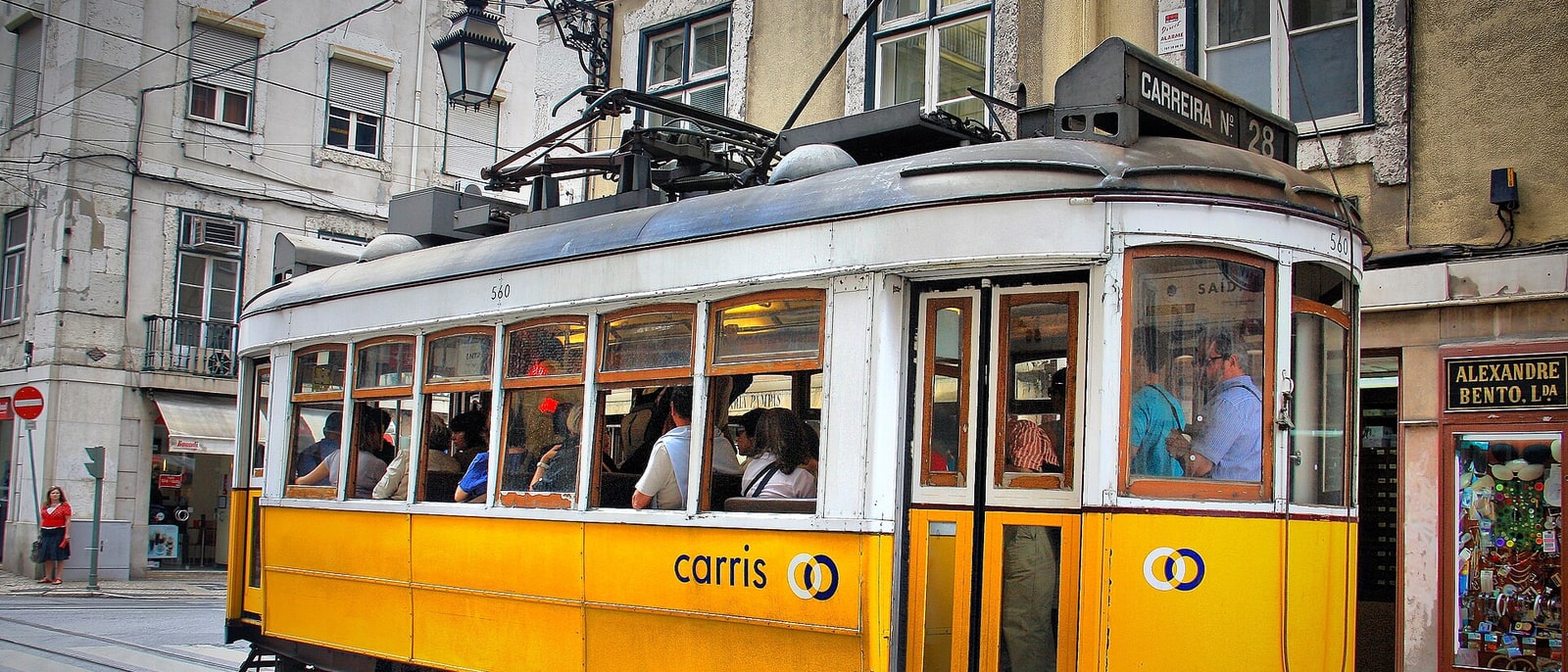
The rest are details that save grief: the time, which throws anyone arriving from Spain, the pavement, which is slippery, and the hills, made easier once you know there are lifts and funiculars so you needn’t climb them on foot.
The route, stop by stop
5 STOPS- 01
The time: an hour behind Spain
Mainland Portugal shares a time zone with the UK and Ireland, an hour behind Spain and most of continental Europe. It’s the commonest slip for anyone crossing from Spain by car or train: they arrive in Lisbon thinking it’s an hour later than it is, or miss a flight for the opposite reason. The phone adjusts on its own, but it’s worth keeping in mind when booking trains, restaurants or the return flight itself.
- 02
The slippery pavement and the hills
Lisbon’s pavements use calçada portuguesa: small cobbles of white limestone and black basalt laid by hand in patterns. It’s beautiful and, polished by millions of feet, turns into a skating rink when it rains or when the slope is steep.
Grippy-soled shoes are no luxury here.
And for the hills, Lisbon has had its own remedies since the nineteenth century: the funiculars (the Elevador da Bica, the Glória, the Lavra) climb impossible slopes, and the Santa Justa lift bridges a drop vertically. They run on a transport ticket and save your legs.
- 03
The ticket: the Viva Viagem card
Lisbon transport is paid with the Viva Viagem card, a rechargeable ticket costing a few cents that works on the metro, the trams, the Carris buses, the funiculars and the commuter trains to Sintra and Cascais. You can load it with single journeys or with “zapping” credit, which comes cheaper per trip.
Buying a single ticket aboard the tram from the driver is considerably dearer than having it on the card, so it pays to get one the moment you arrive, from any metro machine.
A 24-hour pass is worth it if you’ll be moving around a lot in a day.
- 04
Safety and pickpockets
Few European capitals record less violent crime than Lisbon, and you can walk almost all of the centre at night without trouble. What there is, and plenty of, is pickpocketing: on the packed tram 28, on the Glória funicular, in the crowds at the viewpoints and on the airport metro.
The precaution is that of any tourist city: wallet and phone in a front or zipped pocket, the backpack worn in front on the tram, and care during the scramble to board and alight.
With that, the problem all but vanishes.
- 05
Mobile data
Coverage is excellent across the city and on the commuter trains. Landing connected helps with the Lisbon-specific things: the tram’s real-time arrivals, which don’t follow an easy timetable, the Sintra and Cascais trains, and the Uber and Bolt apps, which here are the usual way to get a car. With an eSIM you land already on data and can check in the terminal itself whether the metro, the bus or the taxi suits you best, which is exactly the first-minute decision.
Frequently asked
Is Lisbon safe?
Very, in terms of violent crime: it’s one of Europe’s calmest capitals and you can walk the centre at night. What there is is pickpocketing in specific spots (tram 28, the funiculars, the crowded viewpoints) so the precaution is simply keeping wallet and phone well stowed.
What time is it in Lisbon compared with Spain?
An hour earlier. Mainland Portugal is on UK and Ireland time, one behind Spain and continental Europe. It’s the classic slip for anyone crossing from Spain: keep it in mind when booking trains, dinners and the return flight.
Do you need a visa for Portugal?
It depends on your passport and the rules change, so check the official source before travelling. Portugal is in the European Union and the Schengen area, so arriving from another Schengen country there is no border check.