Eating and drinking in Lisbon
3 h route4 stopsBest: June, for the festivals and the sardinesUpdated July 2026
Bacalhau is Portugal’s national dish and some say there’s a recipe for every day of the year, but the fish doesn’t come from the sea here: it arrives dried and salted from Norway and Iceland, as it has since Portuguese boats fished it off Newfoundland, across the Atlantic. It’s one of those Lisbon things you only understand by looking twice.
The rest of the table is similar: almost everything good is humble in origin (tinned fish, grilled sardines, a convent pastry) and has become a badge of identity. The rule for eating well is the usual one: where the Portuguese are eating.
The route, stop by stop
4 STOPS- 01
Bacalhau, the “faithful friend”
The Portuguese call it the faithful friend because for centuries it was the protein that kept without refrigeration: dried in salt, it lasts months. Before cooking it must be desalted in water for a day or two. From it come dishes like bacalhau à brás, shredded with straw potatoes and egg, or à Gomes de Sá, baked with potato and onion.
The paradox is that Portugal has almost no cod in its own waters: it was fished far away, off Newfoundland and Greenland, by a fleet that became near-mythical, and today it’s imported mostly from Norway and Iceland.
The most national dish is made from a fish that was never from here.
- 02
The pastel de nata, and the Belém ones
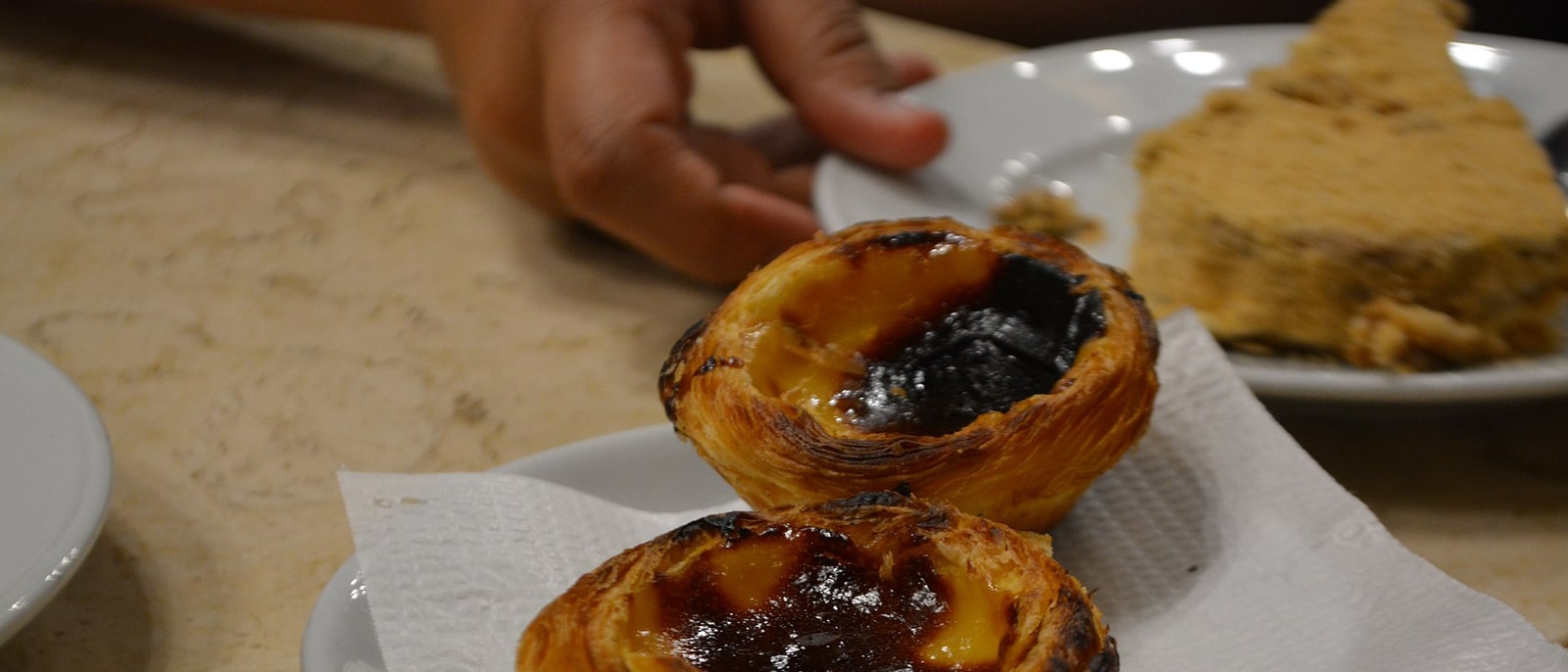
The recipe came out of a convent: the Jerónimos monks used egg white to starch their habits and had yolks to spare, so they made sweets. When the state dissolved the religious orders in 1834, the recipe passed to a sugar refinery next door, which began selling the pastries in 1837 and still does from the same spot.
That’s why there are two names for one thing. Only that house, the Fábrica dos Pastéis de Belém, may call them “Pastéis de Belém”, with a recipe said to be kept secret, everywhere else in the country, and the world, they’re “pastéis de nata”.
The Belém ones are famous, but around the city there are bakeries that make them just as well or better, and with no queue.
- 03
Tinned fish and the market
Tinned fish is no emergency fallback here: sardine, mackerel, tuna or mussel in a tin, with good oil, is a starter you order in taverns and bars with a glass of wine. There are century-old shops dedicated to nothing else, the tins stacked like an old pharmacy.
The Mercado da Ribeira, by Cais do Sodré, is the city’s great historic market.
Since 2014 half of it is the Time Out Market, a hall of stalls from well-known cooks: well done but now very touristy and queued.
The other half is still a fruit and fish market in the mornings, and that’s where the neighbourhood shops.
- 04
Ginjinha, and the June sardines
Ginjinha, a sweet, strong sour-cherry liqueur, gets downed in one in tiny holes-in-the-wall that serve nothing else. The most famous, by the Rossio, opened in 1840 and has nowhere to sit: you order it at the counter, “com ou sem”, with or without the cherry in the bottom of the glass, and drink it in the street.
And if you come in June, you land in the Festas de Lisboa: on the night of the 12th to 13th, for Saint Anthony, Alfama and Madragoa fill with the smoke of grilling sardines, music and neighbourhood parades, the marchas populares, that come down the Avenida da Liberdade.
It’s when the whole city eats sardines in the street, no exceptions.
Frequently asked
What should you eat in Lisbon?
Bacalhau in any of its forms, à brás or à Gomes de Sá, a warm pastel de nata, tinned fish as a starter and, if it’s June, grilled sardines in the street. To drink, vinho verde or a ginjinha standing by the Rossio. Almost all of it is humble in origin, and that’s the point.
Which is the authentic pastel de nata?
All of them, really. The recipe comes from the Jerónimos convent and since 1837 the Fábrica dos Pastéis de Belém has sold it, the only one allowed to call them “Pastéis de Belém”. Everywhere else they’re “pastéis de nata” and many are just as good. The Belém ones are worth trying, but they aren’t the only good ones.