What to see in Lisbon
14 h route4 stopsBest: All year. Winter is mild and quieterUpdated July 2026
Seven hills, tradition tells Lisbon, and though it actually rises and falls over rather more, the number explains the essential thing: there isn’t one view here, there are dozens, and the city is read from above. The second thing to know is that almost nothing predates 1755, because that year an earthquake split it in two, and what came after is another city.
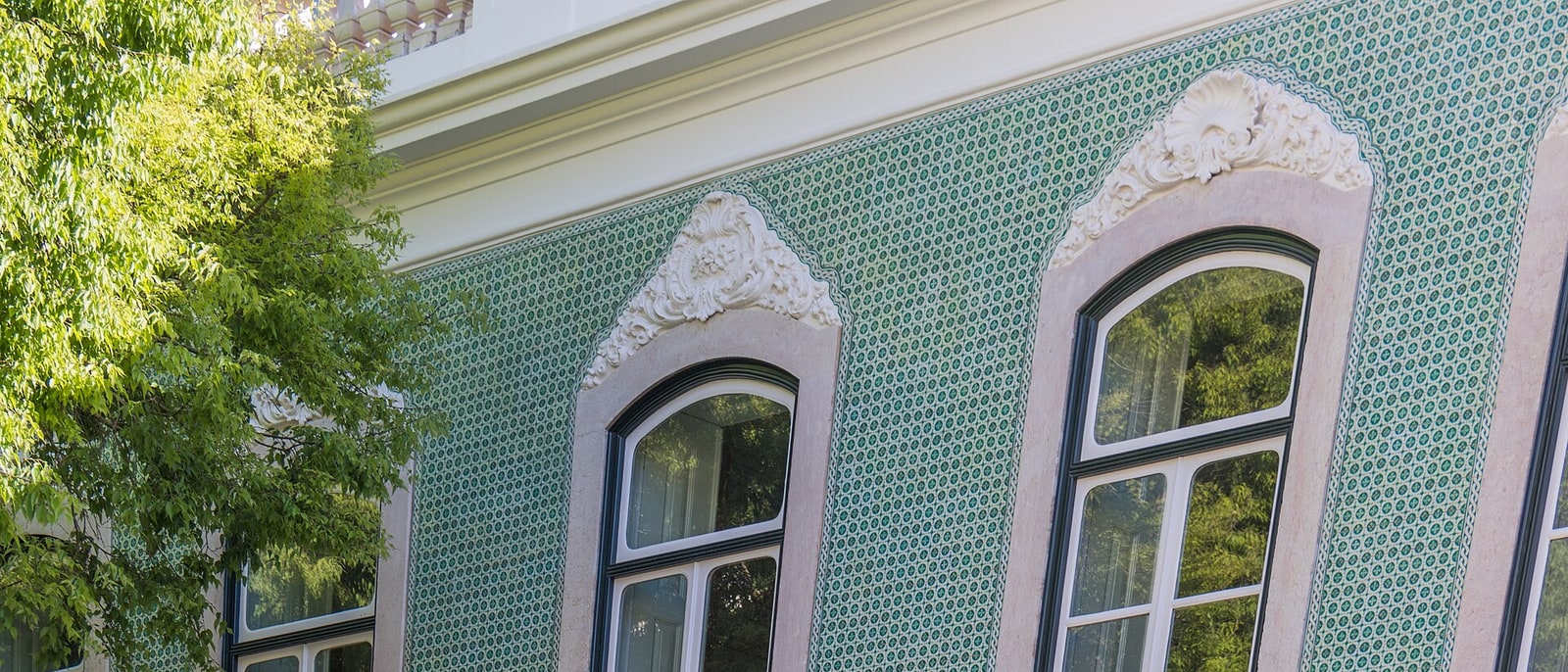
With those two keys, the slopes and the earthquake, the whole of Lisbon makes sense: why the Baixa is a perfect grid and Alfama a maze, why there are funiculars, why the façades are sheathed in tile.
The route, stop by stop
4 STOPS- 01
The 1755 earthquake and the Baixa Pombalina
On 1 November 1755, All Saints’ Day, with the churches full, an earthquake of an estimated magnitude around 8.5 shook Lisbon. Then came the tsunami, surging up the river, and after it six days of fire. Tens of thousands died and the news crossed Europe: Voltaire wrote about it and put it into “Candide”, and the disaster marked the Enlightenment debate on optimism and providence.
The prime minister, the future Marquis of Pombal, summed up his plan in a phrase: “bury the dead and feed the living”. He rebuilt the whole Baixa on a grid, its buildings set on a flexible timber frame, the gaiola pombalina, designed to sway in a tremor without collapsing. To test it, troops were made to march around the models.
It’s one of the first anti-seismic urban plans in history.
- 02
Belém and the discoveries
In Belém, to the west, sits the Lisbon of the discoveries, the one that grew rich on the spice route. The Mosteiro dos Jerónimos was raised from 1501 on the gold of that trade, in the Manueline style: a late Portuguese Gothic full of ropes, knots, armillary spheres and sea motifs carved in stone. Vasco da Gama is buried at the entrance.
In the river, the Torre de Belém (1519) guarded the harbour mouth. Small and fine, more decorative than military, with a rhinoceros carved at its base: the first to reach Europe from India.
The third landmark, the Padrão dos Descobrimentos, is much later: Salazar’s regime built it in 1960, and it’s worth knowing, because it’s imperial propaganda, not a monument of the age it depicts.
- 03
The azulejos
The azulejo (the name comes from the Arabic az-zulaij, “polished stone”) is Lisbon’s skin: it covers churches, stations, doorways and whole façades, mostly blue and white but also in colour. It isn’t only decoration. It insulates against damp and reflects light, which matters in a city of long summers.
The Museu Nacional do Azulejo, in a sixteenth-century convent east of the centre, tells five centuries of the tradition. Its greatest piece is a twenty-three-metre panel portraying the whole of Lisbon seen from the river as it was before the earthquake: one of the few records of how the city that vanished in 1755 looked.
- 04
The 25 de Abril bridge and Cristo Rei
The suspension bridge across the Tagus is identical to San Francisco’s Golden Gate, and not by chance: it was built in 1966 by the American Bridge Company, the same firm that had raised the San Francisco Bay Bridge. It was the Salazar Bridge until 1974. When the Carnation Revolution brought down the dictatorship on 25 April of that year, people renamed it and kept the date.
Opposite, on the far bank, in Almada, stands Cristo Rei: a Christ with open arms, unveiled in 1959 and copied straight from Rio’s Corcovado. Portugal’s bishops raised it in thanks for the country being spared the Second World War.
From its base is one of the best views of the whole of Lisbon, with the bridge in front.
Frequently asked
What is essential to see in Lisbon?
The historic centre (Baixa, Chiado, Alfama and the castle) and Belém, with the Jerónimos monastery and the tower. That gives you both Lisbons: the one rebuilt after the 1755 earthquake and the maritime one of the discoveries. With time to spare, the Azulejo museum and a trip to Sintra.
Why does Lisbon look like San Francisco?
The bridge and the terrain. The 25 de Abril bridge was built by the same company as San Francisco’s Bay Bridge and is almost identical to the Golden Gate. Add the steep hills, the trams that climb them and a Christ with open arms opposite, like Rio’s. The resemblance is real, even if the historical order runs the other way.