OZU /UNITED ARAB EMIRATES /DUBAI /GUIDE
Dubai’s neighbourhoods
5 h route4 stopsBest: After dark: that’s when the whole city comes outsideUpdated July 2026
Around nine out of ten people living in Dubai were born in another country. It isn’t an approximate headline figure: it’s the structure of the place. Emiratis are a small minority in their own city, and the vast majority of the population are foreign workers (from South Asia above all, and also from the Philippines, Egypt, Europe, Africa) here on a visa tied to their job.
That means Dubai’s neighbourhoods aren’t organised by history or geography but by income and origin, considerably more sharply than in other cities. There’s shop-window Dubai, the one in the photos, where those who can pay for it live. There’s worker Dubai, ten minutes away, where most people live. And there’s the old one, beside the Creek, where it all came from. All three are covered by metro in an afternoon.
The route, stop by stop
4 STOPS- 01
Deira and Bur Dubai
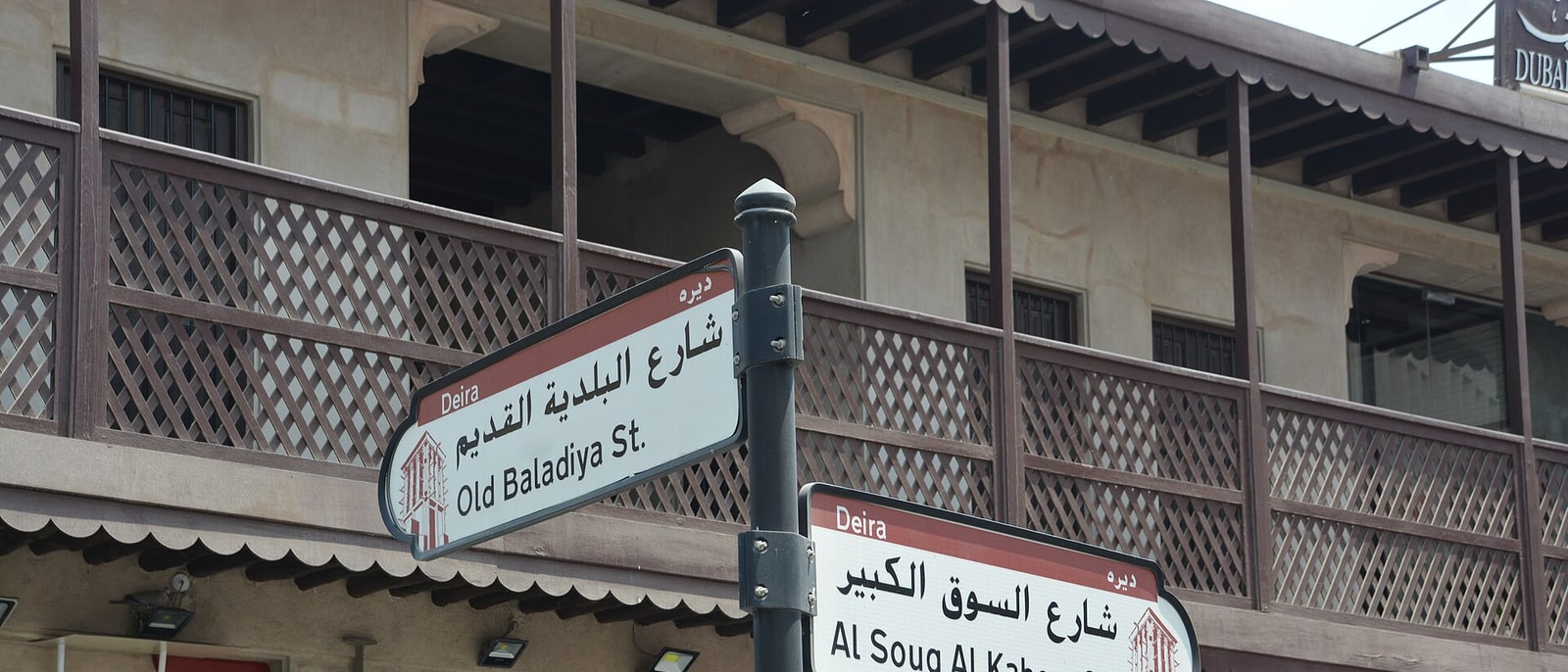
Original Dubai fits into two neighbourhoods facing each other across the Creek: Deira on one bank and Bur Dubai on the other, joined by the abras. Everything was there for a century and a half: the port, the souks, the merchants’ houses, the customs post.
Today they’re dense, working-class, lively quarters, with the working population of the Indian subcontinent, and they’re the only part of this city that works at pedestrian scale: pavements, narrow streets, shops at street level, people walking. In Bur Dubai is Al Fahidi with its wind towers, and there’s a Hindu temple and a Sikh gurdwara that have operated for decades, which surprises anyone arriving with fixed ideas about the Gulf.
In Deira are the souks and the dhow wharves, where wooden ships are still loaded with boxes stacked to the sky bound for Iran, Somalia or India. That wharf, in plain view, is Dubai’s oldest business still running.
- 02
Downtown and Marina
Photo Dubai: Downtown around the Burj Khalifa and the mall, and Marina, a canyon of skyscrapers around an artificial yacht harbour, with its promenade and its twisted towers. It’s where foreigners with money live and where almost every tourist stays.
The fact to hold in mind to look at it properly: none of this is twenty-five years old. Marina was open sea and Downtown was sand. Everything you see (hundreds of towers, a twelve-lane motorway, an elevated metro) has been built in the time since you left school. That’s the genuinely astonishing thing about this city, more than the height of anything.
The Marina promenade and the JBR one walk well after dark, when the heat eases and everyone comes out. And with the advantage that the metro drops you at the door, which is rare here, where most people live in a car.
- 03
Al Karama and Satwa
Apartment blocks from the seventies and eighties, shops at street level, tailors, barbers, electronics stores and subcontinental restaurants on every corner. Al Karama and Satwa are working-class and foreign middle-class neighbourhoods, and they’re where an enormous part of the city lives.
It’s the Dubai almost no visitor sees and it’s more interesting than Marina, because there’s genuine street life here: people sitting outside, children, shops open late, improvised cricket. You eat superbly and for nothing.
And there’s something very much of this place: the tailors. In Karama there are dozens, and for what a branded shirt costs they’ll make you one to measure in two days, choosing the cloth. It’s one of the few purchases in Dubai genuinely worth it, along with dates and gold by weight. Go by metro, there’s a station.
- 04
The city you don’t visit
One part of Dubai appears on no itinerary and is worth naming, because everything else depends on it. Most of this country’s population are foreign workers, many from South Asia, on visas tied to their employer. That system, kafala, has been the subject of documented reports by international human rights organisations and the ILO for years: unpaid wages, recruitment debts paid off over years, passport confiscation, which is illegal here and still happens, and accommodation in camps outside the city.
There have been reforms: rules on changing employer have changed and there’s a legal ban on outdoor work during the middle hours in the summer months, precisely because doing it kills.
That the reforms exist and that the problems remain documented are both true at once.
I’m not telling you not to come: I’m telling you the tallest tower in the world, the palm-shaped island and the sail-shaped hotel were raised by specific people whose conditions are documented, and that knowing it is part of looking at this city with your eyes open.
Frequently asked
Where to stay in Dubai?
Downtown if you want the tower and the mall at your door, and Marina if you want a promenade and a beach: both are on the red metro line, which is what matters. Deira and Bur Dubai, beside the Creek, are considerably cheaper, have the old city, the souks and the best food, and they’re on the metro too. Bear in mind distances here are enormous and without the metro you depend on taxis.
How many people in Dubai are from Dubai?
Very few: around nine out of ten people living here were born in another country. Emiratis are a small minority in their own city, and most of the population are foreign workers on visas tied to their jobs, mostly from South Asia. That explains the neighbourhoods, the food and practically everything else about this city.