OZU /UNITED ARAB EMIRATES /DUBAI /GUIDE
Where to eat in Dubai
3 h route4 stopsBest: At night, which is when this city comes outdoorsUpdated July 2026
Two hundred nationalities cooking in one city: that’s the answer to what you eat in Dubai, not a local tradition. Saying so isn’t a slight, it’s arithmetic. Emirati cooking exists (there are dishes, there’s tradition, there are dates and camel) but it’s a small minority’s cuisine in its own city, and finding it takes deliberate effort.
What there is instead is far better than it sounds: the food of everyone who came to build this. India, Pakistan, Iran, Lebanon, the Philippines, Egypt, Ethiopia. Made by people from there, for people from there, in neighbourhoods with not a single tourist, and for a fraction of what anything costs Downtown. The best food in Dubai isn’t in the tower: it’s in a fluorescent-lit room ten minutes away by metro.
The route, stop by stop
4 STOPS- 01
Karama, Satwa and Deira
Most people in this city live in these neighbourhoods, and the real eating happens here. Al Karama has southern India: dosas the length of an arm, thali served on a metal tray, Kerala food. Satwa has the Filipino and the Pakistani. And Deira, next to the souks, has the Iranian, the Afghan and the Egyptian.
They’re rooms with no pretension: fluorescent lights, formica tables, genuinely laminated menus and a queue of people coming off work. And there’s Dubai’s best argument as a food destination, which almost nobody uses: on the same block you can eat southern Indian cooking made by people from Kerala, Iranian kebab made by Iranians and Lebanese hummus made by Lebanese, all for less than an observation deck ticket.
It’s the real advantage of a city made entirely of people who came from somewhere else. Go by metro and don’t take a taxi: there’s a station at the door.
- 02
Emirati food, if you look for it
It exists and it’s worth it, but you have to look for it deliberately because you won’t come across it by chance.
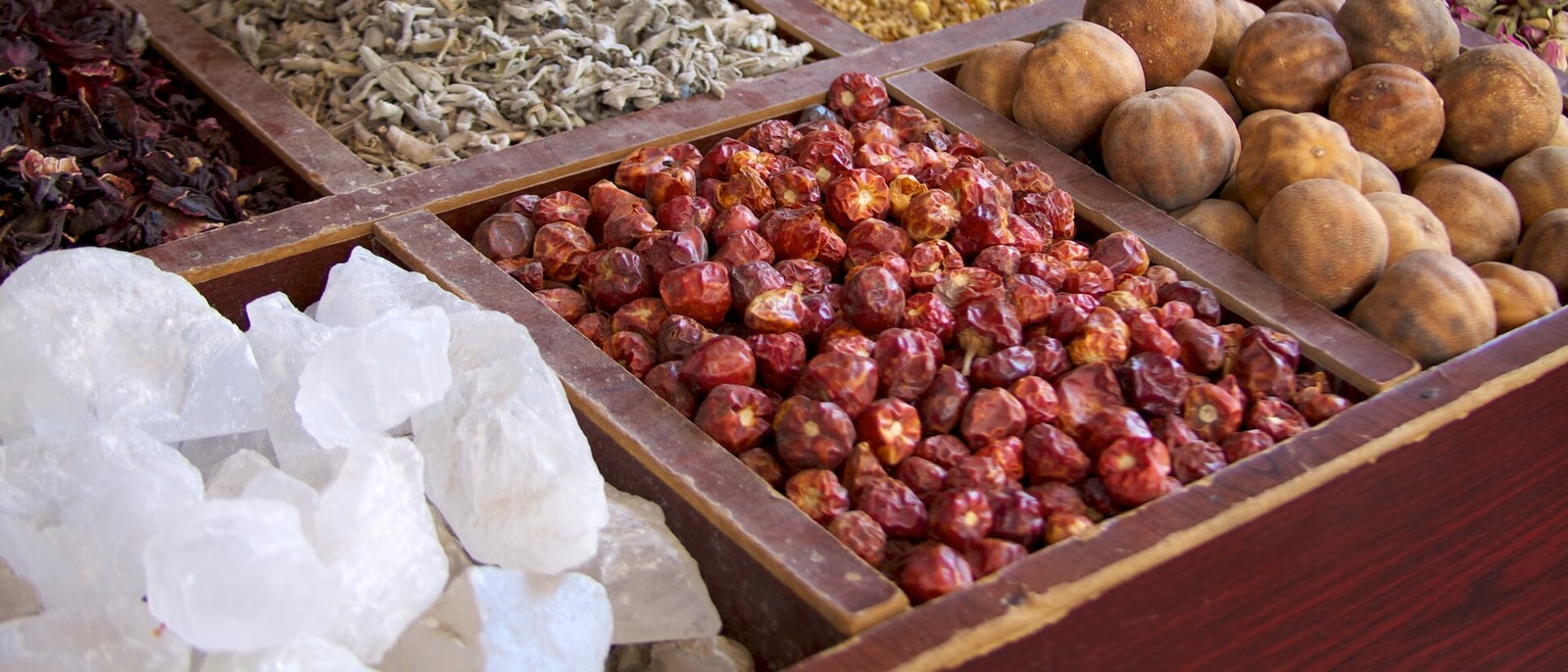
The central dish is machboos: spiced rice cooked with meat or fish, with dried lime (loomi, a lime boiled and sun-dried until it’s black and hard) giving it a very particular citrus bitterness.
It’s a cousin of Indian biryani and Saudi kabsa, and that familiarity tells the Gulf’s trading history better than a museum.
Around it there’s harees, a wheat-and-meat purée cooked for hours until it falls apart, eaten above all during Ramadan, luqaimat, fried balls bathed in date syrup that are the national dessert, and camel, eaten stewed and in burgers, whose milk is in every supermarket.
There are a couple of places doing this seriously, including a cultural centre in Al Fahidi where you eat sitting on the floor with an Emirati family who answer whatever you ask. That’s the best way to do it.
- 03
Karak
Karak tea serves as the de facto national drink: black tea boiled with evaporated milk, cardamom and plenty of sugar, served scalding in a tiny plastic cup. It comes from Indian chai, brought by workers from the subcontinent, and today everyone drinks it, Emiratis included.
And it has an institution of its own that’s pure Dubai: karak cafés with drive-through service. You pull onto the shoulder, sound the horn or order through a window, and it’s handed over without you getting out, along with a regag: a paper-thin bread cooked on a griddle with cheese and sometimes egg. There are places where at midnight twenty cars sit in a row drinking tea without anyone getting out.
In a city where for half the year you can’t be on the street, social life happens inside the car. That little cup costs practically nothing and it’s the most everyday and most honest thing about this place.
- 04
Brunch, and alcohol
Weekend brunch works here as a serious institution: a huge buffet in a hotel, free-flowing drinks included, starting at midday and running all afternoon. It’s the great social event of the expatriate community here and it’s a scene worth seeing even if it isn’t your thing. Some people have met at the same one every Saturday for years.
And with that, the alcohol rules, which you need to know to stay out of trouble. Alcohol is served legally, but only in licensed premises, which in practice means hotels, clubs and authorised restaurants. It isn’t sold in ordinary supermarkets but in specific shops. And this is the important part: drinking in the street or any public space is illegal, and being drunk in public is a criminal offence, not a minor infraction.
The combination of free-flowing drinks at midday and a strict law on the way out has landed plenty of people in serious trouble. From the hotel to the taxi, and from the taxi home. There’s no room for your own judgement on this one.
Frequently asked
What do you eat in Dubai?
Above all, the food of everyone who came to build this: Indian, Pakistani, Iranian, Lebanese, Filipino, Egyptian, in Al Karama, Satwa and Deira, ten minutes away by metro and for a fraction of Downtown prices. Emirati cooking exists (machboos with dried lime, harees, luqaimat, camel) but you have to look for it deliberately, because Emiratis are a small minority in their own city. And karak, the cardamom tea, ordered from the car.
Can you drink alcohol in Dubai?
Yes, but only in licensed premises: hotels, clubs and authorised restaurants. It isn’t sold in ordinary supermarkets but in specific shops. And the important part: drinking in the street or any public space is illegal, and being drunk in public is a criminal offence, not a minor infraction. The free-flowing weekend brunch is a local institution, but it’s hotel to taxi and taxi home.