OZU /UNITED ARAB EMIRATES /DUBAI /GUIDE
Dubai in a day
9 h route4 stopsBest: November to March. June to September you can’t be outdoorsUpdated July 2026
The tallest building in the world was going to be called the Burj Dubai, and it was, for the six years it took to build. When it opened, in January 2010, it was the Burj Khalifa. The change was announced on opening day itself and it wasn’t an aesthetic whim: a few weeks earlier, Dubai had come close to being unable to pay its debt, and Abu Dhabi lent it billions to save it. Khalifa was the president of Abu Dhabi. The tower carries his name.
That story is the best way into this city, because it dismantles the first idea everyone brings: that money springs from the ground here. It doesn’t. A day in Dubai can be spent entirely looking at big expensive things, and that’s fine, but it goes much better if you know why they’re there. Start with the old part, which exists and almost nobody visits, and go up high at the end.
The route, stop by stop
4 STOPS- 01
Al Fahidi and the wind towers
A quarter of narrow lanes, coral-and-plaster houses and inner courtyards, on the bank of the Creek. It’s what remained of the Dubai that came before everything, and you should start here because without it the rest doesn’t make sense.
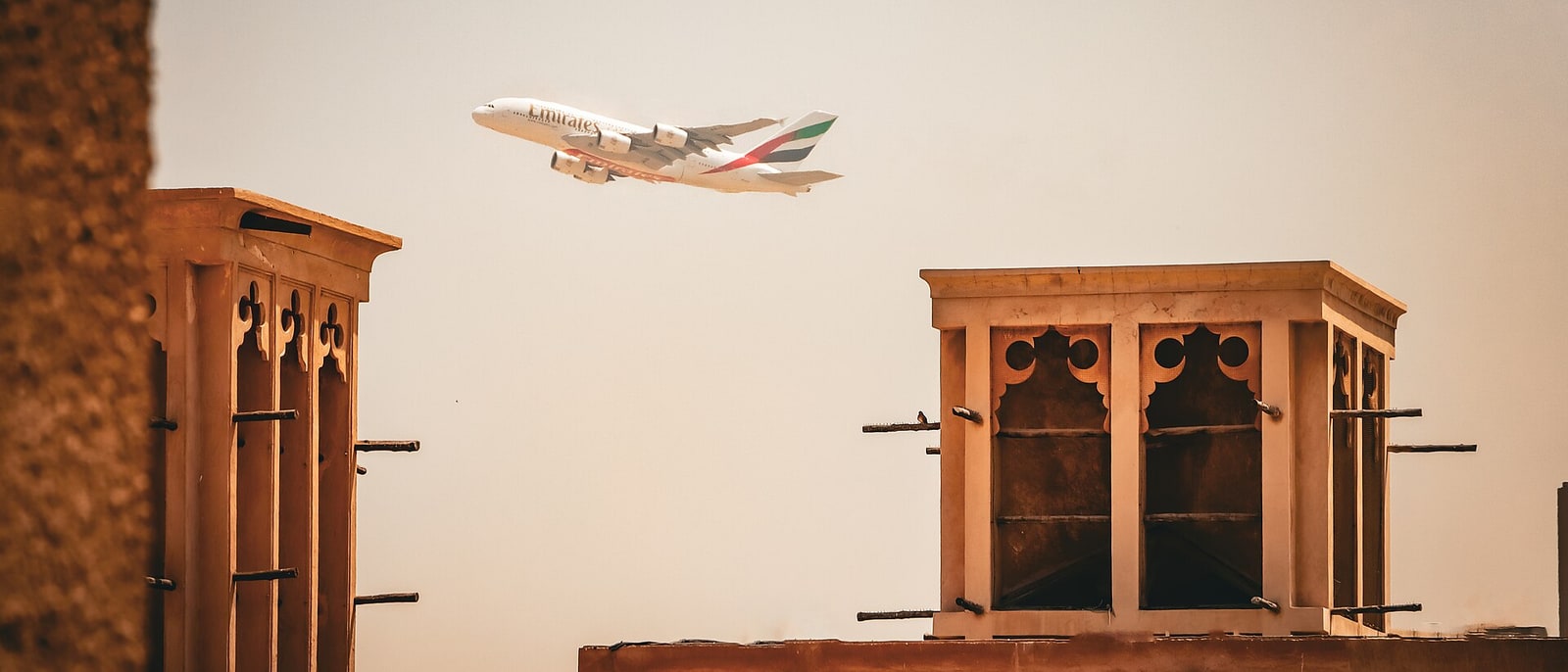
What to look at are the towers: every house has a square chimney on top, open on all four sides. It’s called a barjeel and it’s air conditioning without electricity. It works like this: the tower catches any breeze blowing, channels it down into the room, and at the same time the hot air inside rises and leaves through the opposite side. With a damp cloth hung across it, the air also cooled as it passed.
It’s a Persian system brought here by the traders who arrived from Iran, and it dropped the temperature several degrees in the depths of a Gulf summer. Two hundred years before a compressor existed. That idea, in the city that today is the greatest imaginable consumer of air conditioning, deserves the twenty minutes.
- 02
The Creek by abra
The Creek, an arm of sea reaching inland, explains why Dubai exists: it was a natural harbour where you could anchor, and everything was set up around it a century and a half before the towers. Crossing it is compulsory and it’s done by abra, wooden boats with an engine and a bench where people sit with their backs to the water.
And here’s the best part: it costs pennies. Literally a few cents, paid in cash to a man who comes round collecting, in the most expensive city in the Gulf. It’s public transport, not an attraction: workers use it to get from one bank to the other, they run full all day and they leave when they fill, with no timetable.
A five-minute crossing with the skyscrapers behind and the cargo dhows moored alongside, loading boxes for Iran and Africa the way they have for a century. It’s the best value in Dubai by an obscene margin.
- 03
The Deira souks
Across the Creek wait the gold souk and the spice souk, side by side. The gold one is a covered street with hundreds of windows loaded to the top, and it produces an effect of unreality: there’s more gold in view than you’ll see together in your life.
To avoid embarrassing yourself, understand how it’s charged: gold is paid for by the weight of the piece at the day’s international price, which is public and not up for discussion, plus a making charge, which is the work of fabricating it. That second charge is the only negotiable part, and there you do haggle, and you’re expected to. Ask the day’s gram price before entering any shop.
Next door, the spice souk smells of saffron, cumin and dried lime, and that’s where to buy dates, which are what’s genuinely worth taking home from Dubai. The good ones are medjool, and here they cost a fraction of what they do in Europe.
- 04
The tower, at sunset
Eight hundred and twenty-eight metres. You go up in a lift that does the trip in a minute and from the top the desert and the sea are visible at once, with the city in between looking like a model. It’s expensive, it’s packed and you should do it anyway: it’s one of those things that justify their own cliché.
Two practical tips worth money. One: book days ahead and online, because the walk-up ticket on the day costs a great deal more, and the sunset slots, which are the ones you want, sell out first.
Two: if it strikes you as expensive, there’s an alternative half the people who live here take. Have a drink on the terrace of any Downtown hotel with a view of the tower. You pay for an expensive drink and you see the whole building lit up, which is a view you obviously don’t get from inside the building. Below is the Dubai Mall and its fountain, which fires every half hour after dark and is free.
Frequently asked
What to see in Dubai in a day?
Start with the old part, which exists and almost nobody visits: the Al Fahidi quarter with its wind towers, which were air conditioning without electricity, cross the Creek by abra, which costs pennies and is public transport, the gold and spice souks in Deira, and go up the Burj Khalifa at sunset, booking days ahead online.
Why is the Burj Khalifa called that?
Because it was going to be the Burj Dubai and the name was changed on opening day itself, in January 2010. A few weeks earlier, Dubai had come close to being unable to pay its debt and Abu Dhabi lent it billions to save it. Khalifa was the president of Abu Dhabi. The name of the tallest building in the world is, literally, a receipt.