OZU /UNITED ARAB EMIRATES /DUBAI /GUIDE
What to see in Dubai
8 h route4 stopsBest: Outdoor things first thing. Indoor things all dayUpdated July 2026
Before oil, and for centuries, this coast lived on one thing: free-diving to the bottom of the Gulf for pearl oysters. It was the local industry, with a fleet of dhows, divers who went down with a clip on the nose and a stone tied to a foot, and an entire economy built around it. And it vanished within a few years, in the thirties, for a reason nobody in the Gulf saw coming: Japan managed to farm pearls industrially. Once they could be manufactured, the price collapsed and everything here ended.
That’s what lies beneath the towers, and it’s worth knowing because it changes what you’re looking at: Dubai didn’t go from empty desert to skyscraper, it went from brutal economic ruin, a port wrecked by a foreign innovation, to reinventing itself twice. What to see here are both layers: the superlatives, which are fine and deceive nobody, and the one underneath, which almost nobody visits and which explains something.
The route, stop by stop
4 STOPS- 01
The Burj Khalifa
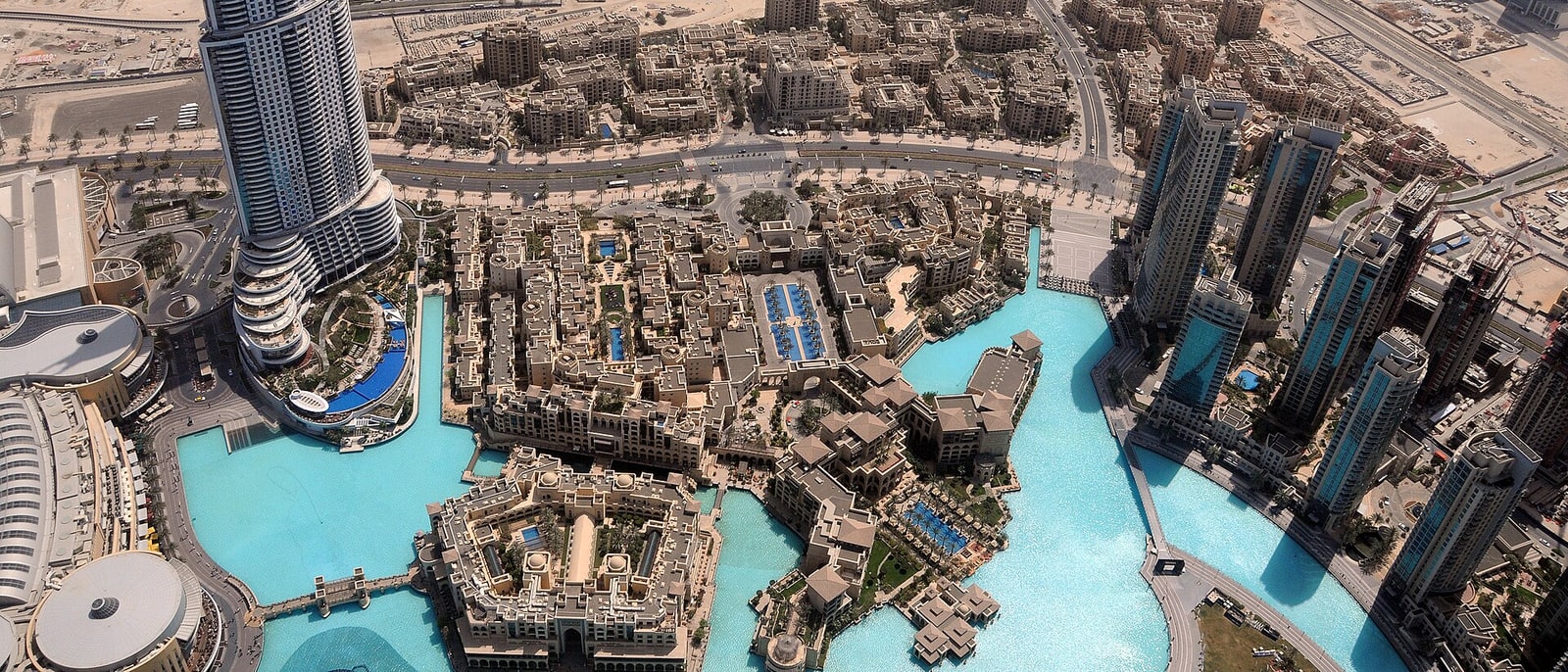
Eight hundred and twenty-eight metres, opened in 2010, and still the tallest building in the world by a considerable margin over the second. The floor plan is Y-shaped, which isn’t a whim: that geometry, with three wings braced against a central core, is what lets it resist wind at that height without twisting.
The construction detail to take away is this: to pump concrete six hundred metres up in a place where it hits fifty degrees, they had to do it at night and add ice to the mix, because in the day’s heat it set before reaching the top.
And a warning about the views: from the observation deck you see a flat city and a desert. You don’t see the Burj Khalifa, which is what you came to see. That’s why plenty of people who live here will tell you the best view of the tower is from a hotel terrace opposite, with an expensive drink in your hand. Both things are true and they don’t exclude each other.
- 02
The Palm
An artificial island shaped like a palm, with its trunk, its sixteen fronds and a breakwater around it, built between 2001 and 2007. You see the whole thing from the monorail that runs along it, and from the ground you can’t make out the shape at all, which has its own charm: it’s a drawing designed to be seen from a plane or a satellite.
The fact that makes it interesting is how it’s made: no concrete and no structural steel. It’s sand dredged from the bottom of the Gulf and rock brought from the inland mountains, placed by GPS-guided ships and compacted with vibrators so the material settles and won’t liquefy in an earthquake. Millions of tonnes of stone around it so the sea doesn’t take it away.
It’s a work of earth engineering rather than construction, and that’s why the real debate about it isn’t aesthetic but environmental: it changed this coast’s currents and affected the area’s reefs. That’s documented and it’s part of the place as much as the hotels are.
- 03
The fort museum
A coral-and-mud fort from 1787, the oldest building in Dubai, beside the Creek. Inside is the city museum, and you should see it for a specific reason: it tells the part that isn’t on the postcards, which is the pearls.
You see the tools of the trade: the bone clip for the nose, the leather thimbles to avoid cutting yourself on the shells, the stone tied to a foot to descend quickly. The divers made dozens of dives a day, on one breath, for months of season at a stretch, and many ended up deaf or blind. They earned a pittance and were usually in debt to the boat’s captain for life.
It’s a brutal industry, and it vanished within a few years when Japan invented the cultured pearl. Without that ruin you can’t understand the desperation with which this place reinvented itself afterwards. The museum tells it well and costs practically nothing.
- 04
The islands that didn’t work
Off the coast, Dubai built another artificial archipelago: three hundred islands laid out as a map of the world, each sold as a private plot. Dredging finished in 2008. And there it stopped: the financial crisis arrived, the emirate came to the brink of default, the sales campaign halted and most of those islands are still empty heaps of sand today. A few things have been built on a handful. The rest has been waiting fifteen years.
It’s worth knowing because it’s the only part of this city that admits a failure, and because it qualifies everything else. Not everything comes off here: a series of palms larger than the first was also attempted and several sat half-finished for years.
Dubai works by betting big and very often wins, but the sand world map off the beach is there, visible from the plane as you land, reminding you that the 2009 crisis was real and that the tallest tower in the world is named after the neighbour who put up the money.
Frequently asked
What’s genuinely old in Dubai?
The Al Fahidi fort, from 1787, the oldest building standing and today the city museum, the Al Fahidi quarter with its wind towers, which were air conditioning without electricity, the Creek and its abras, and the gold and spice souks in Deira. Before oil this lived on diving for pearls, and that industry vanished in the thirties when Japan invented the cultured pearl.
Is going up the Burj Khalifa worth it?
Yes, but book online days ahead: at the box office on the day it costs considerably more and the sunset slots sell out first. And bear one thing in mind: from the deck you see a flat city and a desert, but you don’t see the Burj Khalifa. The alternative half the city takes is a drink on a hotel terrace opposite, seeing the whole tower lit up.