OZU /DOMINICAN REPUBLIC /SANTO DOMINGO /GUIDE
Santo Domingo: practical tips
5 stopsUpdated July 2026
A Caribbean capital of three million people, with its traffic, its noise, its inequality and its life: this isn’t a resort and shouldn’t be treated as one. That means the ordinary precautions of any large Latin American city, no more and no less, and it also means things happen here that don’t happen on a fenced beach.
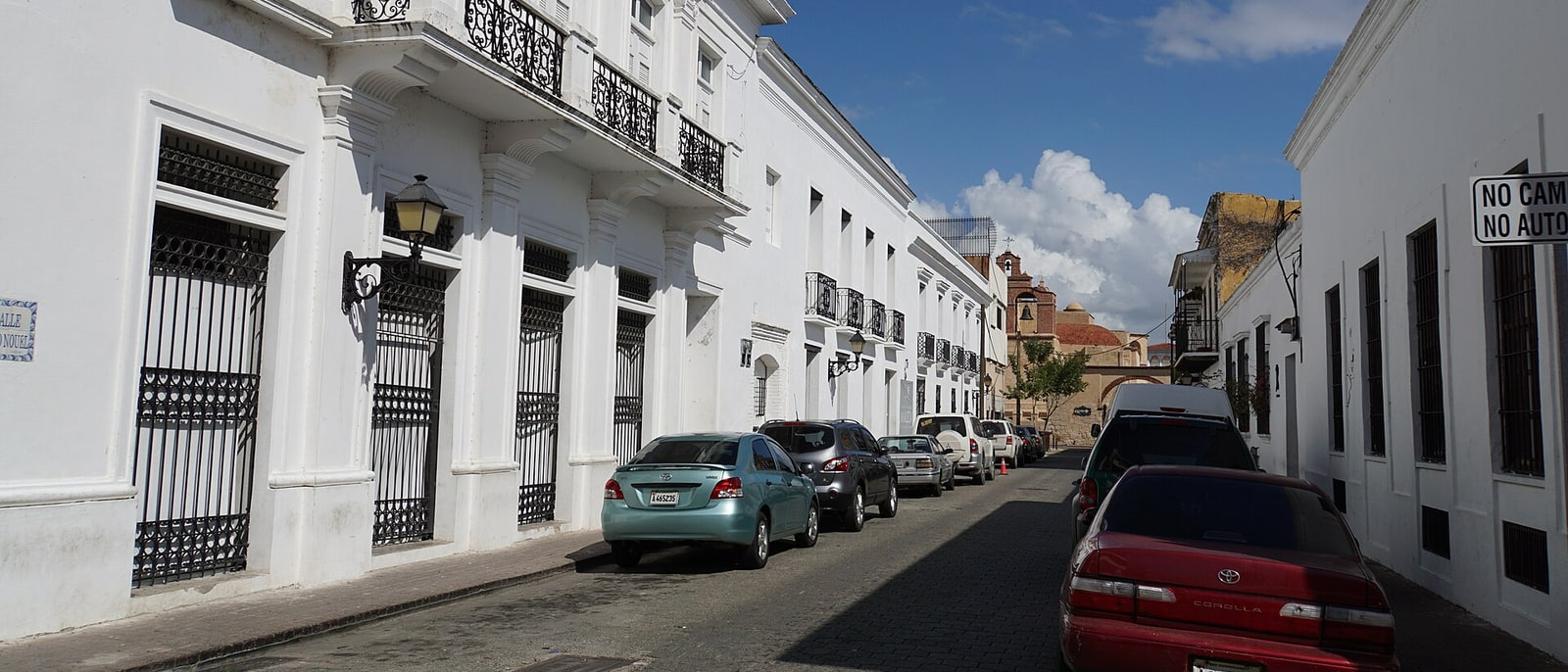
The three things genuinely worth knowing in advance are about money and logistics: that you ask the taxi price before getting in because no fare applies, that the restaurant bill carries 28% on top that isn’t on the menu, and that you drink bottled water. With that, the city is easy and it’s one of the best in the Caribbean.
The route, stop by stop
5 STOPS- 01
The price, before you get in
Taxis here don’t use meters in practice and there’s no official fare you can invoke: for the same airport-to-centre ride we found prices between twenty-eight and seventy-seven dollars depending on who quoted. That isn’t generalised cheating, it’s the absence of a standard.
The practical consequence is one thing and it applies across the country: you ask the price to your specific destination, out loud, before getting in and with the bag still on the pavement. Once you’re inside and the luggage is in the boot, you have nothing left to play.
For moving around the city, ride apps work well and have the obvious advantage that the price comes from a screen rather than a conversation.
- 02
The 28% on the bill
In formal restaurants, a 10% legal tip, compulsory and paid to staff, plus 18% ITBIS get added at the end to the menu price. Total: 28% more. It’s the first-dinner surprise and there’s nothing to argue about, because it’s regulated and itemised on the bill. Knowing it is useful twice over. First, for arithmetic: a thousand-peso dish is one thousand two hundred and eighty. And second, because the tip is already in there, so leaving more on top is genuinely voluntary and isn’t expected. At colmados, comedores and fry stalls it doesn’t apply: the sign is what you pay.
- 03
Big-city common sense
The Colonial Zone and Gazcue are walkable at night without drama and there’s tourist police in the quarter. What applies is what applies in any large Latin American capital: don’t walk around holding your phone out, don’t carry more cash than you’ll spend, don’t take a taxi you didn’t call, and don’t wander into neighbourhoods you don’t know after dark.
There’s one local detail that throws Europeans: inequality here is visible and in plain sight, not tucked away. You’ll see things you don’t see in Punta Cana, because Punta Cana has a fence. That doesn’t make the city dangerous. It makes it a real city.
People, incidentally, are friendly in a way that will throw you more than anything else on the trip.
- 04
Water, sun and hurricanes
Tap water isn’t drunk anywhere in the country: you buy it bottled, and Dominicans do too. Brushing your teeth is no problem, and ice in formal places is made with treated water. It’s normal across the island and it isn’t alarmism.
The sun here comes down nearly vertical because you’re at eighteen degrees of latitude, and in the old town the cobbles reflect: at midday the Colonial Zone is an oven with no shade, which is why you visit it from eight to eleven.
Hurricane season runs 1 June to 30 November, peaking August to October. Most years nothing happens, but if you travel in those months, take insurance with weather cover.
- 05
Mobile data
In this city your phone solves exactly the problem this whole page is about: calling a car through an app means the price comes from a screen instead of from a negotiation on the kerb, and in a place with no reference fares that’s worth far more than the convenience. Coverage is good in the capital, at the airport and along the south coast. In the Cordillera Central, climbing to Jarabacoa, there are stretches with nothing. An eSIM activates before you leave home and works on landing, which here is precisely the moment you have to decide how much you’re paying to reach the hotel.
Frequently asked
Is Santo Domingo safe?
It’s a Caribbean capital of three million and what applies in any large Latin American city applies: the Colonial Zone and Gazcue are walkable at night without drama and there’s tourist police, but don’t walk around holding your phone out, don’t carry extra cash and don’t take taxis you didn’t call.
Can you drink the tap water in Santo Domingo?
No, nowhere in the country: you drink bottled and Dominicans buy it too. Brushing your teeth is no problem and ice in formal restaurants is made with treated water.
What’s the best time to visit the Colonial Zone?
Eight to eleven in the morning. You’re at eighteen degrees of latitude, the sun comes down nearly vertical and the cobbles reflect: at midday the old town is an oven with no shade. And if you can, make it a Sunday, so you end the afternoon at Bonyé.