OZU /DOMINICAN REPUBLIC /SANTO DOMINGO /GUIDE
A weekend in Santo Domingo
18 h route5 stopsBest: Make sure it includes a Sunday, for Bonyé. Non-negotiableUpdated July 2026
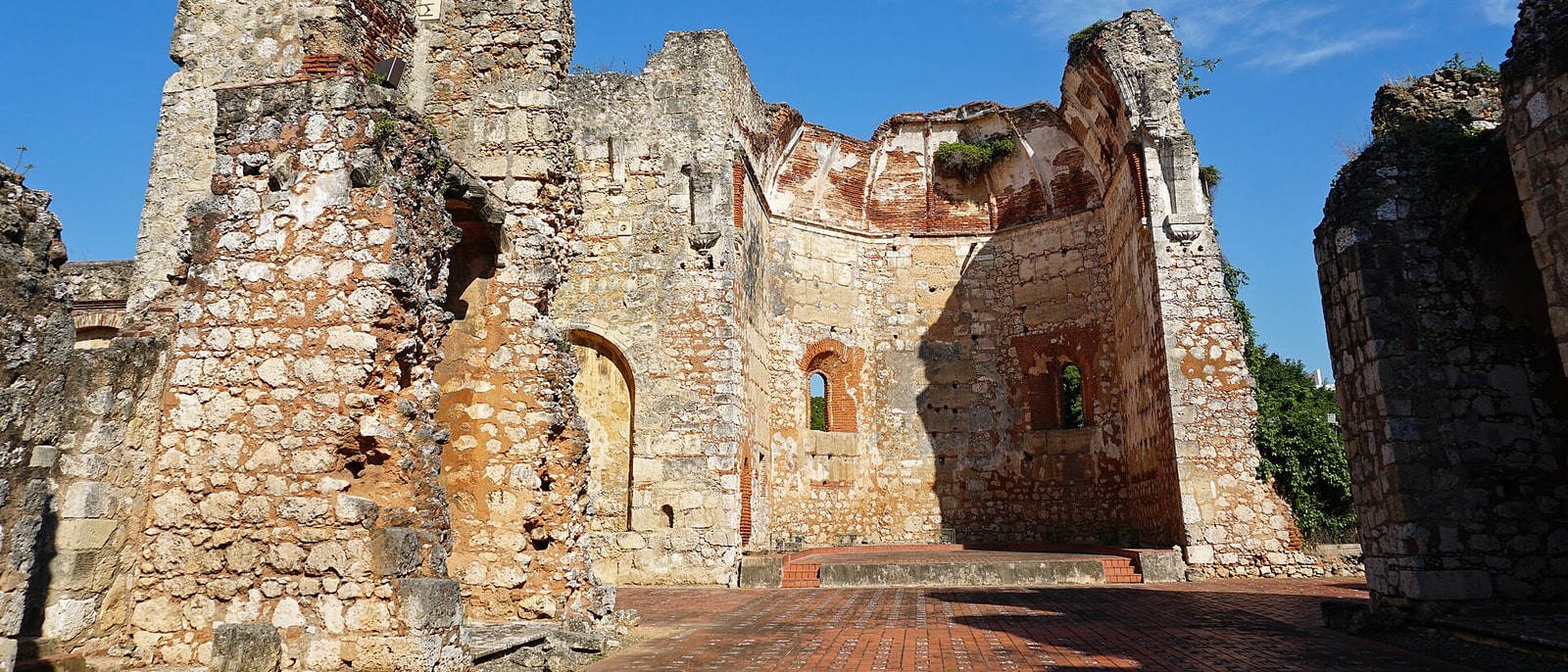
On Sunday afternoons, in the open-air ruins of the first monastery in the Americas, a band sets up and plays son and merengue until dark. It’s called Bonyé, it’s free, it has been happening for about twenty years, and the whole neighbourhood goes: grandmothers, children, couples who have been dancing together for fifty years, and the odd bewildered tourist who can’t believe it. If your weekend doesn’t include a Sunday, change it.
The rest sorts itself out. Saturday is the day for the Colonial Zone, which you walk in a morning, and for the part the city took decades to tell: the Trujillo dictatorship, which lasted thirty-one years and changed this city’s name. Sunday is for streets, markets and music.
The route, stop by stop
5 STOPS- 01
Saturday: the Colonial Zone on foot
The Colonial Zone entered the World Heritage list in 1990 and covers ten blocks you walk slowly in a morning: Calle Las Damas, the fortress, the Alcázar, the cathedral, the ruins of the university and the hospital. Start at eight, because by eleven the tropical sun turns the cobbles into a hotplate. And walk down El Conde, the pedestrian street crossing the whole quarter: no monuments here, just people, shoeshiners, colmados and long-standing shops. It’s the useful reminder that this isn’t a museum but a neighbourhood where people live. In Santo Domingo the colonial and the everyday share the same pavement, and that’s exactly what makes it different from Cartagena or Old Havana.
- 02
Saturday: the thirty-one years nobody mentions
Between 1930 and 1961 this country was ruled by Rafael Trujillo, and one fact shows how far it went: from 1936 to 1961 this city, the oldest in the Americas, was called Ciudad Trujillo. He put his surname on the capital the Columbus family founded. The Memorial Museum of Dominican Resistance tells the whole thing, including the uncomfortable part about who collaborated.
And there’s a date from here you may already know without knowing. On 25 November 1960 the Mirabal sisters were murdered: three opposition activists beaten to death and thrown down a ravine to fake an accident. That crime so outraged the country that Trujillo fell six months later.
Because of them, 25 November is the International Day for the Elimination of Violence against Women. That date on the global calendar comes from this island.
- 03
Saturday night: baseball, if it’s the season
The Dominican Republic produces more Major League players than any country in the world except the United States, and not narrowly: an island of eleven million supplies the richest league on the planet. The winter league, LIDOM, runs October to January, and that’s when the ones who made it abroad come back to play at home.
Going to a game is nothing like going to an American ballpark: there are brass bands playing merengue between innings, people dancing in the stands, cheerleaders, constant noise and an intensity that doesn’t exist over there. You don’t need to understand baseball. Honestly, it’s almost better.
If your trip lands between October and January, this is the best night you’ll have in this country.
- 04
Sunday: Bonyé, in the ruins
The San Francisco monastery opened first in the Americas, begun in 1508, and it has been a ruin since an earthquake and then the English finished it off. It stands open to the sky at the top of the quarter, arches up and no roof. And on Sunday afternoons, inside it, a band sets up.
It’s called Bonyé, it’s free, it’s been going about twenty years, and it plays son, merengue and bachata until dark. The neighbourhood turns out: older women who dance better than you, children running, beer sellers, couples of fifty years’ standing. It isn’t a show staged for tourists and that’s the whole point.
Get there early, stand to one side, buy a Presidente and wait: someone will pull you up to dance and you won’t be able to say no.
- 05
Sunday: Los Tres Ojos
Twenty minutes from the old town, inside an urban park, there’s a limestone cave with four freshwater lakes inside it: they’re called the Three Eyes even though there are four, because the fourth was found later and nobody wanted to change the name. You go down steps cut into the rock and suddenly you’re underground with light falling from above onto the water. The Taíno held these water-eyes sacred and there are pictographs here too. You reach the last lake on a wooden raft pulled along by a man hauling a rope, which is exactly as handmade as it sounds. It’s a half-hour visit and it’s the best place in the city to escape the midday heat: it’s ten degrees cooler inside.
Frequently asked
What is Bonyé in Santo Domingo?
A free son and merengue concert held on Sunday afternoons inside the open-air ruins of the San Francisco monastery, the first in the Americas. It’s been going about twenty years and the whole neighbourhood comes to dance, not tourists. It’s the best thing in the city.
Can you watch baseball in Santo Domingo?
October to January, when the winter league (LIDOM) plays, at the Estadio Quisqueya. It’s nothing like American baseball: brass bands play merengue between innings and people dance in the stands. This country produces more Major League players than any other except the US.
Who were the Mirabal sisters?
Three opponents of the Trujillo dictatorship murdered on 25 November 1960, in a crime disguised as an accident that outraged the country and precipitated the regime’s fall six months later. Because of them, 25 November is the International Day for the Elimination of Violence against Women.