OZU /DOMINICAN REPUBLIC /SANTO DOMINGO /GUIDE
Day trips from Santo Domingo
5 stopsBest: January to March for the whales. The rest, all yearUpdated July 2026
The capital sits in the middle of the south coast and that makes it the best base in the country: from here you reach almost everything in under three hours, which Punta Cana, stuck in the corner, cannot claim. There’s beach half an hour away, mountains at two, and whales at ninety minutes, depending on the month.
And that last note is what rules the calendar. Between January and March, in Samaná Bay, the humpback whales of the entire North Atlantic gather to breed: the same ones that in summer are off Iceland, Greenland or Canada come to this specific piece of sea to give birth. If your dates land there, this trip beats all the others without argument.
The route, stop by stop
5 STOPS- 01
The whales of Samaná
Every winter, somewhere between three and five thousand North Atlantic humpbacks come down to Samaná Bay to mate and calve, because it’s warm, shallow, protected water. It’s one of the largest and most reliable gatherings on the planet, and the calves are born here: you see them metres long beside the mother.
The season is short and strict: roughly mid-January to late March, and outside that there are no whales, full stop. Trips are regulated (number of boats, minimum distance, maximum time with each group) because this has been going on for decades and it was done badly at first.
Pick an operator who respects that. The one promising to get you closer than allowed is promising you an infraction.
- 02
Boca Chica
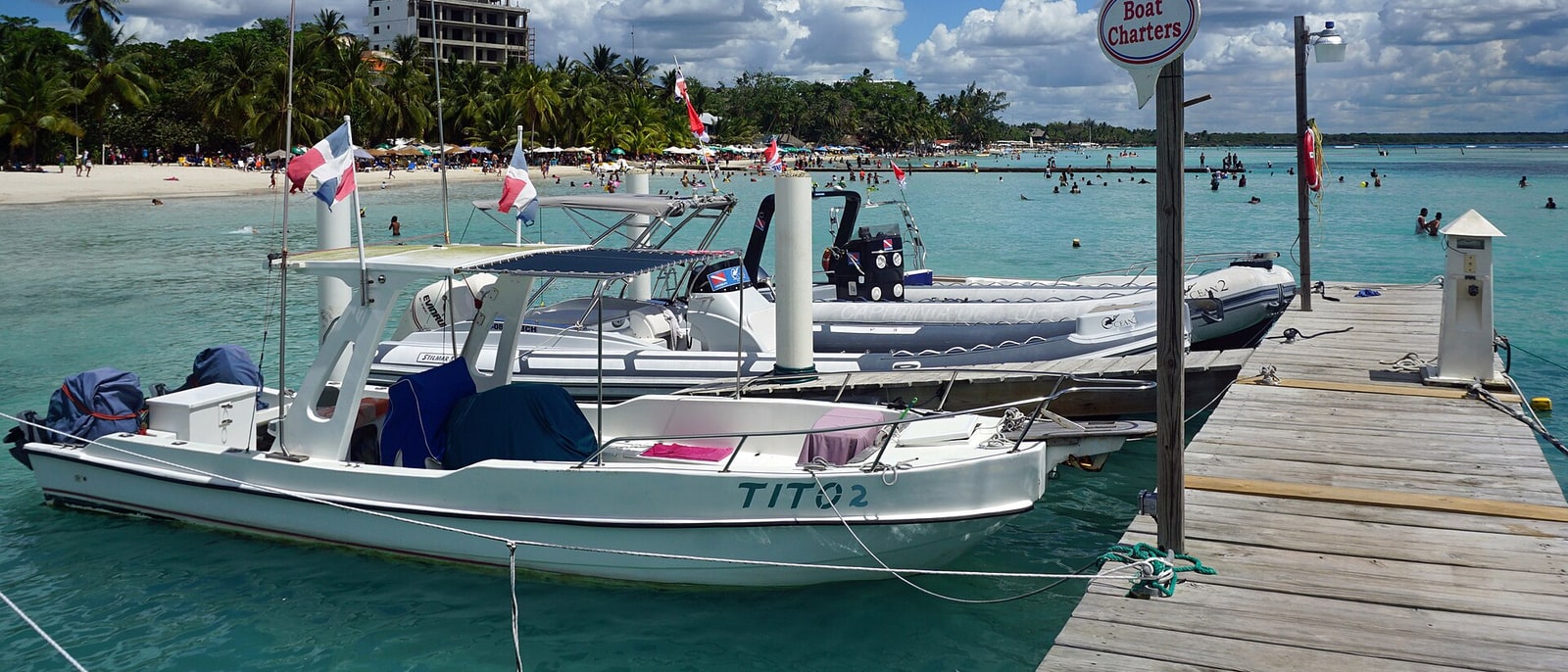
The capital has no beach, so this is its beach: half an hour east, on the way to the airport, a shallow lagoon protected by a reef where the water is waist-deep for a hundred metres. It’s the closest thing to a natural swimming pool the size of a neighbourhood.
The day to come is Sunday, and not for the sea: it’s when the whole of Santo Domingo comes down with the cool box, the speaker and three generations of family, and the beach becomes a loud, popular, very Dominican party. On a weekday it’s half empty and it’s just another beach.
If you want the silent Caribbean postcard, this isn’t it. If you want to watch the country enjoy itself, this is exactly it.
- 03
Jarabacoa and the mountains
Two hours north, the road climbs into the Cordillera Central and the Caribbean disappears: pine forest, cold rivers, morning fog and fifteen degrees at night. Jarabacoa sits at five hundred metres and it’s where people from the capital keep a house to escape the heat. There’s rafting, there are waterfalls and there’s lamb.
The fact nobody associates with this island: Pico Duarte is here, three thousand and ninety-eight metres, the highest mountain in the entire Caribbean. And it isn’t a day trip: it’s two or three days of walking with a mule and a guide.
But knowing it exists changes the idea you had of this country. This island has high mountains, and at that altitude it has frozen.
- 04
Bayahibe and Saona
Bayahibe went from fishing village to pier, and every boat to Saona Island, inside the Cotubanamá national park, leaves from here. It’s the same trip sold in Punta Cana at trip prices, with the difference that from the capital you’re two hours away rather than an hour-plus plus the rest of the circuit.
Saona is twenty-five kilometres of roadless island, with two fishing villages and a beach that justifies the journey. Being a national park, nothing can be built.
On the way is the natural pool, a sandbank in the middle of the sea with starfish on the bottom: look, and don’t lift them out for the photo, because they breathe through water and it kills them.
- 05
San Cristóbal
Three quarters of an hour west is the town where Rafael Trujillo was born, and where he had two things built that you can visit today and that explain the dictatorship better than a book. The Castillo del Cerro, a six-storey palace that cost the state a fortune in 1947, which Trujillo visited, disliked and never set foot in again. He never slept there. Today it’s an almost empty museum and a fairly sinister place.
And the church of San Cristóbal, which he had raised to be his tomb and where he was in fact buried, until his family took the remains to France. The tomb is there and it’s empty.
It’s a trip that appears on no list and that, if you want to understand this country, is worth more than three beaches.
Frequently asked
When can you see whales in the Dominican Republic?
Mid-January to late March in Samaná Bay, about two hours from Santo Domingo, when three to five thousand North Atlantic humpbacks come to mate and calve. Outside that window there are no whales. Trips are regulated on boat numbers and distance.
Where is the nearest beach to Santo Domingo?
Boca Chica, half an hour east on the way to the airport: a shallow reef-protected lagoon where the water is waist-deep for a hundred metres. The day to go is Sunday, when the whole capital comes down with the cool box and the speaker.
Are there mountains in the Dominican Republic?
Yes, and high ones: Pico Duarte, in the Cordillera Central, is 3,098 m and the highest mountain in the entire Caribbean. Two hours from the capital is Jarabacoa, at five hundred metres, with pine forest, cold rivers and fifteen degrees at night. At Duarte’s altitude it has frozen.