Paris: practical tips
5 stopsUpdated July 2026
You say bonjour when you walk in. In a shop, in a bakery, in a pharmacy, getting into a taxi, approaching someone in the street: bonjour first, and then the question. It sounds like a phrasebook triviality and it’s exactly the opposite: it’s the most important social rule in this country and it explains half the French reputation for rudeness. They aren’t rude. You walked into their shop and started talking without greeting them, and here that’s bad manners.
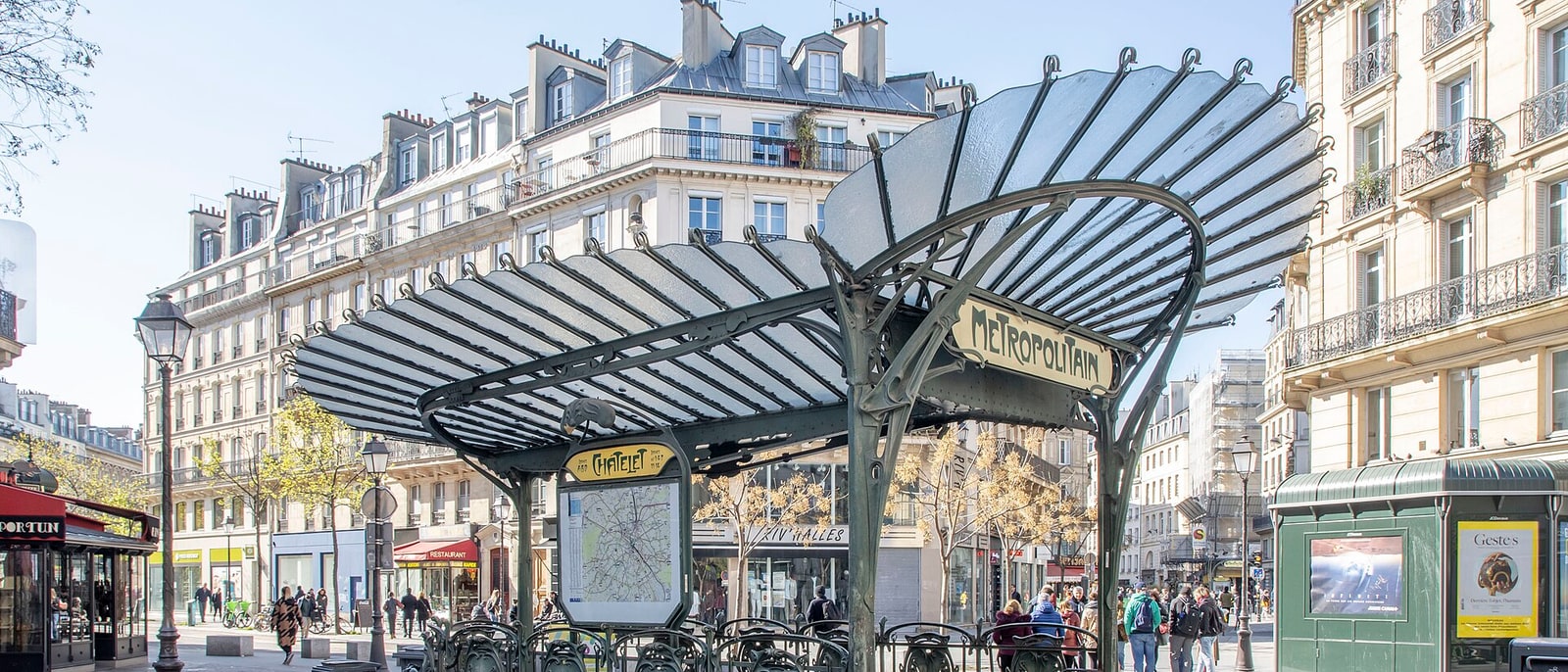
The rest of Paris is easy: the city is small, the métro reaches everything and it walks better than it drives. What’s left to know is four things about calendars and rules: which day each museum closes, that in August the city empties, that a métro ticket doesn’t cover the airport RER, and that there are pickpockets where there are tourists, here as everywhere.
The route, stop by stop
5 STOPS- 01
Bonjour, and why it matters so much
The rule admits no exceptions and fits in one line: on entering any establishment, or approaching any person, the first thing out of your mouth is “bonjour”, or “bonsoir” after six in the evening. Only then the question. And on leaving, “merci, au revoir”. It isn’t optional and it isn’t folklore: in France a shop is a semi-private space, and walking in without greeting is like walking into someone’s house and saying nothing.
The consequence is enormous and very few people connect it: almost all of the Parisians’ reputation for being unfriendly to tourists comes from here. The tourist walks in and fires off “do you speak English?”, the shopkeeper registers that as rudeness and answers coldly, and the tourist concludes the French are rude.
Try saying bonjour first, even if you say the rest in English, and you’ll watch the city change character in a day. It’s the cheapest and highest-yielding advice on this page.
- 02
Closing days
This mistake ruins more weekends in Paris than any other, and it appears on no front page. The Louvre closes on Tuesdays. The Musée d’Orsay and Versailles close on Mondays. The Pompidou closes on Tuesdays. Many municipal museums close on Mondays. If you come Friday to Monday and don’t check, you can find half your list shut on the day you’d planned it.
And two things work in your favour if you know them. One: a fair number of national museums are free on the first Sunday of the month, though that means queues and crowds, so it cuts both ways. Two: some open one evening a week until late, and those night hours are by far the best time to see the Louvre, because the groups have gone.
Look at the museum’s calendar before fixing the order of your days, not after.
- 03
A métro ticket doesn’t cover the airport
The métro and the RER share platforms in the centre and look like the same thing, but they aren’t: the métro is urban and the RER is regional, and an ordinary métro ticket doesn’t cover the RER out to Charles de Gaulle. That journey has its own, more expensive fare, and it isn’t a trap: you’re leaving the urban zone.
This matters because there are inspectors and the fines aren’t symbolic, and because with an insufficient ticket the exit gate at the airport simply won’t let you through and you’re stuck there with your suitcase. Buy the right ticket at the machine.
The good news, again, is Orly: because line 14 reaches it and that’s a normal métro, the usual ticket does work there. It’s the exception, which is why it’s worth remembering.
- 04
August, and the pickpockets
In August Parisians leave and many neighbourhood bistros shut for two or three whole weeks, with a handwritten sign on the shutter. What stays open is, above all, what’s built for tourists. It’s the same phenomenon as Rome and it has the same consequence: the city looks the same, but you eat worse. If you can choose, come May to June or in September.
And the pickpockets: they exist, and they’re exactly where you’d imagine, which is wherever people are looking upward or at their phones. Métro line 1, around the tower, Montmartre and the Sacré-Cœur steps. It isn’t a dangerous city and you won’t have a problem. There’s opportunistic theft.
Wallet in the front pocket, backpack on your front in the métro, and don’t get your phone out halfway up an escalator. That’s it.
- 05
Mobile data
In Paris your phone does two specific jobs. One: tickets, which here are nearly all timed and live as a code on your phone. The Louvre, the Sainte-Chapelle, the tower, the catacombs, Versailles. Two: checking the RER, because with the Roissybus shut the RER B is the way to the airport and it’s worth seeing whether there are problems before leaving the hotel with a flight to catch.
Coverage is good across the city and there’s signal in the métro.
An eSIM activates before you leave home and works on landing, which at CDG covers the first thing you’ll do: check whether your RER is a non-stop or an all-stations one, which is twenty minutes of difference.
Frequently asked
Are the French rude?
No: you just didn’t say bonjour. In France you greet on entering any establishment and before asking anything, and not doing it registers as rudeness. Almost all of the Parisians’ reputation for being unfriendly to tourists comes from that. Say bonjour first, even if you carry on in English, and the city changes character.
Does a métro ticket work for the Paris airport?
For CDG, no: the RER B is regional and has its own, more expensive fare. With an insufficient ticket the exit gate won’t let you through. For Orly, yes, because since 2024 line 14 reaches it and that’s an ordinary métro with no airport supplement. It’s the exception.
When is the best time to go to Paris?
May to June or September. In August Parisians leave and many neighbourhood bistros shut for two or three weeks, so only what’s built for tourists is left: the city looks the same but you eat worse. And check the closing days: the Louvre shuts on Tuesdays, and Orsay and Versailles on Mondays.