Eating and drinking in Munich
5 stopsUpdated July 2026
There’s a Bavarian law saying that in a traditional beer garden you may bring food from home and pay only for the drink. It isn’t a custom that gets tolerated: it’s a written right, and it’s written because in 1995 the regional government tried to cut opening hours, twenty-five thousand people came out in Munich’s biggest demonstration in decades, and the government backed down. In Bavaria, you don’t play games with beer.
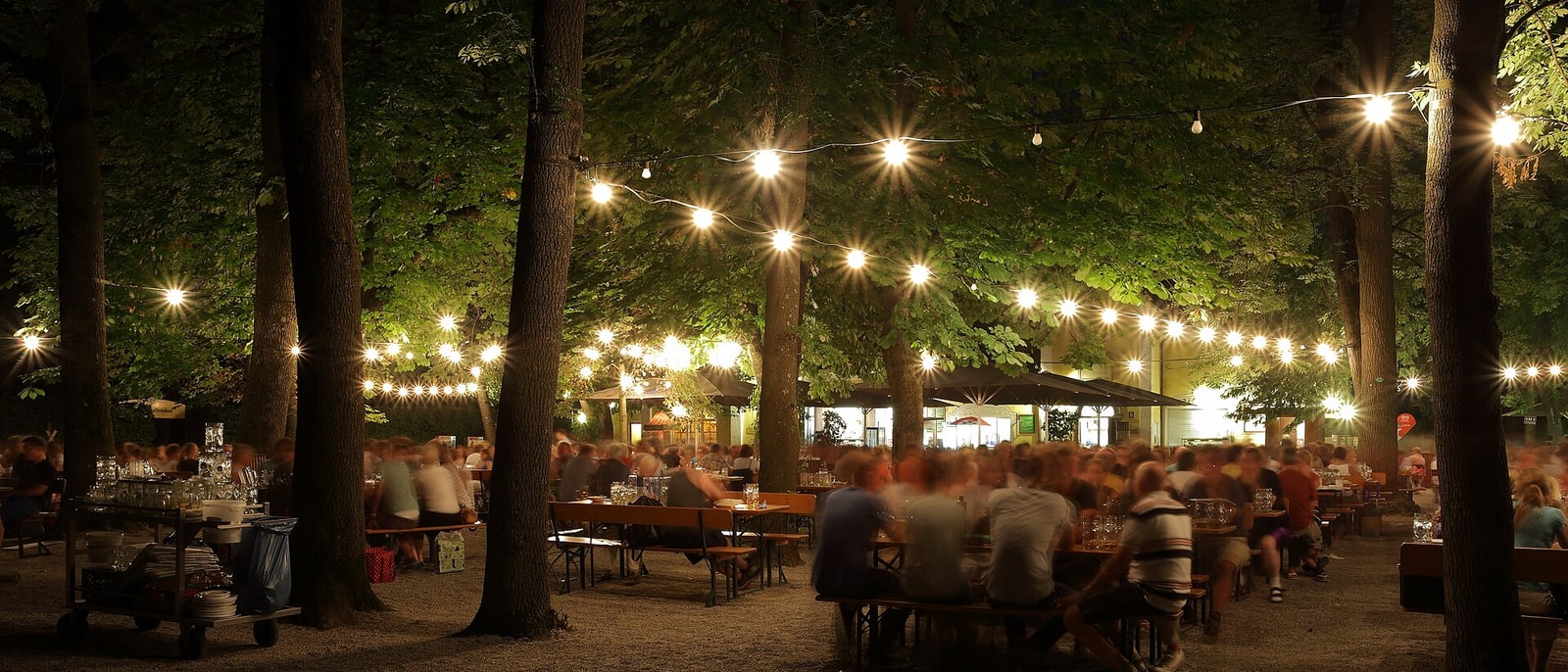
The rest of the cooking follows that logic: institution, timetable, rule. The white sausage has a deadline, beer is ordered by the litre, the table is shared and only six breweries may call themselves Munich ones. It sounds rigid and in practice it’s the opposite: the rules are what make a stranger shuffle up on the bench for you.
The route, stop by stop
5 STOPS- 01
Weisswurst and the noon bells
The rule goes: the Weisswurst must not hear the noon bells. It sounds like folklore and it’s pure refrigeration: it’s made with fresh veal, no preservatives, uncured, it was produced before dawn and, before there were cold rooms, it didn’t last until the afternoon. The custom outlived the reason, as always.
It arrives in a bowl with the hot water it was poached in (never boiled, they burst) and you eat it with sweet mustard, a Brezn and a wheat beer.
And you don’t eat the skin: either you open it with a knife and lift the filling out, or you do what they do here, called zuzeln, which is sucking the sausage straight out of it. That last one is advanced, but watching the person next to you do it is half the breakfast.
- 02
The Biergarten, and the right to bring your own food
In a traditional Bavarian Biergarten you can turn up with a cool box, get out your salad, your cheese and your bread, sit on a bench and order only the beer. It’s legal and it’s in a regional regulation.
Whole families arrive with the basket, the cloth and the radishes already cut in a spiral. Nobody looks at you oddly: you’d be the odd one for not doing it.
The practical distinction is visual and it never fails. Tables with no cloth, bare boards with a bench, are self-service: that’s where you get your food out.
Tables with a cloth and cutlery laid are waiter service, and there you order from the menu. Mixing them up is the only mistake available, and looking at the table before you sit fixes it.
- 03
The six breweries
The list closes at six: Augustiner, Hacker-Pschorr, Hofbräu, Löwenbräu, Paulaner and Spaten. They have to be brewed inside the city boundary to be called Munich beer, and that is exactly the condition for having a tent at Oktoberfest. Nothing else gets in, however famous.
The local one is Augustiner, the oldest (from 1328, monastic in origin) and the only one still held by a foundation rather than a multinational. Some of it still goes out on wooden drays.
And the Hofbräuhaus, the brewery the duke founded in 1589, is now mostly a tourist attraction: it isn’t bad, but if you’re looking for where Munich drinks, that isn’t it.
- 04
Obatzda, Brezn and the rest
Obatzda, an orange spread, goes on the Brezn and gets ordered in any Biergarten: very ripe camembert mashed with butter, onion and a lot of paprika.
It was invented in the twenties by a beer-garden landlady who didn’t want to throw out over-ripe cheese, added paprika to disguise the colour, and came up with the recipe now sold in tubs across Bavaria.
A Brezn is eaten the same day, full stop: the next day it’s a rock, and people know it here, so you buy them two at a time and not six.
And if you stay for dinner, the serious order is Schweinshaxe, roast pork knuckle with crackling and a bone that looks like it came off another animal, order it for two even if the menu doesn’t say so, because for one it’s an outrage.
- 05
The Viktualienmarkt
It has run since 1807 and it’s still a market supplying people who cook, even if the prices are central Munich. There are stalls in their fourth generation and a density of odd things (pickles, twenty kinds of radish, honey, spices) that barely exists in Germany any more.
The beer garden in the middle, under chestnuts, has the detail that sums the city up: the beer it serves rotates between the six breweries through the year so as not to do any of them a favour. And it’s self-service, so you buy your food at the surrounding stalls and carry it to the table.
Sundays it shuts, like everything in this country.
Frequently asked
Can you bring food into a beer garden in Munich?
Yes, and it’s a right written into Bavarian regulation, not a tolerated custom: bring your own food and pay only for the drink. It only applies at the bare-board tables, which are self-service. The ones with a cloth and cutlery are waiter service and there you order from the menu.
Why is Weisswurst eaten before noon?
Because it’s made with fresh veal, no preservatives and no curing, it was produced before dawn and, before refrigeration, didn’t last until the afternoon. Hence the saying that it must not hear the noon bells. The custom outlived the reason. And you don’t eat the skin.
What are the Munich beers?
Six: Augustiner, Hacker-Pschorr, Hofbräu, Löwenbräu, Paulaner and Spaten. They must be brewed inside the city boundary to be called Munich beers, and only those six have a tent at Oktoberfest. The local favourite is Augustiner, the oldest, from 1328.