Where to stay in Budapest
1 h route5 stopsBest: All yearUpdated July 2026
Budapest’s districts are numbered in Roman numerals from I to XXIII and appear in the postcode and in any address, so learning four is enough to orient yourself: I is the castle in Buda, V central Pest, VI the Andrássy avenue and VII the Jewish quarter with the ruin bars.
The decision that matters is noise. The VII holds the nightlife of the entire city, and the difference between sleeping there and one street over is real. The rest (safety, transport) gives no trouble: the centre is safe and public transport good and cheap.
The route, stop by stop
5 STOPS- 01
Belváros-Lipótváros (District V)
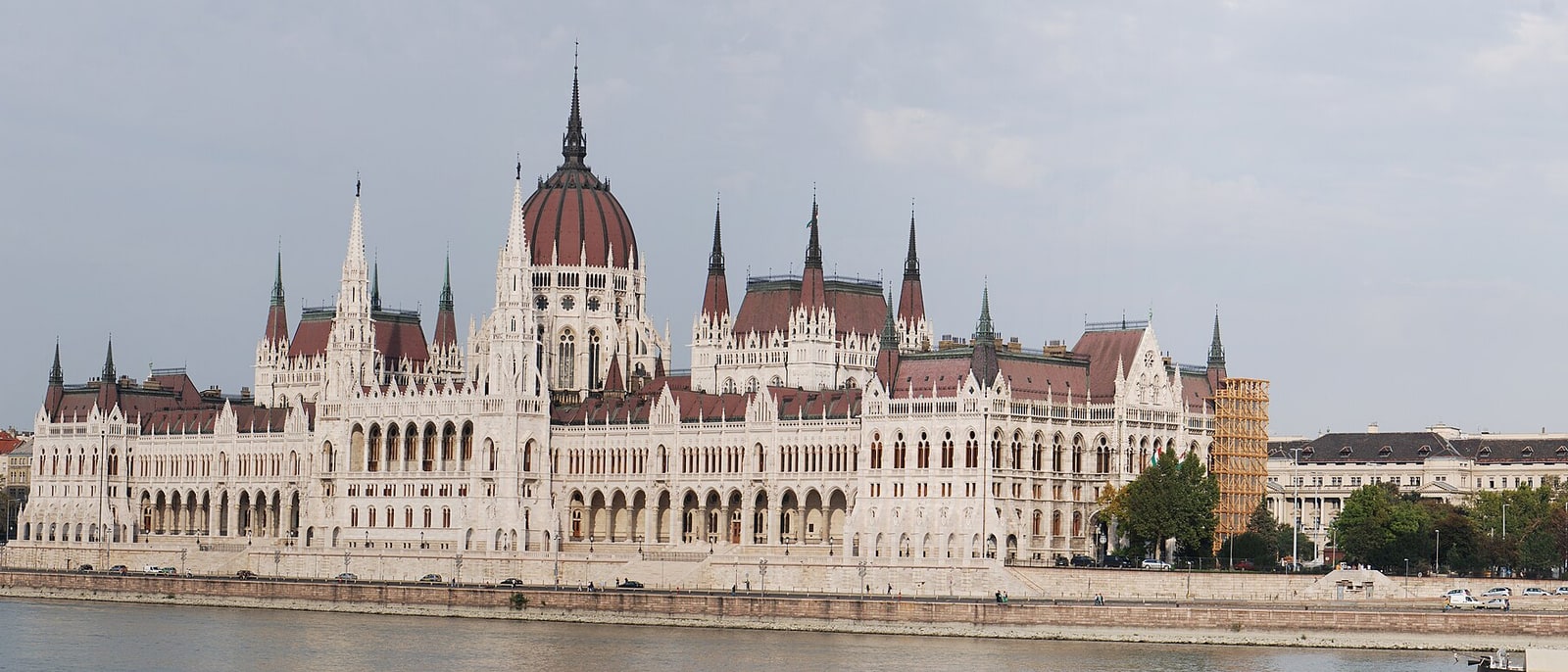
The administrative and tourist heart: the parliament, St Stephen’s basilica, the pedestrian Váci street and the Danube promenade with its views of the castle. Everything is walkable and there’s metro everywhere. In exchange it’s the priciest and at night it’s quiet, with barely any neighbourhood life, because there are a lot of offices. For two or three central, quiet nights, it works very well.
- 02
Erzsébetváros (District VII)
The old Jewish quarter has become Budapest’s liveliest: the Great Synagogue, restaurants, cafés and the city’s greatest concentration of ruin bars. It adjoins the centre and everything is walkable.
The price is noise. At weekends the bar zone runs until dawn, and the council has spent years handling residents’ complaints.
If you pick the VII, look carefully at which street the hotel is on: two blocks from Kazinczy the situation changes entirely.
- 03
Terézváros and Andrássy avenue (District VI)
Andrássy avenue, the great nineteenth-century boulevard, UNESCO-listed, runs dead straight from the centre to Heroes’ Square, with the opera house, mansions and embassies. The 1896 M1 metro runs beneath it, so connections are immediate. It’s elegant, quiet at night and a walk from both the VII and the V. For anyone wanting to be central without sleeping above the bars, it’s probably the best-balanced choice in the city.
- 04
The Castle district (District I)
Sleeping up on the Buda hill, among eighteenth-century houses and cobbled streets, has an obvious charm: once the coach parties leave, the quarter empties and falls silent, the views yours.
The trade-off is being cut off from most things: to eat, to go out or to reach the baths you have to come down and cross the river, and the restaurant choice up top is limited and expensive.
A good choice for a quiet stay. A bad one if you came for the city at night.
- 05
Józsefváros (District VIII) and Ferencváros (IX)
The two districts south of the centre have been changing for years: the IX, Ferencváros, has Ráday street full of terraces, the Great Market at one end and a quiet riverside walk.
The VIII is more uneven (the part next to the centre is heavily renovated, the outer part less so) and still carries a reputation that no longer fits its inner half.
They’re the sensible option on a tight budget: lower prices, the M3 and M4 metro, and fifteen minutes on foot to the centre. As in any city, look at the specific street before booking.
Frequently asked
What’s the best area to stay in Budapest?
District V for the monumental, quiet centre, the VI (Andrássy avenue) for the balance between central and silent, and the VII only if you want the nightlife at your door. The castle district is beautiful but cut off for eating and going out.
What do Budapest’s district numbers mean?
They run from I to XXIII in Roman numerals and appear in addresses and in the postcode. The ones that matter to a visitor are the I (castle, in Buda), the V (central Pest), the VI (Andrássy avenue) and the VII (Jewish quarter and ruin bars).