A weekend in Budapest
20 h route4 stopsBest: April to June and September to OctoberUpdated July 2026
Buda and Pest split a weekend almost without argument: one day for the hill, the castle and the river, another for what gives Budapest its reputation as a good time, which is all in Pest. The Jewish quarter, the market, the city park and the baths.
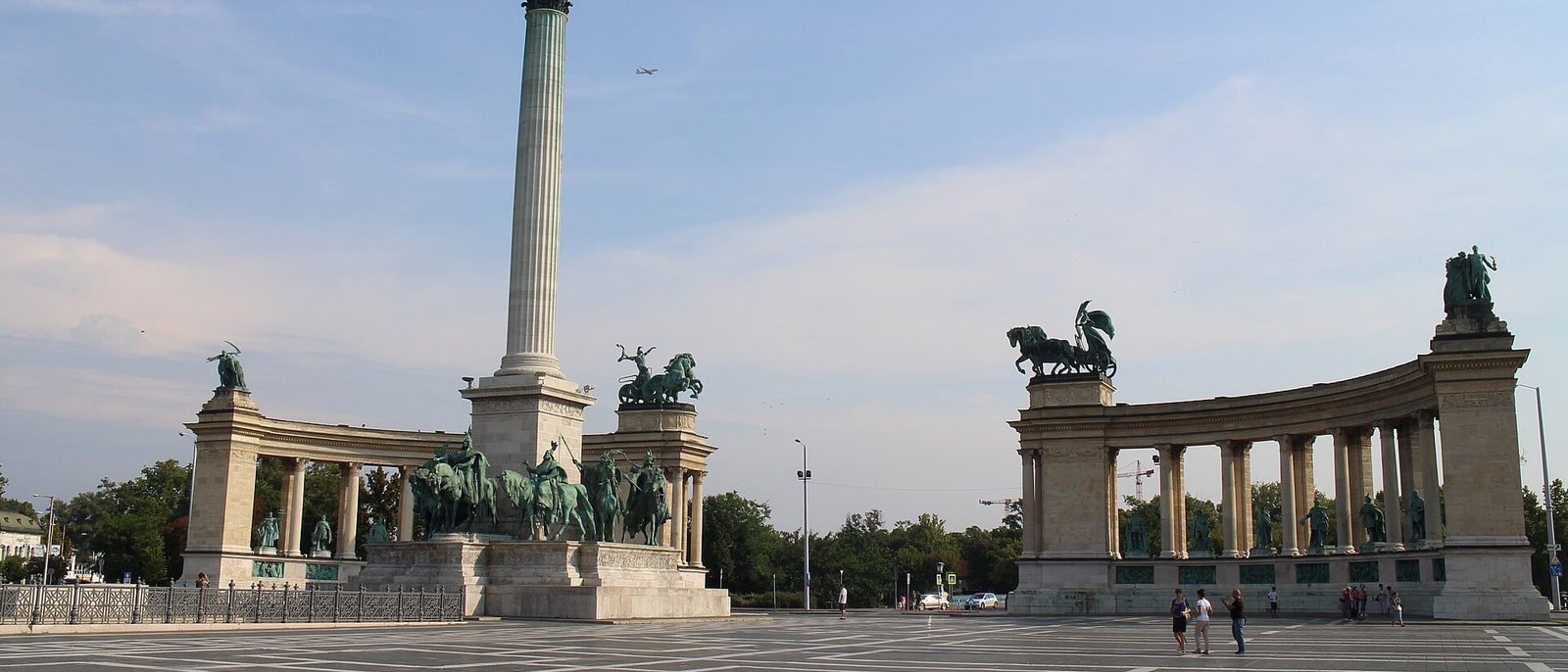
Two days also fit what falls out of one: Heroes’ Square, the park with the fake castle, and a long night in the ruin bars of District VII.
The route, stop by stop
4 STOPS- 01
Saturday: Buda, the river and the parliament
The castle hill in the morning, the Chain Bridge at midday, and the Pest bank with the parliament and the iron shoes in the afternoon. With two days you can take the guided tour inside the parliament, which must be booked, and climb the dome of St Stephen’s basilica.
- 02
Saturday night: the ruin bars
In District VII, the old Jewish quarter, the war and then communism left whole blocks of empty, crumbling buildings nobody restored because ownership was a tangle. In the early 2000s someone began opening bars inside them without fixing much of anything: mismatched second-hand furniture, courtyards full of junk, art on the walls. The first, Szimpla Kert, opened in 2002 and is still the best known.
Out of that came a label (romkocsma, “ruin pub”) and an industry: there are dozens now, some very touristy.
The area is also where the Great Synagogue stands, the largest in Europe, so it’s worth being aware of which quarter you’re drinking in.
- 03
Sunday: Heroes’ Square and the park
Line M1, the yellow one, opened in 1896 and is the first electric underground on the European continent: only London’s is older, and that one ran on steam. It’s UNESCO-listed, runs shallow beneath the street, has wood-and-tile stations and small carriages: it looks like a toy and works as ordinary transport.
It takes you to Heroes’ Square, with the millennium column and the statues of the Magyar chieftains, and to the city park, where the Széchenyi baths and Vajdahunyad Castle stand: a building from 1896 that deliberately copies pieces of twenty-one different historic Hungarian buildings. It began in card and timber for an exhibition, was liked so much they rebuilt it in stone.
- 04
Sunday: the Great Market Hall
The Nagyvásárcsarnok has stood in iron and brick since 1897 at the end of Váci street, with its coloured Zsolnay tiled roof. Downstairs sells real food (strings of paprika, sausage, pickles, cheese) and upstairs are souvenir stalls and counters serving lángos. A calendar warning: the market doesn’t open on Sundays, so if Sunday is your free day, this is a Saturday plan. That detail catches out plenty of people who leave it until last.
Frequently asked
What are Budapest’s ruin bars?
Bars opened inside derelict buildings in District VII, the old Jewish quarter, with second-hand furniture and courtyards full of junk. The first, Szimpla Kert, opened in 2002. There are dozens now, some very touristy. The Hungarian name is romkocsma.
Which is continental Europe’s oldest underground?
Budapest’s M1, the yellow line, opened in 1896. Only London’s is older, and that ran on steam: the M1 was the continent’s first electric one. It’s UNESCO-listed and still in ordinary service.