Eating and drinking in Budapest
3 h route4 stopsBest: All yearUpdated July 2026
Goulash is Europe’s most widespread culinary misunderstanding. In Hungary, gulyás is a brothy meat soup with potato and paprika, eaten with a spoon. The thick stew in sauce served abroad under that name does exist here, but it’s called pörkölt. Ordering one and expecting the other is the first lesson of the Hungarian table.
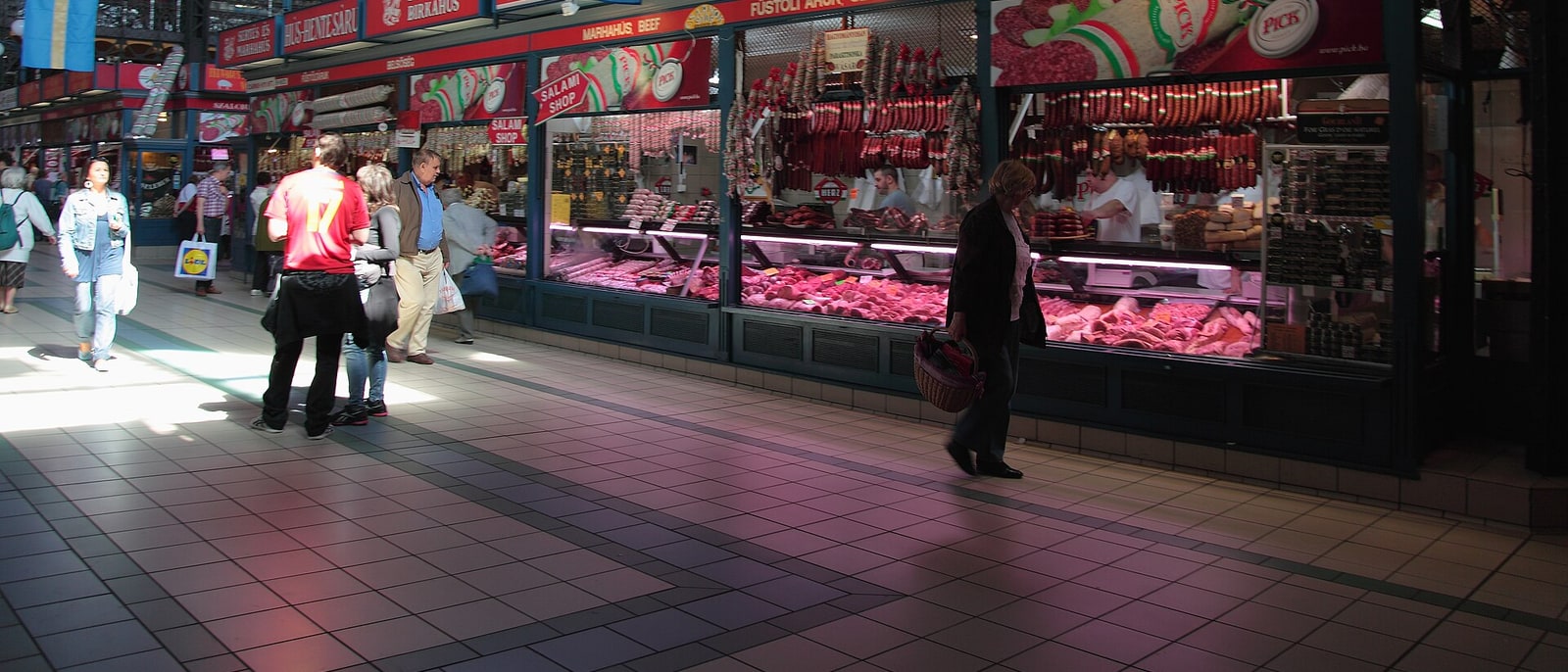
The second is paprika, which arrived from the Americas by way of the Ottomans and ended up the base of nearly everything. It isn’t hot by default: there’s sweet, smoked and hot, and home cooking uses it by the spoonful, not the pinch.
The route, stop by stop
4 STOPS- 01
Gulyás, pörkölt and paprikás
Gulyás began as herdsmen’s food, gulyás literally means “cowherd”, cooked in a cauldron in the open: beef, onion, paprika, potato and plenty of broth. It’s a soup, and in a Hungarian house it’s served as a first course.
Pörkölt is the stew: the same base without the broth, reduced, the meat in a thick sauce. And paprikás is pörkölt with sour cream stirred in at the end, almost always with chicken, paprikás csirke, served with nokedli, an egg pasta close to German spätzle.
If you order “goulash” expecting something thick, what you want is one of these two.
- 02
Lángos and the market
Lángos, a plate-sized disc of potato-and-flour dough deep-fried in oil, comes served spread with sour cream and buried in grated cheese, sometimes with garlic.
It’s heavy, cheap and thoroughly popular: eaten standing, with your hands.
The obvious place to try it is the upper floor of the Great Market, among the souvenir stalls, though neighbourhood stands usually do it better. One warning: the market closes on Sundays.
- 03
Tokaji and Hungarian wine
Hungary has twenty-two wine regions and the most famous is Tokaj, in the north-east, where autumn mist brings noble rot to the grapes and allows Tokaji Aszú, a concentrated sweet wine sold in half-litre bottles.
Louis XIV called it “the wine of kings and the king of wines”, and the appellation has used the line ever since.
But it isn’t all sweet: Tokaj also makes excellent dry wines, and the south and north produce reds like Egri Bikavér, “bull’s blood” from Eger, and kékfrankos. In the wine bars in the centre you try them by the glass without ceremony.
- 04
Pálinka and Unicum
Pálinka gets distilled only from fruit grown in Hungary (apricot, plum, pear, cherry) and the name is protected across the European Union: with added sugar or alcohol from elsewhere, it can’t be called that. It’s drunk at cellar temperature, not frozen, and in a tulip glass so you can smell the fruit.
Unicum is the other national bottle: a bitter herbal liqueur in a spherical bottle with a cross, made by the Zwack family since 1790. The recipe is secret and the taste divides people with no middle ground.
It’s drunk as a digestif, and seeing it ordered is a good sign you’re somewhere local.
Frequently asked
Is Hungarian goulash a soup or a stew?
A soup. Hungarian gulyás has broth, potato and paprika and is eaten with a spoon. The thick meat stew called goulash abroad is called pörkölt here, and with sour cream added, paprikás. They are three different dishes.
What should you try in Budapest?
A gulyás soup and a pörkölt to understand the difference, a lángos standing at a stall, and to drink a Tokaj wine, sweet or dry, or an apricot pálinka. Unicum, the herbal bitter, is the test of nerve.