Budapest: practical tips
1 h route5 stopsBest: All yearUpdated July 2026
The thermal baths are what brings many people to Budapest and also where most is improvised: you arrive without flip-flops, without a towel and without knowing that some indoor pools require a cap. Nothing serious, but easier knowing in advance.
And the other classic surprise is the money: Hungary has been in the European Union since 2004 and doesn’t use the euro. You pay in forints, and though plenty of places take cards without trouble, street exchange is where money gets lost.
The route, stop by stop
5 STOPS- 01
The forint, which is not the euro
Here you pay in Hungarian forints (HUF) and not in euros, despite Hungary joining the European Union in 2004. The figures are alarming at first because prices carry a lot of zeros, but you adjust within a day.
Cards are accepted almost everywhere, taxis and transport included. If you need cash, avoid the exchange booths in tourist areas and the independent-brand ATMs offering “guaranteed conversion”.
The usual trap is being offered a charge in euros, so-called dynamic currency conversion, at a terrible rate. Always paying in forints is the rule.
- 02
What to take to a thermal bath
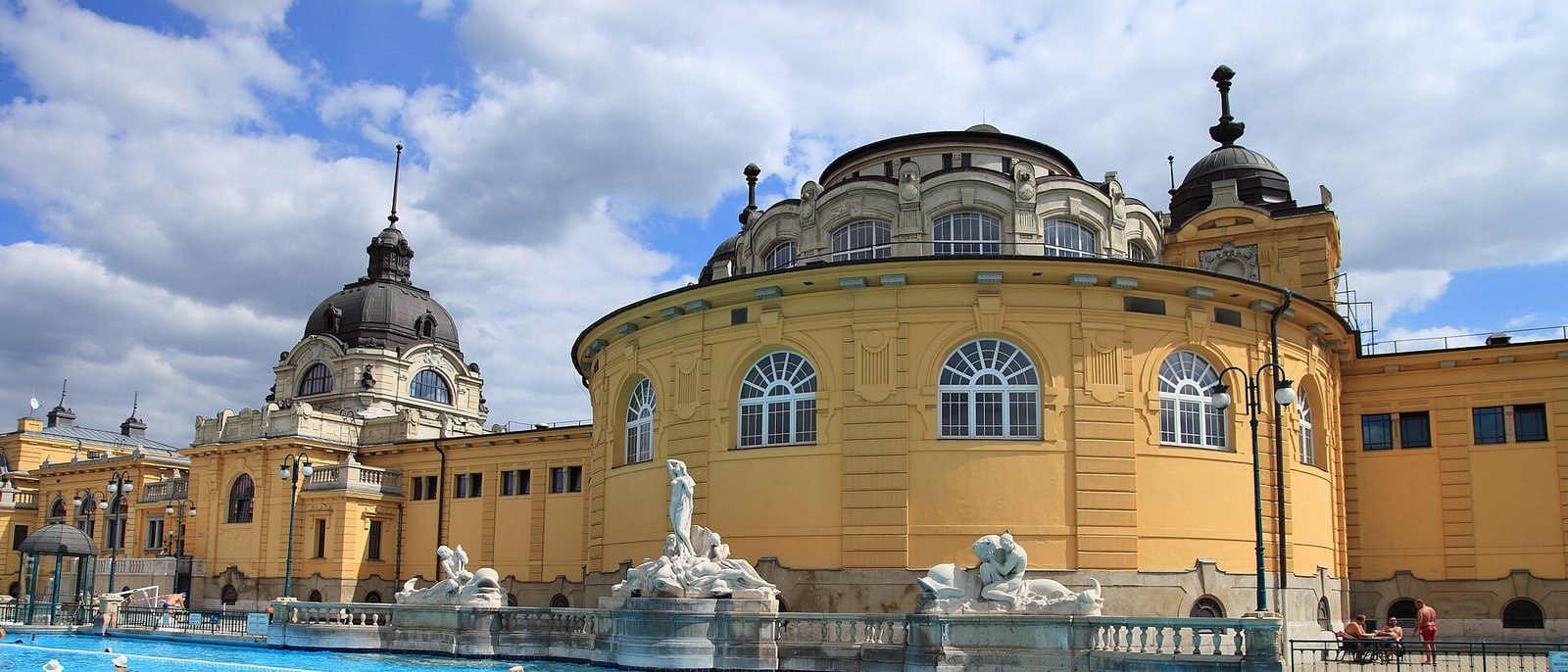
You need little: swimsuit, flip-flops, the floors are wet throughout, a towel and something for your hair. In several indoor pools, especially the lane-swimming ones, a cap is compulsory. In the sit-and-soak thermal pools, usually not. Towels and robes are hired there, but it costs more than bringing your own. The mechanics are the usual: you pay, you get a wristband that opens a locker or cabin, and inside you walk barefoot. In the genuinely thermal pools people sit still rather than swim: the water comes out hot and the custom is to alternate a few minutes of heat with a spell outside.
- 03
Transport and the ticket you stamp
Budapest has four metro lines, a dense tram network (the 2, which runs along the Danube bank, is one of Europe’s finest urban rides) and buses, all on the same BKK ticket and pass system, with the exception of the airport 100E.
A single ticket must be validated at the start of the journey and doesn’t allow changing between metro lines without another one, so for more than two or three journeys a day the 24-hour, 72-hour or weekly pass pays off.
Inspectors in high-vis stand at metro entrances and board the trams: travelling unvalidated is expensive.
- 04
Water, tipping and the language
You can drink the tap water and it tastes good across the city. Tipping in restaurants runs around ten per cent and is well established. Check the bill, because some places already add a service charge and then nothing more is needed. Hungarian isn’t an Indo-European language: it resembles neither German, nor Slavic, nor anything you’ll recognise. Its distant relatives are Finnish and Estonian. There’s no shortcut for guessing words. English works fine in the centre, and two courtesies are enough: köszönöm is “thank you” and egészségedre is the toast, which is worth practising before you need it.
- 05
Mobile data
Coverage works very well across the city, metro included. Landing connected has two specific uses here: buying the 100E ticket or the pass in the BKK app without fighting a machine the moment you land, and checking which bathhouse is open, which this year is a question with a moving answer. With an eSIM you leave the terminal already on data and with the ticket bought, which is exactly when you need it.
Frequently asked
Is the euro used in Budapest?
No. Hungary has been in the European Union since 2004 but keeps its own currency, the Hungarian forint. Cards are accepted almost everywhere. If you’re offered a charge in euros, decline and pay in forints, because the rate on that conversion is usually very poor.
What should you take to Budapest’s thermal baths?
Swimsuit, flip-flops and a towel. In some indoor pools, especially the lane-swimming ones, a cap is compulsory. You can hire a towel there, but it costs more. And check which is open first: the Gellért is under works until 2028 as things stand.
Do you need a visa for Hungary?
It depends on your passport and the rules change, so check the official source before travelling. Hungary is in the European Union and the Schengen area, so arriving from another Schengen country there is no border check.