OZU /INDONESIA /JAKARTA /GUIDE
Jakarta airport to the centre
1 h route3 stopsBest: If you land between 3pm and 8pm, take the train without thinkingUpdated July 2026
In almost every city, choosing between train and taxi is about price and comfort. In Jakarta it’s something else: it’s about how long you’re willing to sit still. This city’s traffic is among the worst in the world and that isn’t affectionate exaggeration: a 30-kilometre trip can take forty minutes at six in the morning or two and a half hours at six in the evening.
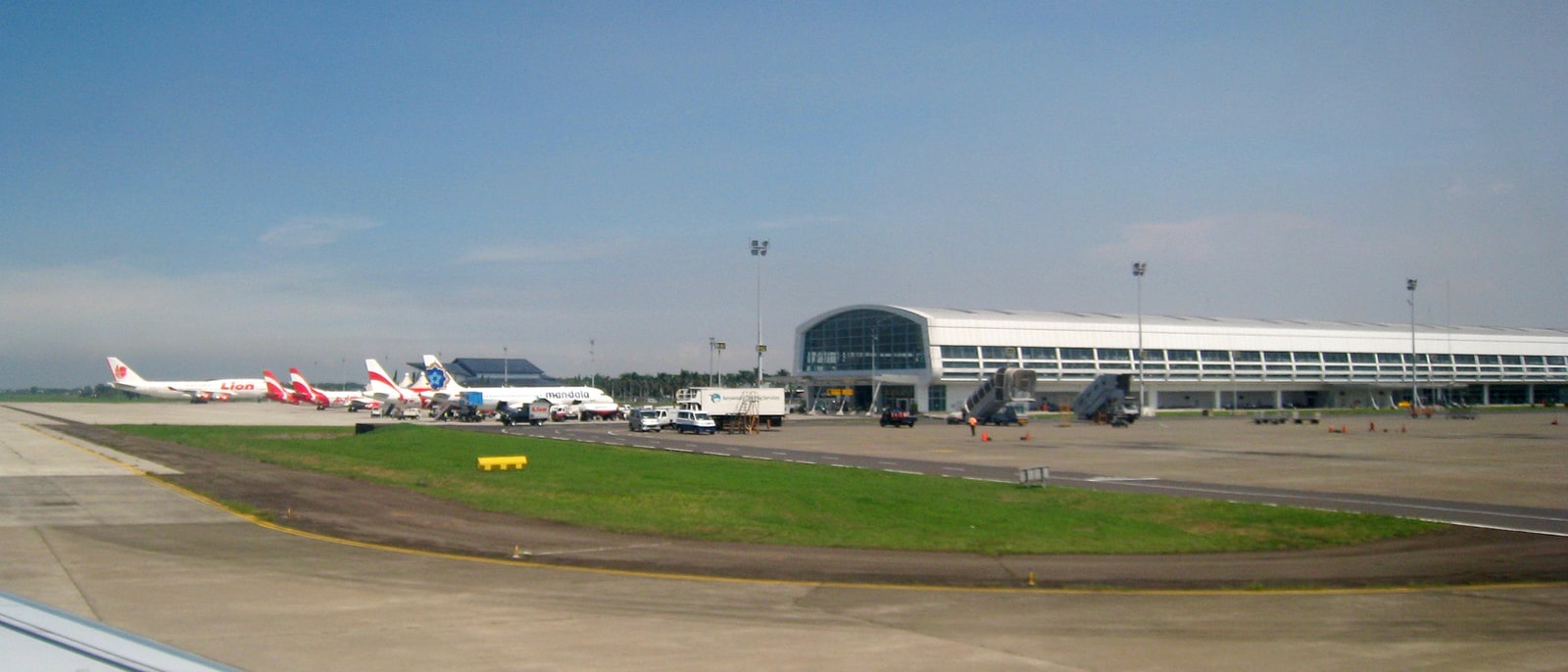
Soekarno-Hatta airport is west, outside the city, and everything travelling by road is exposed to that. The train isn’t. That’s the whole decision.
The route, stop by stop
3 STOPS- 01
The airport train
The airport train runs on its own track and is therefore immune to whatever is happening on the motorway. It calls at BNI City, right in the centre, and continues to Manggarai, the big interchange with the commuter network: from there you reach the rest of the city.
It isn’t the cheapest and it doesn’t get closest to your hotel, and it’s still the right answer most of the time, because the only thing that matters here is predictability. A taxi might take forty minutes or two and a half hours and you don’t know which when you get in. The train takes what it takes.
If you land at rush hour, there’s no debate.
- 02
The DAMRI coaches
The state coaches have covered the airport for decades and have one virtue the train doesn’t: they go to many different places, so there’s a fair chance one stops near your hotel with no changes. They’re cheap and they have real luggage space.
The drawback is obvious: they go by road, so they eat the whole jam. If you land in the small hours or at midday on a Sunday, it’s an excellent option. If you land on a Friday at six in the evening, it’s a sentence.
Check the clock before deciding, because here that’s literally the only thing that matters.
- 03
Taxi, app and the ojek
The apps (Grab and Gojek, the Indonesian one) work well and are the normal way to move around the city. From the airport they have marked pick-up points. And there are official metered taxis at the terminal.
And then there’s the ojek: the motorbike taxi, the solution this city invented for its own traffic. You get on the back with a helmet and the rider threads between the stationary cars. It’s enormously faster than anything on four wheels and it’s how half of Jakarta moves.
With suitcases from the airport it isn’t an option, obviously, but note it for getting around the city: when you’ve spent twenty minutes without moving a metre in a car, you’ll understand why it exists.
Frequently asked
How do you get from Jakarta airport to the centre?
By train, nearly always: it runs on its own track and is immune to the traffic, which here decides everything. It calls at BNI City, in the centre, and continues to Manggarai, the interchange with the commuter network. The DAMRI coaches are cheap and reach more places, but they go by road and eat the whole jam.
Is Jakarta’s traffic really that bad?
Yes: it’s among the worst in the world. The same 30 km trip can take forty minutes at six in the morning or two and a half hours at six in the evening. That’s why the train usually wins, and why the ojek exists, the motorbike taxi that threads between the stationary cars.
What is an ojek?
The Indonesian motorbike taxi: you get on the back with a helmet and the rider threads through stationary traffic. You book it by app (Gojek or Grab) and it’s by far the fastest way to move around Jakarta. No good with suitcases, but for the city it’s the answer.