OZU /INDONESIA /JAKARTA /GUIDE
Jakarta in a day
9 h route5 stopsBest: Sunday morning: the main avenue closes to trafficUpdated July 2026
Jakarta has the worst press in Southeast Asia and that’s a mistake. People use it as a stopover to Bali and stay a day at most, convinced there’s nothing but traffic and shopping malls. The traffic is real and it’s legendary. The rest isn’t.
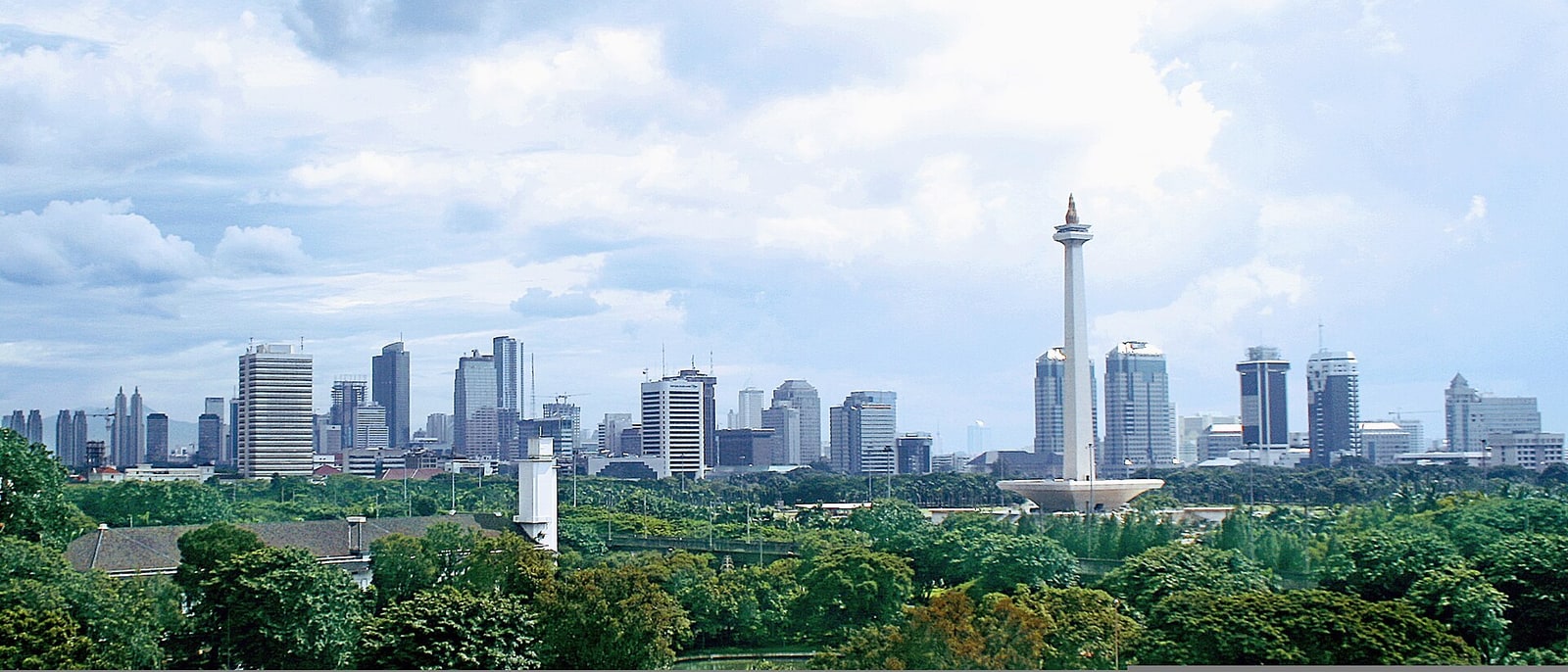
What’s here: a Dutch colonial quarter almost nobody sets foot in, the best street food in Indonesia, a port where wooden schooners are still loaded by hand, and the most forceful demonstration of religious tolerance you’ll see in any city in the world. A well-planned day, and here “well-planned” means dodging the traffic, covers all of it.
The route, stop by stop
5 STOPS- 01
The mosque and the cathedral, face to face
Start here: this city has nothing better, and almost nobody tells it. The Istiqlal mosque is the largest in Southeast Asia and holds a number of people that doesn’t seem real. And directly opposite, across the street, is Jakarta’s Catholic cathedral, neo-Gothic, with its spires.
This isn’t an urban coincidence: Sukarno, Indonesia’s first president, chose that plot deliberately, facing the cathedral, as a declaration that the country would be plural. The mosque’s name, Istiqlal, means “independence”. And it didn’t stop there: they share a car park, and at Christmas Mass the Muslims give theirs over to the Catholics, and on Muslim holidays it’s the reverse. In 2021 a pedestrian tunnel was opened between them, called the Tunnel of Silaturahmi: of brotherhood.
In the country with the most Muslims in the world, the main mosque and the cathedral share the parking. Start the day with that in your head.
- 02
El Monas
The National Monument, in the middle of an enormous square: a 132-metre marble column topped by a flame clad in real gold. Tens of kilos of it. Sukarno had it raised in the 1960s to celebrate independence and to have a symbol that could compete with the Eiffel Tower or the Washington Monument.
A lift takes you to the observation deck and you see the city’s extent, which is what lands. Below is a museum with dioramas of Indonesian history and the independence room, with the original text of the 1945 declaration.
It’s Jakarta’s image and it sits at the geographical and symbolic centre of everything.
- 03
Kota Tua, the Dutch Batavia
The old town and the part almost no visitor sees. This was Batavia, capital of the Dutch commercial empire in Asia for three centuries, seat of the East India Company, which was history’s first multinational and had its own army.
Around Fatahillah Square the buildings remain: the old city hall, now Jakarta’s history museum, with the dungeons below, the wayang puppet museum, and Café Batavia, in an 1805 building. The square fills with people hiring brightly coloured bicycles with matching hats, which is a very local and very funny sight.
The district is half-restored, and that mix of colonial splendour and tropical ruin is exactly what makes it interesting.
- 04
Sunda Kelapa
The old port and the most astonishing thing in Jakarta: a row of pinisi (two-masted wooden schooners, built by hand by the Bugis of Sulawesi using centuries-old techniques) moored in a line, being loaded and unloaded by men walking a narrow plank with sacks on their shoulders.
And it isn’t a museum or a re-enactment: it’s a working commercial port. Those ships are carrying cement, timber and goods to the archipelago’s islands right now, because on many routes they’re still more profitable than a freighter. It’s a 19th-century scene operating in a 21st-century megacity, twenty minutes’ walk from a luxury mall.
One fact: Indonesia has more than seventeen thousand islands, and this is how many of them are connected.
- 05
Glodok, the Chinatown
Right next to Kota Tua: narrow alleys, wet markets, temples with incense smoke and food everywhere. It’s one of the oldest Chinatowns in Southeast Asia and the best place around to eat.
It has a history worth knowing to understand the neighbourhood: Jakarta’s Chinese community has suffered very violent episodes, from the 1740 massacre under the Dutch to the 1998 riots, when Glodok was looted and burned during Suharto’s fall.
That it’s a living, bustling district today, with its temples open and its market heaving, says plenty. It isn’t a tourist set: there are almost no tourists.
Frequently asked
Is Jakarta worth stopping in?
Yes, and it’s Southeast Asia’s most underrated city. It has the Dutch colonial quarter of Kota Tua, the port of Sunda Kelapa where wooden schooners are still loaded by hand, the country’s best street food, and Southeast Asia’s largest mosque facing the cathedral, sharing a car park.
Why is the Istiqlal mosque opposite the cathedral?
Because Sukarno, Indonesia’s first president, chose that plot deliberately as a declaration that the country would be plural. They share a car park and lend it to each other on their respective holidays, and since 2021 a pedestrian tunnel joins them, called the Silaturahmi, brotherhood, tunnel.
What is Kota Tua?
Jakarta’s old town, which was Batavia: capital of the Dutch commercial empire in Asia for three centuries and seat of the East India Company, history’s first multinational. The period city hall survives, now a museum, along with several colonial buildings around Fatahillah Square.