OZU /NETHERLANDS /AMSTERDAM /GUIDE
What to see in Amsterdam
8 h route4 stopsBest: Early. And book everything online before you comeUpdated July 2026
Amsterdam stands on a buried forest. There’s no rock here: there’s soft peat and sand, and to build anything they had to drive tree trunks down vertically to a firm layer some eleven metres deep. Millions of trunks, house by house, since the seventeenth century. The palace on Dam square rests on thirteen thousand six hundred-odd.
That system works on one condition: that the trunks stay permanently under water. Submerged, the wood lasts centuries. The moment they meet air, fungi get in and they rot. And that is exactly what’s happening in parts of this city as the water table drops: there are thousands of buildings with foundation problems, quays that have collapsed and bridges closed, and fixing it costs a fortune per house. What you’re about to see is a beautiful seventeenth-century city with a very real structural crisis underneath. Nobody tells it and it explains a lot of what you’ll see fenced off.
The route, stop by stop
4 STOPS- 01
The Rijksmuseum
The national museum, with the world’s best collection of seventeenth-century Dutch painting: Rembrandt, Vermeer, Hals, Steen. It’s one of those museums where an hour is no use at all. The Night Watch is the piece and you already know the two things to know about it: it isn’t night, and it isn’t whole.
Look too for Vermeer’s milkmaids and the domestic interiors, which is where the argument of Dutch art lies: while the rest of Europe painted kings, saints and battles, here they painted kitchens, letters, maps and ordinary people at home. It wasn’t an aesthetic choice: it was the market. There was no court or Church buying paintings here. There were merchants with money who wanted something nice in the sitting room, so painters made what sold. Europe’s first middle-class art.
And under the building runs a public bike tunnel, which the architect of the refurbishment wanted closed and which cyclists defended for years until they won.
- 02
The church in the attic
In an ordinary canal house, in the middle of town, you climb three floors up a narrow staircase and find a complete Catholic church wedged into the attic: with its altar, its organ, its pews and two floors of galleries. It held about a hundred and fifty people. It’s called Our Lord in the Attic and it’s mid-seventeenth century.
The story explains this whole country. After the Reformation, Catholic worship was banned in public in Amsterdam. But the authorities decided not to pursue it as long as it wasn’t visible: you could pray whatever you liked provided nothing indicated it from the street. So Catholics built entire churches inside private houses, and everyone knew, the authorities included, who looked the other way.
That has a name here: gedogen, tolerating the forbidden. It’s a way of governing this country has used for four hundred years, and it’s exactly the same logic that sustains the coffeeshops today. This house is the best museum in Amsterdam and almost nobody goes in.
- 03
The Begijnhof and the wooden house
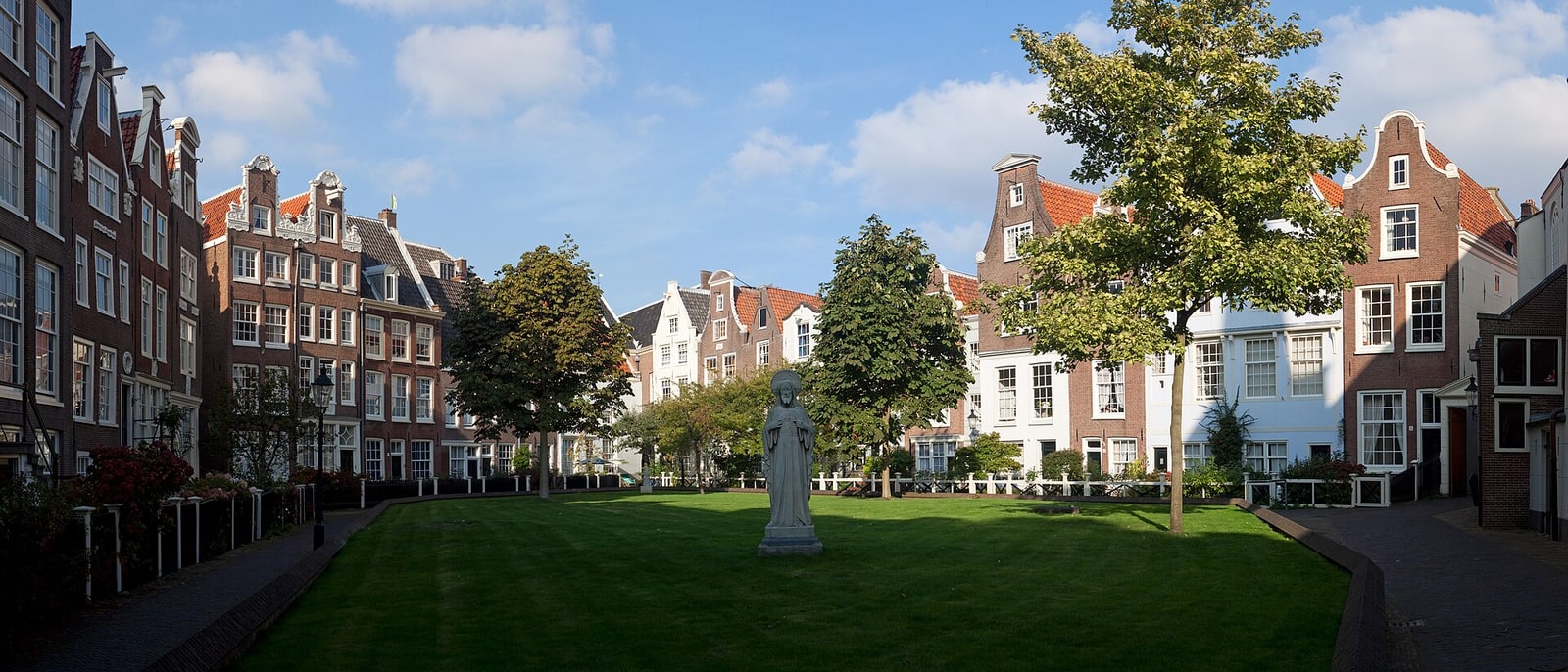
Hidden behind a discreet door in the middle of the shopping district is a silent courtyard ringed by low houses with gardens, where women have lived since the fourteenth century. It was a beguinage: a community of religious women who weren’t nuns, took no perpetual vows and could leave whenever they wished, which was unheard of in medieval Europe. The courtyard is preserved and still inhabited, so you enter quietly and without noise.
Inside is Het Houten Huis, one of only two wooden houses left standing in Amsterdam, from around 1420. And the reason only two remain is specific: this city burned several times, and in the fifteenth century wooden façades were banned by ordinance and brick and stone were made compulsory. This house survived because it sat inside the courtyard.
In the same Begijnhof there’s also another clandestine church, from the period when Catholic worship was banned: two houses joined inside with a temple hidden in them. It’s the calmest stop in the centre and it’s fifty metres from the city’s busiest shopping street.
- 04
The piles, and what’s falling down
As you walk the canals you’ll see stretches of quay fenced off, under works, propped up or simply collapsed, with cranes working in the water. It isn’t routine maintenance: it’s a structural crisis much discussed here and not at all abroad.
The cause is underneath. The canal walls and much of the housing rest on seventeenth- and eighteenth-century wooden piles, which last centuries intact as long as they stay submerged.
The problem appears when the water level drops and the top of the trunk is exposed to air: then fungi get in, the wood rots and the building sinks a few centimetres or tilts. That’s why there are houses visibly leaning to one side: that isn’t the hook, that’s a pile that has given way.
The city has a repair programme for kilometres of quay and bridges that will run for decades and costs billions. When you see a leaning house, you now know how to tell: forward is design. Sideways is the ground.
Frequently asked
What is Amsterdam built on?
On millions of tree trunks driven in vertically. There’s no rock here: there’s soft peat and sand, so building meant driving wooden piles to a firm layer some eleven metres down. The palace on Dam square rests on thirteen thousand six hundred-odd. The trunks last centuries under water, but if the water table drops and they meet air, they rot: there are thousands of buildings with foundation problems and collapsed quays.
What is Amsterdam’s attic church?
A complete Catholic church (altar, organ, pews and two floors of galleries, for around 150 people) hidden in the attic of a canal house, mid-seventeenth century. After the Reformation Catholic worship was banned in public, but the authorities didn’t pursue it as long as it wasn’t visible from the street. That has a name here, gedogen: tolerating the forbidden. It’s the same logic that sustains the coffeeshops today.