OZU /UNITED KINGDOM /LONDON /GUIDE
London’s free museums
8 h route4 stopsBest: Weekdays, first thing: in August the queues are realUpdated July 2026
This is London’s best argument and its worst-explained one. The great British national museums are free: the British Museum, the National Gallery, Tate Modern, the Victoria & Albert, the Natural History Museum, the Science Museum. Not one evening a month, not a discount: you never pay.
And it has a date and a reason. In 2001 the British government abolished admission charges at the national museums and compensated the institutions with public money, on the argument that the collections already belonged to the people. Visits soared. In a city where a pint costs what it costs, this is what makes London affordable.
The route, stop by stop
4 STOPS- 01
The British Museum
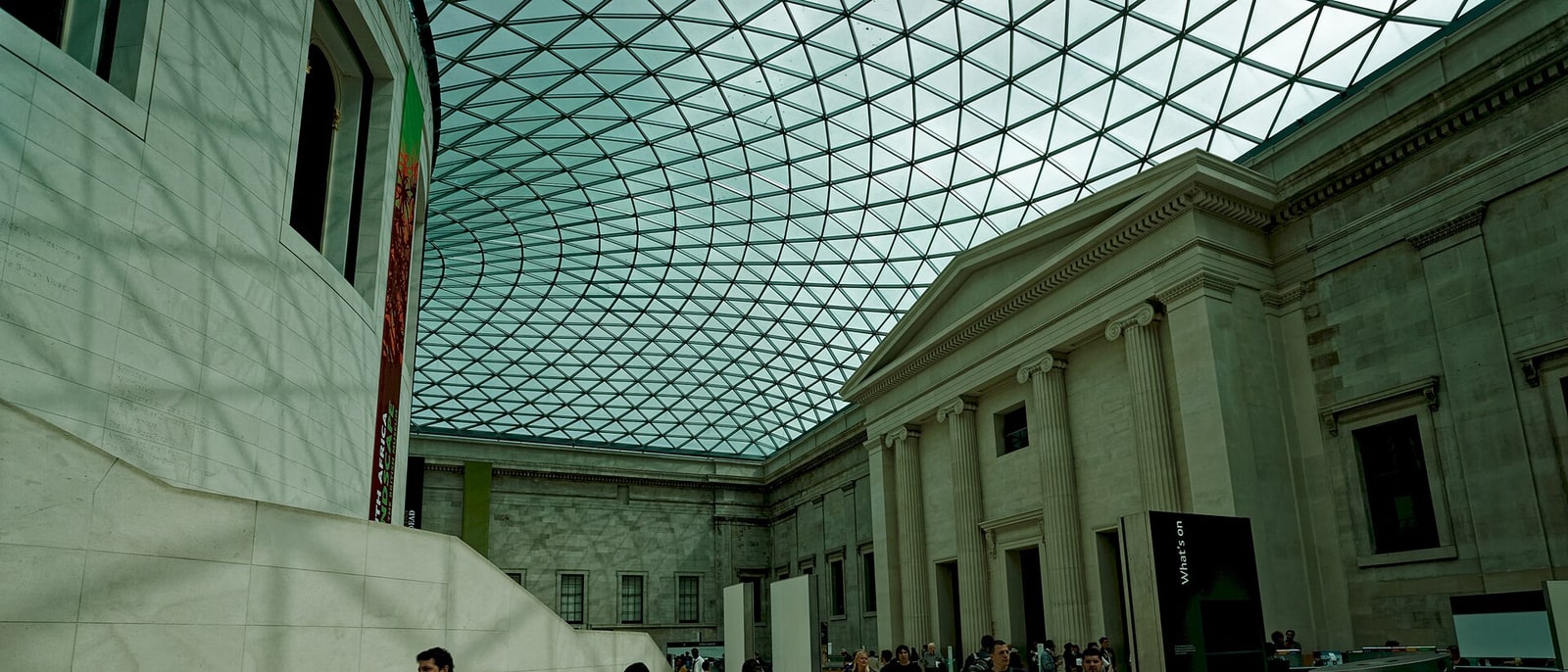
The oldest public museum in the world, and free since its founding in 1753, when it was decided that “all studious and curious persons” should enter. Inside is the Rosetta Stone, the basalt block carrying the same decree in three scripts that allowed Egyptian hieroglyphs to be deciphered. And the Great Court, which Norman Foster roofed in 2000 with a glass lattice in which no two triangles are alike.
And this has to be said, because it’s part of the visit: much of what’s here left other countries in circumstances that wouldn’t be accepted today. The Parthenon Marbles, which Elgin removed from Athens in the early 1800s, are the loudest case: Greece has been asking for them back for decades and the museum refuses.
Seeing them knowing that is different from seeing them without.
- 02
The National Gallery
One of the world’s great painting collections, in the building presiding over Trafalgar Square, and you walk in without paying or booking. Van Gogh’s Sunflowers, Turner’s Fighting Temeraire, not Las Meninas, that’s in Madrid, but yes Velázquez’s Rokeby Venus, and Vermeer, and Caravaggio.
The right way to use it isn’t to see it all: it’s to go in for forty minutes, look at five paintings and leave, and come back another day if you feel like it. Since it costs nothing, there’s nothing to get your money’s worth from. That shift in logic is the best thing about free admission.
- 03
The Natural History Museum
The building alone justifies the visit: an 1881 Victorian terracotta cathedral, with animals carved into the columns and stairs. And in the central hall hangs Hope, a 25-metre blue whale skeleton, suspended in a diving pose.
It has its local controversy: until 2017 Dippy stood there, the diplodocus replica that had greeted everyone for decades, and replacing him with the whale outraged half of England. The reason was good: Dippy was a plaster cast and the whale is a real animal, from a species that came to the brink of extinction and recovered. A message about what can be saved.
And next door on the same street, the Science Museum and the V&A, both free: it’s the best museum block in the world.
- 04
The Tate Modern
A coal-fired power station that shut down in 1981 and was going to be demolished. Herzog & de Meuron turned it into a museum in 2000 without disguising what it was: they kept the 99-metre chimney and, above all, they kept the turbine hall, a space 35 metres high and 150 long that is now the most impressive room in the city.
The collection is free: Rothko, Picasso, Warhol, Bourgeois. But what to do here is go up to the top-floor viewing level, also free, with the best view of the river and St Paul’s directly opposite.
Temporary exhibitions are paid. The permanent collection and the view aren’t.
Frequently asked
Are London’s museums free?
The national ones are, always, not one evening a month: the British Museum, the National Gallery, Tate Modern, the V&A, the Natural History Museum and the Science Museum. The British government abolished admission charges in 2001. Temporary exhibitions are paid.
Do you need to book for the British Museum?
For the permanent collection you need no ticket and no booking: you walk in, and it has been free since its founding in 1753. In high season there’s a security queue at the door, so go first thing. Temporary exhibitions are booked and paid.
What are the Parthenon Marbles in the British Museum?
The sculptures Lord Elgin removed from the Parthenon in Athens in the early 19th century and sold to the British state. Greece has spent decades demanding their return and the museum refuses. It’s the world’s best-known heritage dispute and it’s still open.