OZU /BRAZIL /RIO DE JANEIRO /GUIDE
A weekend in Rio
20 h route4 stopsBest: April to October. In summer the humid heat is brutalUpdated July 2026
The tropical forest around Rio, the one you see climbing to Christ and which reaches into the neighbourhoods, isn’t original rainforest: it’s planted by hand, tree by tree. In the nineteenth century, coffee plantations had eaten this city’s mountains and the consequence came quickly: no forest meant no sponge, no sponge meant no water, and Rio ran out of supply. The emperor ordered replanting. The work was done by a handful of enslaved people, who planted tens of thousands of trees by hand on bare slopes.
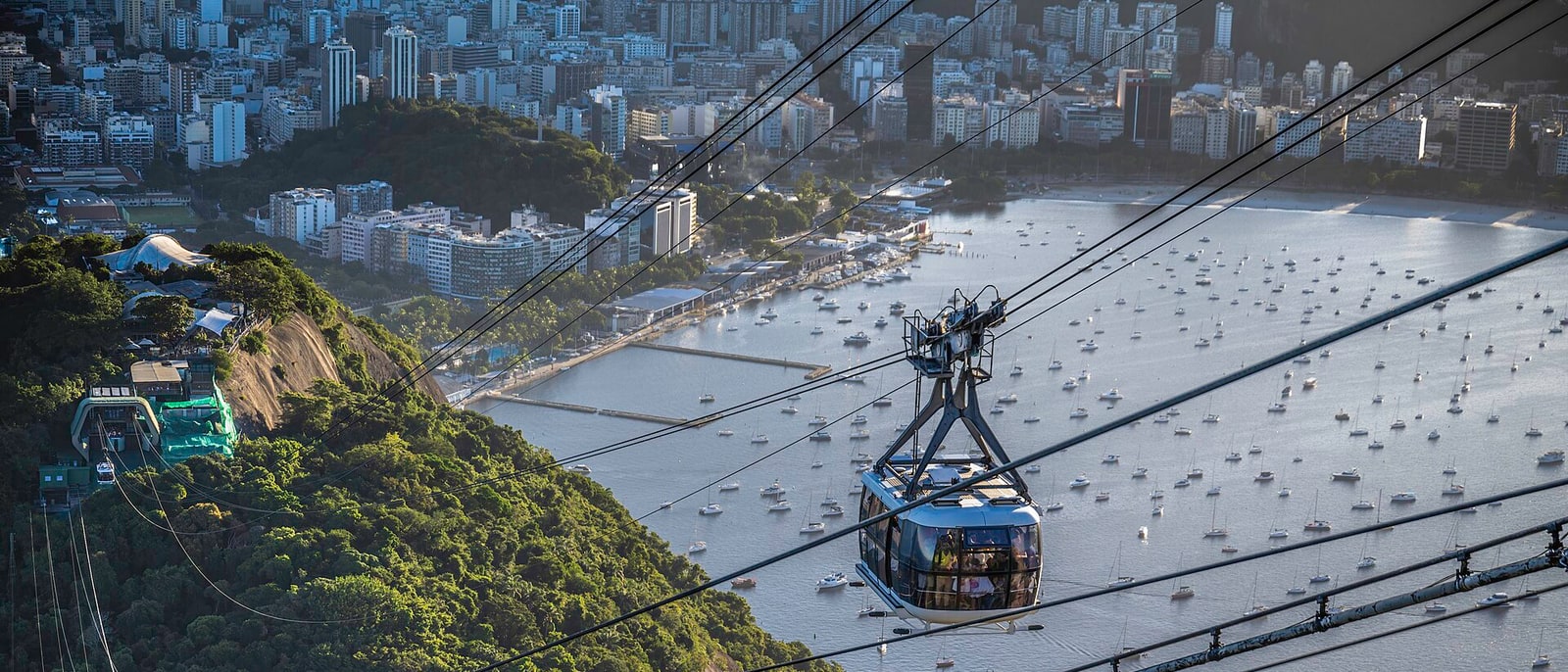
That forest grew back, ate the mountain again and today it’s one of the largest urban forests in the world, with monkeys, toucans and waterfalls inside the municipal boundary of a city of seven million. It’s a nineteenth-century ecological restoration that worked, and it’s what makes Rio Rio: without that replanted forest, this would be a beach city with bare hills. A weekend here is about that: a colossal landscape that was in good part remade by hand.
The route, stop by stop
4 STOPS- 01
Saturday: the two peaks
Christ and Sugarloaf are why most people come, and both have the same condition: they demand a clear sky. With cloud, Christ literally disappears inside it and you see neither the statue nor the city, and Sugarloaf leaves you looking at a white wall. There’s no refund for bad weather.
So the rule is not to buy tickets days ahead for a fixed hour if you can avoid it: check the forecast early in the morning and decide that same day. If the sky is clear, that’s the day.
And the ideal order: Christ in the morning, when there’s less cloud and fewer people, and Sugarloaf at dusk, to watch the city’s lights come on from above. Both can be done the same day if the weather holds, though it’s a hammering. If you have two days and one dawns cloudy, change the plan without hesitating: here the sky rules the diary.
- 02
Saturday night: Lapa
Under the arches of an eighteenth-century aqueduct, Lapa is where Rio comes out to dance: dozens of samba houses, bars with the music at the door and streets full until four in the morning. Saturday is the day.
And you should know what you’re hearing, because it isn’t folklore: in the early twentieth century, samba was persecuted. It was played by the Black communities arrived from Bahia, the police repressed it and carrying an instrument in the street could get you arrested. The legend says musicians were stopped and charged with vagrancy. Out of those persecuted houses, above all that of a woman called Tia Ciata, came what is today Brazil’s national symbol. A criminalised genre turned into the country’s brand within fifty years.
When you walk into a samba house, that’s what’s underneath. And don’t stand at the door filming: go in and dance badly, which is what’s expected.
- 03
Sunday: the forest
On Sunday, the Tijuca forest: hundreds of kilometres of trails, waterfalls, lookouts and genuine Atlantic rainforest, with capuchin monkeys, toucans and sloths, all inside the city. You enter at several points and you can do a two-hour walk or a whole day.
What to carry with you is the history: none of this was here a hundred and fifty years ago. The slopes were stripped bare by coffee, the city had run out of water and it was all replanted by hand in the nineteenth century. The people who planted those trees were enslaved, and their names are known: Manuel, Eleutério, Constantino, Leopoldo, Maria, Mateus. Six people and tens of thousands of trees. That fact doesn’t usually appear in the brochures and it’s the most important thing about the place.
When you’re inside, among thirty-metre trees hearing monkeys, remember that was planted by named people who weren’t free. It’s the best place in Rio and it’s free.
- 04
Sunday afternoon: the beach as it is
On Sunday, the city goes to the beach, and there’s a detail that changes everything: they close the seafront lane running from Leblon to Copacabana to traffic, and that asphalt fills with people running, cycling, skating and pushing carts. It’s the best moment of the week to see Rio being Rio.
And that’s where you understand this isn’t a tourist beach: it’s the city’s public space. On the sand there are games of foot-volleyball (futevôlei, played without hands, and it’s from here) whole families, older men playing cards, people working from a plastic chair.
The beach in Rio is the town square, and it works because it crosses social classes: on the same sand is the person from Leblon and the person who came down from the hill. It’s one of the few places in this city where that happens.
Rent a chair, ask the passing man for a beer and do nothing for four hours. That’s the plan and there isn’t a better one.
Frequently asked
Is Rio’s forest natural?
No: it’s replanted by hand. In the nineteenth century coffee plantations had eaten the city’s mountains and Rio ran out of water, because with no forest there was no sponge to hold it. The emperor ordered replanting, and the work was done by six enslaved people (Manuel, Eleutério, Constantino, Leopoldo, Maria and Mateus) who planted tens of thousands of trees by hand. Today it’s one of the largest urban forests in the world, with monkeys and waterfalls inside the city.
What to do on a weekend in Rio?
Christ and Sugarloaf, but checking the forecast in the morning and deciding that day: both demand a clear sky and there’s no refund. Lapa on Saturday night, for the samba. The Tijuca forest on Sunday, which is inside the city, free, with waterfalls and monkeys. And the beach on Sunday afternoon, when they close the promenade lane to traffic and the whole city comes out.