OZU /BRAZIL /RIO DE JANEIRO /GUIDE
Where to eat in Rio
3 h route4 stopsBest: Feijoada, Saturday at midday. And afterwards, nothing elseUpdated July 2026
The açaí eaten in Rio has nothing to do with the healthy breakfast bowl sold in Europe. Here it’s served frozen, with the texture of a sorbet, mixed with guaraná syrup to sweeten it, and it’s eaten as a dessert or an afternoon snack, often with banana and granola on top. It’s sweet and it’s a calorie bomb. The unsweetened version, presented as a breakfast superfood, is a later export invention.
That sums up how food works here: what reaches you abroad is an edited version. Rio eats with a simplicity that surprises (the beach, the corner bar, the fruit juice, the ice-cold beer) and its great dish is a Saturday stew that cancels the day. It isn’t Brazil’s food capital, which is São Paulo and there’s no argument. It’s another thing: here you eat in the street, standing or on a plastic chair, and that’s half the charm.
The route, stop by stop
4 STOPS- 01
Saturday feijoada
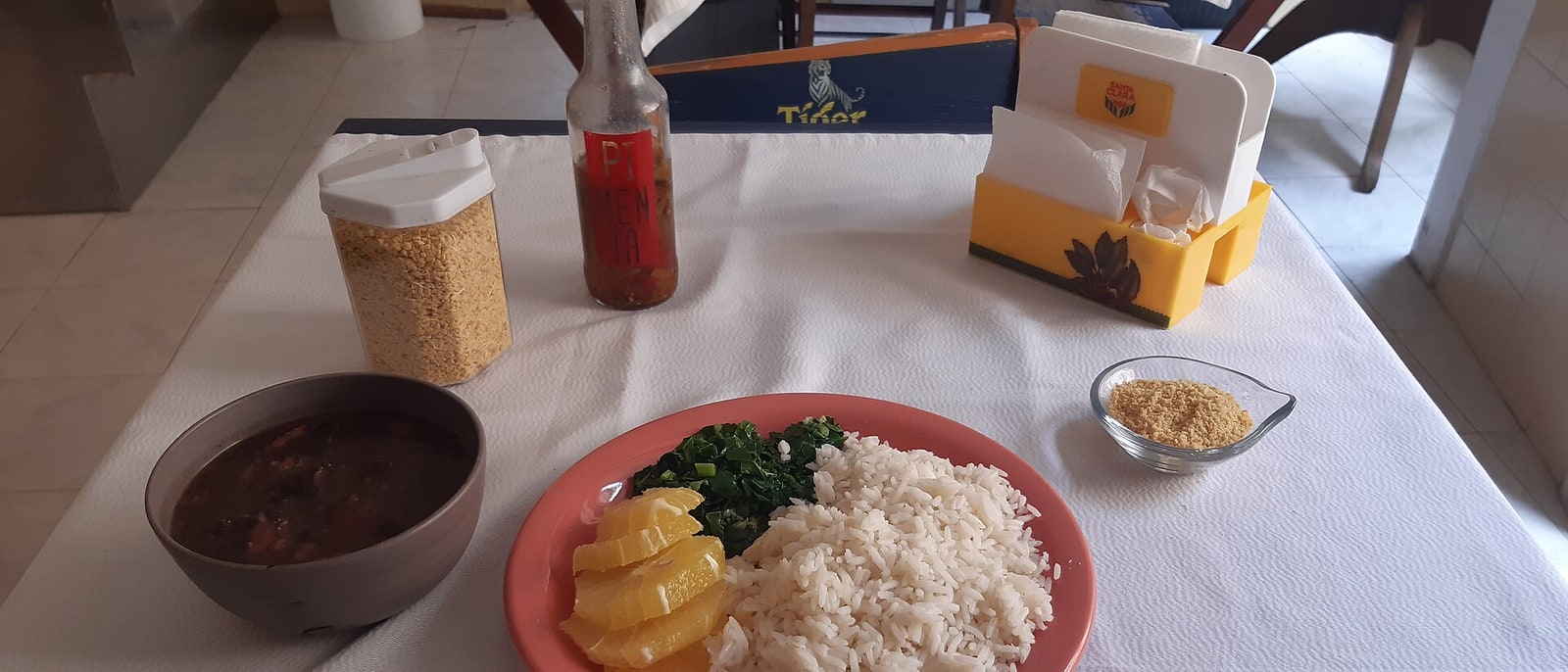
Black beans cooked for hours with various parts of the pig, served with rice, fried kale, farofa, orange and chilli sauce. It’s the national dish and in Rio it’s eaten on Saturday at midday, in a boteco or at someone’s house, with caipirinha before and during and samba in the background.
Two things to know. The first: the orange isn’t decoration. It’s there to cut the fat and you should eat it between mouthfuls. It’s part of the dish, not the decorative garnish. The second: this cancels the afternoon and that isn’t an exaggeration. You eat feijoada and afterwards you do absolutely nothing, and cariocas accept it as a fact of nature. Nobody plans the museum after feijoada.
The correct plan is feijoada at midday, beach or a nap in the afternoon and out at night. And don’t order it for dinner: that isn’t done here, it’s midday food and a day-without-obligations meal.
- 02
The boteco
The corner bar, with plastic tables on the pavement, tiles halfway up the wall and a fan. It’s Rio’s social institution and where you should eat and drink: not in a restaurant with a tablecloth, but here, with the street in front of you.
You order chopp, which is draught beer, and it arrives in a small glass with two fingers of head. And there’s a logic to that ridiculous size: in this heat, a large beer goes warm before you finish it, so it’s served small and very cold, and repeated. The waiter tops you up without being asked, and marks it on a slip or the beer mat. To pick at: bolinho de bacalhau, pastel, meat croquette and, if you find it, a boiled egg in a jar on the bar.
And there’s a rule that surprises Europeans: in a boteco you don’t ask for separate bills and each pay your own. You ask for the whole bill, someone pays and it gets sorted later. Here the other way is considered odd.
- 03
The beach as a restaurant
Eating on the beach in Rio doesn’t mean bringing a sandwich: it means sitting down and waiting. Everything walks past your chair and everything stops if you raise a hand. It’s a complete logistics system running on sand.
What comes past: beer in a polystyrene cool box, coconut water hacked open in front of you and drunk with a straw, boiled corn, grilled coalho cheese (a cheese that doesn’t melt, skewered on a stick and toasted on a little portable brazier the vendor carries slung on him) grilled prawns, açaí, sandwiches, and iced mate, which in Copacabana is sold by men who walk kilometres with a drum on their back and pour into a glass while walking.
Don’t bring a cool box or food: it would be absurd and you’d be taking work from a lot of people. The only rule: carry loose cash, in small notes, and don’t take your wallet down. The day’s money in your swimming shorts and that’s it.
- 04
The caipirinha, done properly
Lime, sugar, ice and cachaça. Four things and none of them optional. And the first clarification is the one most often got wrong abroad: cachaça isn’t rum. Rum is made from molasses, a by-product of sugar refining. Cachaça is made from fresh cane juice, pressed and fermented directly. It’s another spirit, with another flavour, more vegetal and rougher. Making a caipirinha with rum is making something else.
How it’s done properly: the lime is cut into pieces and muddled with the sugar, not squeezed, so the oil from the skin gets into the mix. That oil is half the flavour. Then crushed ice and cachaça.
And there’s a world behind it: there are artisanal cachaças aged in Brazilian woods that resemble nothing else and are drunk neat, like a good spirit, not in a cocktail. If the subject appeals, order one of those at a boteco and try it unmixed.
And an honest warning: the caipirinha goes down very easily, the humid heat is brutal and you’re on the beach. Be careful: sun and cachaça together are treacherous.
Frequently asked
What do you eat in Rio?
Feijoada on Saturday at midday, knowing it cancels the afternoon and that the orange isn’t decoration: it’s there to cut the fat. Chopp and snacks at a corner boteco, with plastic tables on the pavement. And on the beach, bringing nothing: a rented chair and everything comes past. Beer, coconut water, grilled cheese, iced mate. Açaí here is frozen, sweet and a dessert, not the healthy breakfast bowl sold abroad.
Is cachaça rum?
No. Rum is made from molasses, a by-product of sugar refining. Cachaça is made from fresh cane juice, pressed and fermented directly. It’s another spirit and it tastes different: more vegetal and rougher. Making a caipirinha with rum is making something else. And there are artisanal cachaças aged in Brazilian woods drunk neat, unmixed, like a good spirit.