OZU /BRAZIL /RIO DE JANEIRO /GUIDE
Day trips from Rio
9 h route4 stopsBest: April to October. And avoid long weekends: the road jams solidUpdated July 2026
For thirteen years, between 1808 and 1821, the capital of the Portuguese Empire was in South America. When Napoleon invaded Portugal, the entire court boarded ships and settled in Rio: the king, the royal family, the ministers, the nobility and some ten or fifteen thousand people. A European empire governed from the tropics. It’s the only time anything like that has happened, and out of it came palaces, institutions and a country that became independent shortly after with an emperor of its own.
An hour from Rio, climbing into the range, is those emperors’ summer palace, because the city’s heat was unbearable to them and they made themselves a court in the mountains. And around it there’s more: a coast of islands and colonial towns to the south, wild beaches to the west, and granite mountains with fingers of rock. All one, two or four hours away, with the single condition of dodging the long weekends, when half of Rio takes to the road at once.
The route, stop by stop
4 STOPS- 01
Petrópolis
An hour from Rio, eight hundred metres higher and fifteen degrees cooler, is the city Brazil’s emperor made for himself to escape the heat. Petrópolis is an imperial town in the middle of the rainforest, with a palace, a neo-Gothic cathedral, nobles’ houses and a canalised river through the centre.
The summer palace is today the imperial museum and it has a charming quirk: you go in wearing felt slippers, handed to you at the door and put on over your shoes, so as not to damage the original wooden floors. So you tour an empire’s court sliding along. Inside is the emperor’s crown, with over seven hundred diamonds, and his personal things. And next door, the house of Santos Dumont, the Brazilian aviator, who designed it himself with a staircase whose steps force you to start climbing with your right foot.
A serious warning: this area suffered catastrophic landslides in 2022, with hundreds of deaths, and in heavy rain it’s worth checking the forecast before going up.
- 02
Paraty
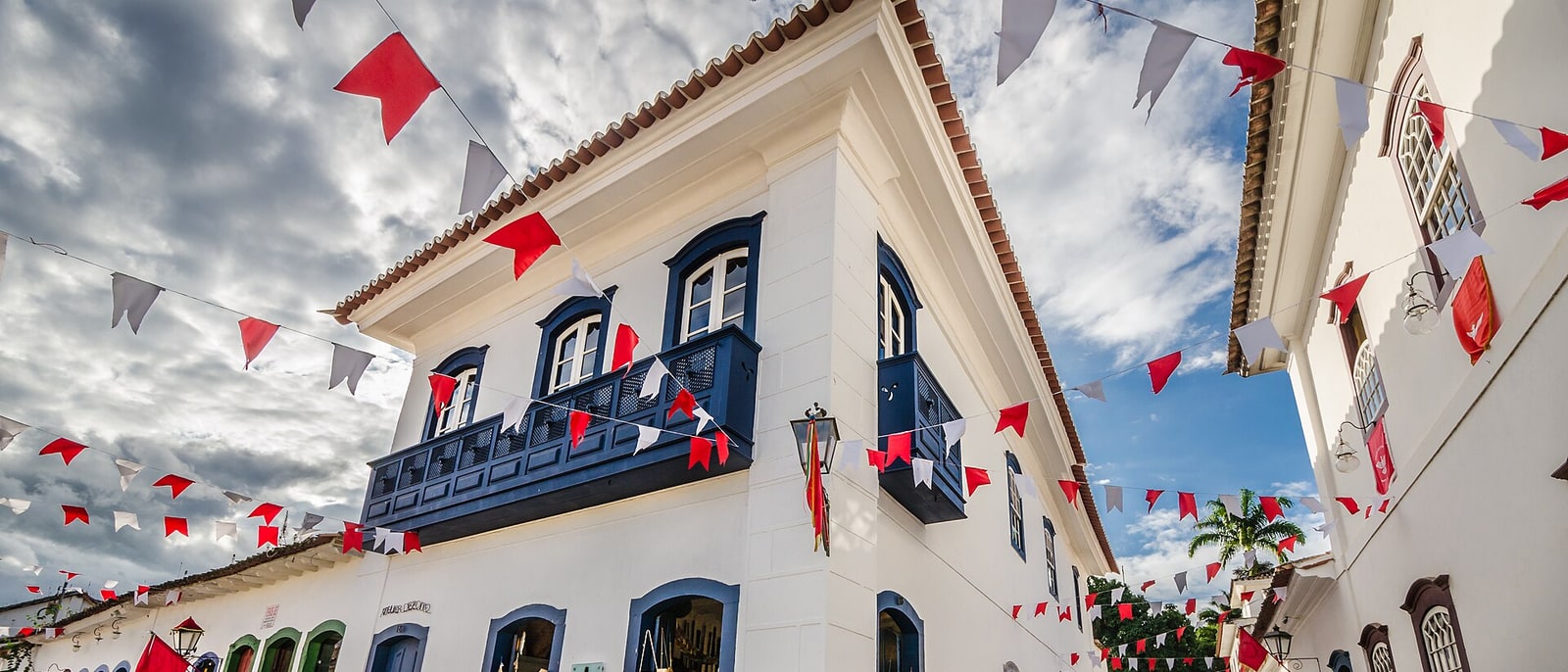
An eighteenth-century colonial town with cobbled streets, white houses with coloured doors and no cars in the centre, between the rainforest and the sea. It was the port the gold of Minas Gerais left through for Portugal, and that wealth is what built this.
And it has a piece of urban design that’s a stroke of genius: the streets of the old town are built with a gradient calculated so that, when the tide rises, the sea comes up them and floods them a few centimetres. It isn’t a fault: it’s the cleaning system. The water comes in, carries the dirt away and retreats by itself. It happens on the high tides of a full moon and people wait for it with their doors ready. A town that washes itself twice a day and has for three hundred years.
It’s four hours away, so it’s a long day or better a night. On the way is Angra dos Reis and the islands, with Ilha Grande, where there are also no cars and there are rainforest beaches.
- 03
The wild beaches
Westward, past Barra, the city ends and the beaches that don’t appear on the postcards begin: Prainha and Grumari, two small coves with Atlantic rainforest dropping straight onto the sand, without a single building, protected and with real waves.
It’s the opposite of Copacabana: no promenade, no vendors every three metres, no twenty-storey buildings behind. There’s rainforest, rock and sea. Prainha is Rio’s surfers’ beach and it tends to be quiet midweek. At weekends it fills and the car park jams. On the way is the Pedra do Telégrafo, the fake-cliff photo one, so you can chain them: the rock in the morning and the beach after.
You need a car or a taxi, because public transport out there is slow. And note: Prainha has real waves and currents, it isn’t a swimming pool. If you aren’t a strong swimmer, stay where the people are.
- 04
The granite fingers
Two and a half hours north, the range separating the coast from the interior rises abruptly and produces one of the strangest formations in Brazil: bare granite fingers rising out of the forest. The most famous, the Dedo de Deus, God’s finger, is exactly that: a spire that looks like an index finger pointing at the sky.
It’s the same material as Sugarloaf and the same geological phenomenon, but at another scale: two-thousand-metre mountains of bare rock emerging from Atlantic rainforest. The area is a national park and there are trails at every level, from one-hour walks to technical climbing ascents.
Brazilian mountaineering was born here, in the early twentieth century, with people climbing those spires on hemp ropes. It’s genuinely cool, there are waterfalls and there’s nobody compared with the city.
If you have a spare day and you’re tired of the beach, this is the opposite of everything else on this list.
Frequently asked
What day trips can you do from Rio?
Petrópolis, an hour up into the range: the imperial town the emperor made for himself to escape the heat, with the summer palace you visit in felt slippers. Paraty, four hours away, a colonial town whose streets flood on purpose with the tide to clean themselves. The wild beaches to the west, Prainha and Grumari, without a single building. And the range of granite fingers, two and a half hours away.
Was Rio the capital of Portugal?
Yes, between 1808 and 1821. When Napoleon invaded Portugal, the entire court (the king, the royal family, the ministers, the nobility, some ten or fifteen thousand people) fled by ship and settled here, and for thirteen years a European empire was governed from South America. It’s the only time in history it has happened. The palaces and institutions in the centre come from that, and so does the summer palace at Petrópolis.