OZU /BRAZIL /RIO DE JANEIRO /GUIDE
What to see in Rio
8 h route4 stopsBest: Everything depends on the sky. Check the forecast and reshuffle freelyUpdated July 2026
Christ the Redeemer wasn’t made in Brazil. The project was a Brazilian engineer’s, yes, but the sculptor was the Frenchman Paul Landowski, who modelled the figure in his Paris studio. The head and hands were made there and travelled to Rio by ship, in pieces, to be assembled on top of the hill. The face, besides, was modelled by a Romanian sculptor. Brazil’s national monument is a French work with a Romanian face assembled by Brazilian workers.
That takes nothing away: it makes it more interesting. And it’s the pattern of what there is to see in Rio, which almost always has a story underneath contradicting the postcard. The forest is planted by hand. Samba was persecuted. Carnival is a competition with judges and relegation. The cliff photo is a trick. Rio is a city that reads far better when you know how each thing was made.
The route, stop by stop
4 STOPS- 01
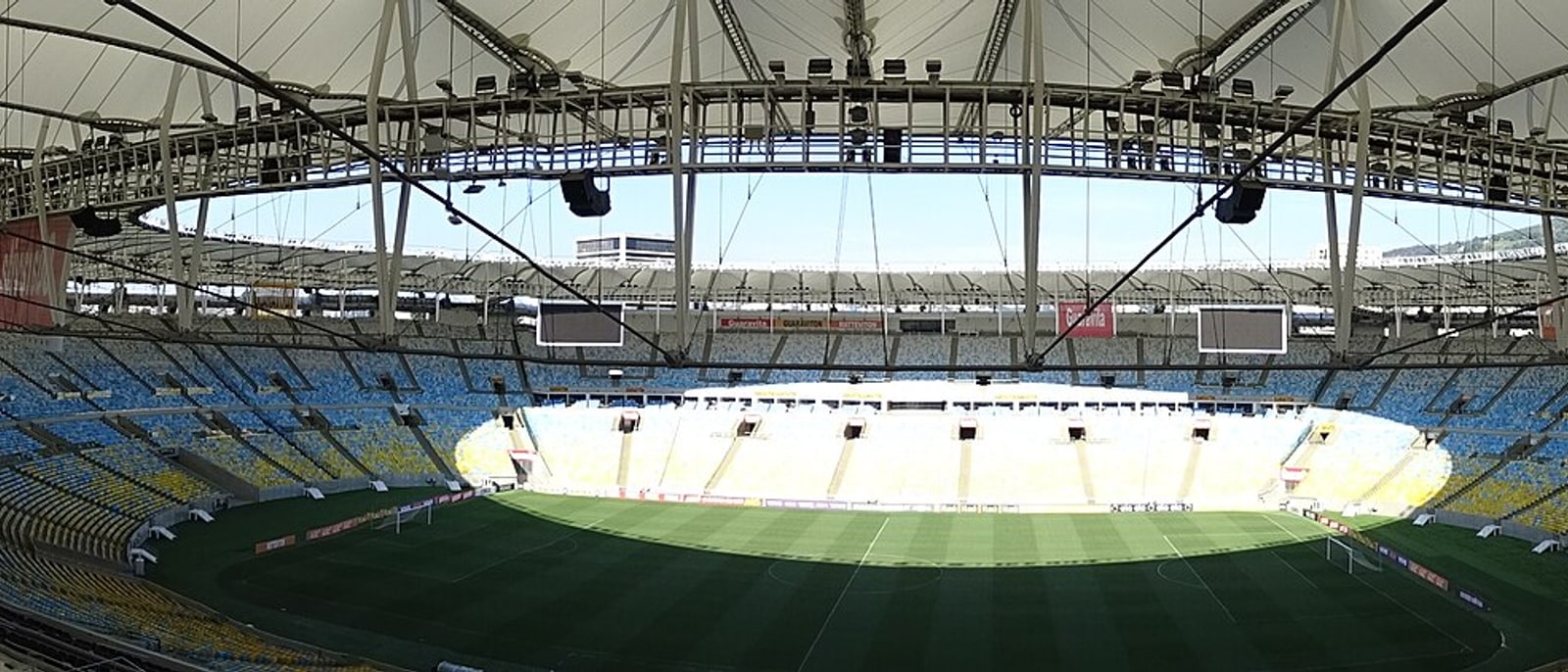
The Maracanã
It was built for the 1950 World Cup and made enormous on purpose, so the whole country would fit: some two hundred thousand people came into the final, the largest attendance at a football match in history, a record that won’t be broken because stadiums like that aren’t built any more.
And that final is Brazilian football’s founding trauma. Brazil were at home, a draw was enough and they lost to Uruguay two-one. The stadium fell into absolute silence: two hundred thousand people quiet. That has its own name, the Maracanazo, and in Brazil it’s spoken of as a national tragedy, not a match. One of the Brazilian players said only three people have ever silenced the Maracanã, and he was one of them.
Today the stadium is refurbished and much smaller, but the guided tour tells this well. If there’s a match, go: the carioca crowd is a spectacle in itself.
- 02
The Sambadrome
A seven-hundred-metre avenue with concrete stands on both sides, designed by Niemeyer in 1984 exclusively for carnival. The rest of the year it sits there, empty, and it can be visited. It’s worth it, because understanding what happens here dismantles the whole cliché.
The Sambadrome parade isn’t a party: it’s a sporting competition. The samba schools compete in a league with divisions, with judges scoring ten categories (the percussion, the lyrics, the float, the harmony, the movement) and there’s promotion and relegation as in football. Each school parades with its own theme developed over a year, with thousands of people, and it has a timed slot: overrunning is penalised. The people you see there have spent twelve months rehearsing in their neighbourhood. Winning is a matter of communal honour celebrated for months.
The real party, the free one in the street, is the blocos: that’s another thing and it’s what most cariocas do.
- 03
The museum across the water
Across the bay, in Niterói, there’s an Oscar Niemeyer building that looks like a flying saucer landed on a cliff: a white cup forty metres across on a narrow foot, with a curving red ramp rising to it. It’s the Museum of Contemporary Art and it’s among the most photographed buildings in Brazil.
Niemeyer said he designed it that way, with continuous windows all round, because the building shouldn’t compete with what’s outside: the painting is the view. And the view faces Rio, with Sugarloaf and Christ opposite, across the water. Which means the best place to look at Rio is in another city.
The best part is getting there: by ferry from the centre, twenty minutes across the bay for pennies, with the whole city opening up behind you. That crossing is everyday public transport, thousands of people use it to get to work, and it’s one of the best bargains in Brazil.
- 04
The photo that’s a lie
You’ll have seen the photo: someone dangling from a rock ledge over a drop of hundreds of metres, sea behind, holding on with one hand. It’s one of the most repeated images of Brazil on the internet. And it’s a trick.
It’s called Pedra do Telégrafo and the ledge is little more than a metre off the ground. Behind the rock there’s a perfectly flat platform where people queue. The photo works because whoever takes it lies on the ground and frames from below, so the sea appears behind and the ground disappears from the shot.
It’s pure forced perspective, and there’s a queue of people waiting their turn to dangle from a stone a metre up.
It’s worth going anyway, but for another reason: the walk out there is lovely and the beaches in that area (Grumari, Prainha) are wild, with rainforest dropping into the sea and no buildings. Those beaches are better than the photo.
Frequently asked
Where was Christ the Redeemer made?
In France, in good part. The project was a Brazilian engineer’s, but the sculptor was the Frenchman Paul Landowski, who modelled the figure in his Paris studio. The head and hands were made there and arrived in Rio by ship, in pieces, to be assembled on top. A Romanian sculptor modelled the face. It’s covered in soapstone tesserae from Minas Gerais, and the women who stuck them on by hand wrote messages on the backs before laying them: they’re still there, unreadable.
Is the Pedra do Telégrafo photo real?
No. The ledge people appear to dangle from over an abyss is little more than a metre off the ground, and behind it is a flat platform with a queue waiting their turn. The photo works because it’s framed lying down from below, with the sea behind and the ground out of shot: pure forced perspective. Go anyway, but for the beaches in that area (Grumari, Prainha) which are wild and better than the photo.