OZU /BRAZIL /RIO DE JANEIRO /GUIDE
Rio’s neighbourhoods
5 h route4 stopsBest: The south zone any time. The centre by day and on weekdaysUpdated July 2026
The word favela doesn’t mean shack: it’s the name of a plant. In north-eastern Brazil there grows a thorny shrub called faveleira, and there’s a whole hill covered in it, the Morro da Favela, in Bahia. In the late nineteenth century, soldiers camped on that hill during a war, and on returning to Rio without being paid what they were promised they settled on a hill in the centre and named it after that place. From there, the name passed to every similar settlement in the country.
That origin says a good deal: Rio’s first favela was founded by war veterans the state didn’t pay. Today over a million people live in this city’s favelas, on the slopes of the same hills that make Rio beautiful, and with the best views in the city. Understanding the neighbourhoods here means understanding that geography: the beach below, the hill above, and the two of them touching.
The route, stop by stop
4 STOPS- 01
The south zone
The strip between the mountain and the sea where everything you came to see is, and which isn’t a uniform block: they’re different neighbourhoods with characters of their own. Copacabana is the oldest and most popular, with fifties buildings, older people, plenty of street life and reasonable prices. Ipanema is pricier and smarter, with the best sand and the best atmosphere. And Leblon, next door, is where Rio’s money lives.
Look at the ground in Copacabana: the promenade pavement has a pattern of black and white waves in Portuguese stone, laid by hand piece by piece, which Burle Marx redesigned in the seventies and which is the city’s most reproduced image after Christ.
And in Ipanema, look for the street where in 1962 two men sitting in a bar watched a girl walk past on her way to the beach and wrote a song about her. That song became one of the most recorded in history and the bar is still there, under another name. The girl existed and her name was Helô.
- 02
Santa Teresa
A quarter on a hill above the centre, with steep cobbled streets, colonial mansions, bougainvillea, artists’ studios and bars with views. It’s the closest thing to an old town Rio has and it’s where the city’s bohemia took refuge.
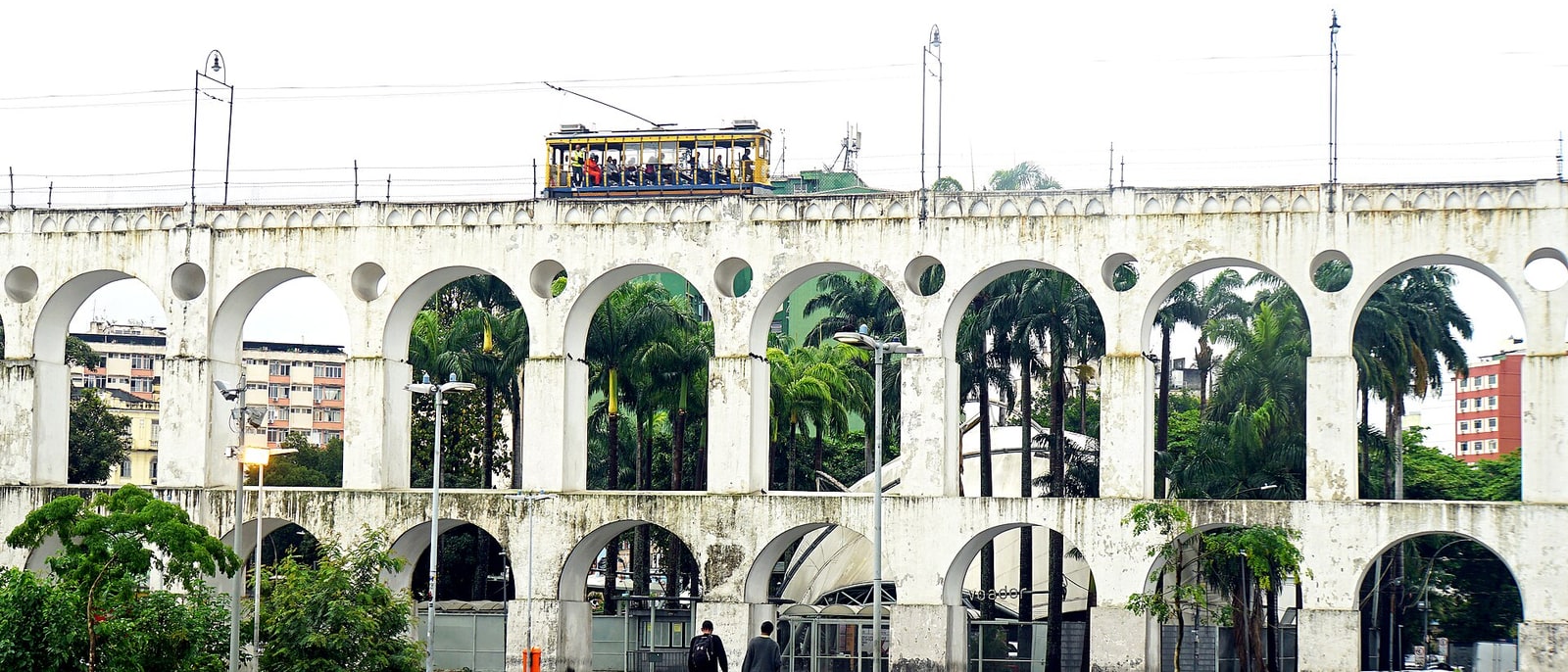
You go up on the bonde, the yellow tram, and that ride is half the reason to go: it leaves the centre and crosses the Lapa Arches aqueduct, an eighteenth-century work of forty arches built to bring water to the city and which, when it was no longer needed, was converted into a viaduct for the tram. You ride a wooden tram over a colonial aqueduct.
An honest warning: there was a serious accident in 2011 with several deaths, the service was stopped for years and came back with genuine safety measures, no people hanging off the running boards as in the old photos. It’s worth it anyway.
- 03
The centre
Almost no tourist sets foot in Rio’s centre, and the entire history of Brazil fits inside it: palaces, gilded baroque churches, a municipal theatre copied from the Paris opera and a Portuguese library that looks like another world.
And it has a fact that throws anyone: between 1808 and 1821, the capital of the Portuguese Empire was here. When Napoleon invaded Portugal, the entire court (the king, the royal family, the ministers, the nobility, some ten or fifteen thousand people) fled by ship and settled in Rio. For thirteen years, a European empire was governed from South America, and this city was the capital of Portugal. It’s the only time in history anything like that has happened.
The palaces and institutions here come from that. The centre walks by day and on weekdays, when it’s full of office workers. At weekends it empties and changes a fair amount.
- 04
The favelas, and the question
Over a million people live in Rio’s favelas, on the slopes of the hills, with the best views in the city and sometimes two hundred metres from a million-euro flat. They aren’t camps: they’re neighbourhoods with decades of history, with shops, churches, samba schools, nurseries and an economy of their own. Rocinha, the largest, has tens of thousands of residents and is bigger than many Spanish towns.
Visits are organised and the ethical debate is real and openly argued here. Some say it turns poverty into a zoo and there are residents who say the opposite: that it breaks the stigma and leaves money.
If you decide to go, three non-negotiable conditions: that the operator is from the community or verifiably returns money there, that people aren’t photographed without permission, and that you don’t go exploring on your own.
That last one isn’t a matter of sensitivity: there are favelas with armed presence and situations that change from one day to the next, and you go in with someone from inside or you don’t go in. If you’re unsure, don’t. And don’t confuse things: samba, funk carioca and half this city’s culture came out of there.
Frequently asked
Where does the word favela come from?
A plant. In north-eastern Brazil there grows a thorny shrub called faveleira, and there’s a hill covered in it in Bahia, the Morro da Favela. In the late nineteenth century soldiers camped there during a war, and on returning to Rio without being paid what they were promised they settled on a hill in the centre and named it the same. From there the name passed to every similar settlement in the country. The first favela was founded by war veterans the state didn’t pay.
Where to stay in Rio?
In Ipanema or Leblon if you can: it’s the pleasantest, with the best sand and a good atmosphere. Copacabana is more popular, cheaper, with plenty of street life and perfectly fine. Santa Teresa is the prettiest and most bohemian, but it’s on a hill and far from the beach. The centre isn’t a sleeping area: it empties at night. Bear in mind everything you want to see is in the south zone.