OZU /BRAZIL /RIO DE JANEIRO /GUIDE
From Rio airport to the city
1 h route4 stopsBest: If you arrive at night or loaded, use the fixed-fare deskUpdated July 2026
The public route from Rio airport to the south zone isn’t direct: it’s a combination, and it works because there’s one specific link you need to know. The dedicated-lane bus, the BRT, leaves the airport and reaches a station called Vicente de Carvalho, and that’s where the magic happens: that station connects with metro line 2, which takes you to Copacabana and Ipanema.
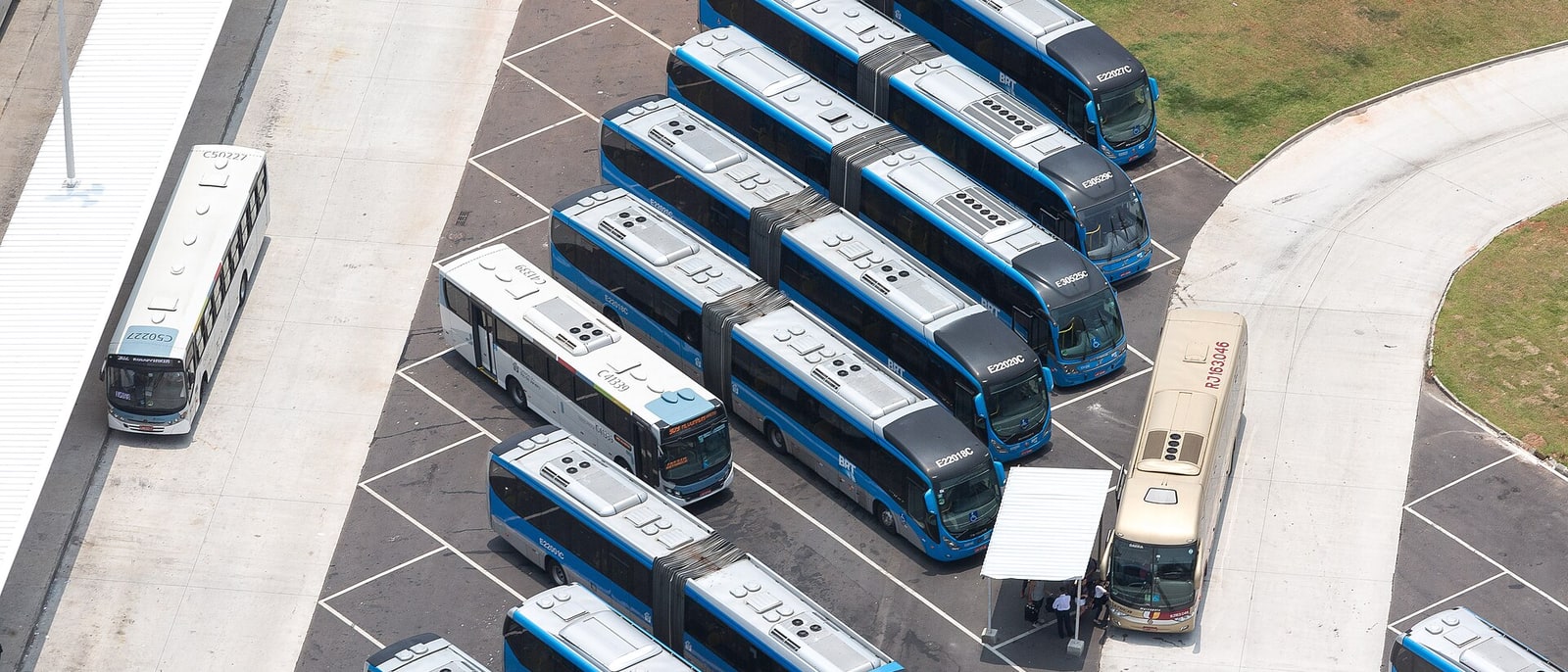
Without that fact, the BRT doesn’t look like it goes anywhere you want. With it, you have the cheap, traffic-free way to reach the hotel zone. And there are two versions of the service: one that stops everywhere and an express that skips most stops. Take the express if there is one. The comfortable alternative is a taxi, and in arrivals there are fixed-fare desks, which is what you should use.
The route, stop by stop
4 STOPS- 01
The BRT and the link
The BRT runs on a dedicated lane, separated from traffic, with enclosed stations as if it were a surface metro. It leaves the airport and its useful destination for you is Vicente de Carvalho, where it connects with metro line 2. From there, the metro goes to the centre and continues to Copacabana and Ipanema.
That link is everything. If you get off earlier or don’t know it exists, the BRT looks like it goes nowhere. There are two services: one stopping at every station and the express, which skips most and takes considerably less. Check the front of the bus before boarding.
The advantage of this combination is that it runs on its own lane and underground, so it doesn’t depend on Rio’s traffic, which is considerable. The drawback is two changes with luggage and it takes a while. It’s the option for travelling light and paying little. With two big suitcases, don’t complicate your life.
- 02
The fixed-fare taxi
In the arrivals area there are taxi cooperatives with a desk and set fares by zone: you say where you’re going, you pay there, and there’s no meter to watch or negotiation on arrival. That’s in addition to the ordinary yellow metered cabs outside.
For most people, especially arriving at night, with suitcases or for the first time, the fixed-fare desk is the answer: you know what it costs before getting in and it takes you straight to Copacabana or Ipanema. The run to the south zone goes along the Linha Vermelha, an elevated motorway crossing the city. Ride-hailing apps also work well here and tend to be somewhat cheaper.
And the usual rule in Brazil: order the car from inside the terminal, wait inside and come out when it arrives. Don’t stand on the kerb with your phone in your hand and your suitcases beside you.
- 03
Note: there are two airports here too
Rio has two airports. Galeão is the international one, on an island to the north, and it’s where you arrive from outside Brazil. Santos Dumont is set into the middle of the city, beside the bay, and handles domestic flights: above all the shuttle to São Paulo.
That second airport is one of the most spectacular things in Rio and almost nobody mentions it: the runway is over the water, in the middle of town, and planes land with Sugarloaf beside them and Christ opposite. It’s probably the most beautiful approach in the world. If you’re flying to São Paulo, try to leave from there and get a window seat.
And the practical warning, the same as in São Paulo: check the code on every leg of your ticket. If you arrive at Galeão from Europe and your domestic flight leaves from Santos Dumont, you have to cross the city, and it isn’t a twenty-minute transfer. Allow margin.
- 04
Getting around the city
Once here, the good news: Rio’s metro is clean, modern, safe and goes exactly where you want. Lines 1 and 4 run the whole south zone (centre, Botafogo, Copacabana, Ipanema, Leblon) and drop you a step from the beach. It’s the best way to move around, by a distance.
Off that spine, things get complicated: the network is short for the city it serves, and for Christ, Santa Teresa or the western beaches you need something else.
There are women-only carriages at peak times, signposted.
An important warning: the metro isn’t twenty-four hours and at weekends the timetable changes, so to come back at night count on a taxi or an app.
And bear in mind that Rio, geographically, is a puzzle: between the south zone and the rest there are mountains and tunnels, and what looks close on the map can be half an hour. Trust the time, not the distance.
Frequently asked
How do you get from Rio airport to Copacabana?
The public route is a combination: the BRT, the dedicated-lane bus, leaves the airport for Vicente de Carvalho, and there it connects with metro line 2, which reaches the south zone. That link is the whole trick. There’s a stopping version and an express: take the express. The comfortable option is the fixed-fare taxi desk in arrivals: you know what it costs before getting in and there’s no meter to watch.
Are Galeão and Santos Dumont the same airport?
No. Galeão is the international one, on an island to the north. Santos Dumont is in the middle of town, beside the bay, and handles domestic flights, above all to São Paulo: its runway is over the water and planes land with Sugarloaf beside them, which is probably the most beautiful approach in the world. Check the code on every leg of your ticket: if you have to cross from one to the other, it isn’t a short transfer.