Where to stay in Beijing
4 stopsUpdated July 2026
Beijing has no centre, it has rings. Six of them, concentric, and the sixth is nearly two hundred kilometres around: the city is the size of a small country and distances deceive on a map because everything is at the same giant scale. What in Europe would be “the next neighbourhood along” is forty minutes here.
So the question isn’t which quarter you sleep in, it’s which subway line you’re on. Beijing’s subway is enormous, cheap, entirely signed in English and the only sensible way to move: surface traffic is among the worst in the world and a taxi at rush hour can take three times as long. Sleep inside the second ring road, which is where the walled city was, and that solves ninety per cent of it.
The route, stop by stop
4 STOPS- 01
Inside the second ring
The second ring road doesn’t run on ordinary ground: it was built exactly on top of the city walls, which were pulled down in the fifties and sixties to make way for it. So if you sleep inside the second ring, you sleep inside what was Beijing for five hundred years, and that includes the Forbidden City, Tiananmen, the Temple of Heaven and the hutongs that survive.
It’s the only rule that genuinely matters when choosing a hotel here, and it’s geographic rather than a question of taste: inside the second ring you’re in the city, outside, you’re on the edge of a city of twenty-two million and everything is a long half-hour on the subway away.
Some station names still carry the word “gate”, men, because that’s where a gate in the wall was.
- 02
The Gulou hutongs
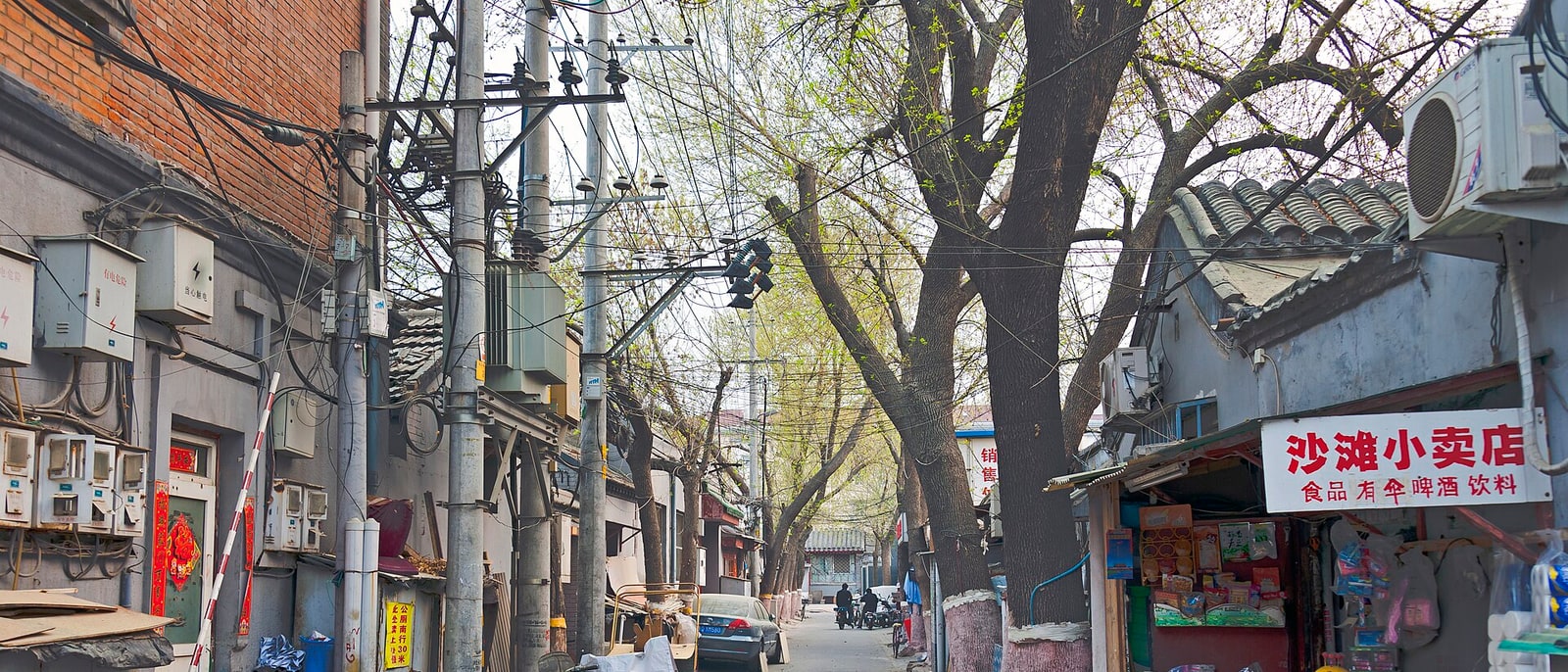
Around the Drum Tower, north of the axis, is the best-preserved hutong area, and there are small hotels built inside real siheyuan: single-storey houses with rooms around a courtyard, a tree in the middle and a silence that doesn’t exist anywhere else in this city.
It’s the most interesting sleeping experience Beijing offers and you should know what you’re getting into: they’re old houses, the rooms are small, and in the most authentic ones the heating and the bathroom can be basic. Check before booking that the room has its own bathroom, because not all of them do and that isn’t a joke.
In exchange, you step out in the morning into an alley where someone is having breakfast in their doorway, and you’re twenty minutes’ walk from the Forbidden City.
- 03
Wangfujing and Dongcheng
East of the Forbidden City and inside the second ring is where nearly all the international hotels are: wide streets, shopping centres and a pedestrian street, Wangfujing, which is the city’s most famous and also one of the least interesting.
The advantage is real and for a first trip it counts for a lot: you’re walking distance from Tiananmen and the Forbidden City, you have several subway lines, and the hotel works to standards you recognise, with staff who speak English, which in Beijing is not nothing. The downside is that you won’t see any of the city from your window.
It’s the practical choice and there’s no shame in it: Beijing is difficult enough without adding difficulty at the hotel.
- 04
Sanlitun and Chaoyang
To the east, already outside the second ring, is the embassy district and the quarter where people go out: bars, restaurants from everywhere, shops and the city’s biggest concentration of foreigners. It’s the part of Beijing that most resembles any other capital, for better and worse.
You sleep here if you’re on business or if you’re staying more than three or four days and want to be able to have dinner without planning it.
It’s on subway line 10 and the Forbidden City is a long half-hour away.
And it has one thing going for it that almost nobody mentions: it’s one of the few places in Beijing with street life after ten at night, because in the rest of the city, at that hour, there’s nobody.
Frequently asked
Where is it best to stay in Beijing?
Inside the second ring road, which was built literally on top of the old walls: the whole historic city is in there. Dongcheng and Wangfujing for international hotels within walking distance of the Forbidden City, the Gulou hutongs to sleep in a courtyard house, Sanlitun for business or nightlife.
Is Beijing’s subway any good?
It’s enormous, cheap and entirely signed in English, and it’s the only sensible way to move: surface traffic is among the worst in the world. At every station your bag goes through a scanner, so allow a couple of extra minutes per trip. Here your line matters more than your neighbourhood.
Is it worth staying in a hutong?
It’s the most interesting thing the city offers, with one warning: they’re old houses, the rooms are small, and not all of them have a private bathroom, because traditional houses don’t have one. Check before booking. In exchange, you sleep in a courtyard with a tree twenty minutes’ walk from the Forbidden City.