Eating in Beijing
5 stopsUpdated July 2026
The duck has been roasted in the same kitchen since 1416, and that year isn’t decoration: it’s the date of the old method, closed-oven, where the duck never touches the fire. The other method, open-oven over fruitwood, is from 1864 and Beijing has been arguing about which is right ever since. That century-and-a-half argument tells you a fair amount about the city.
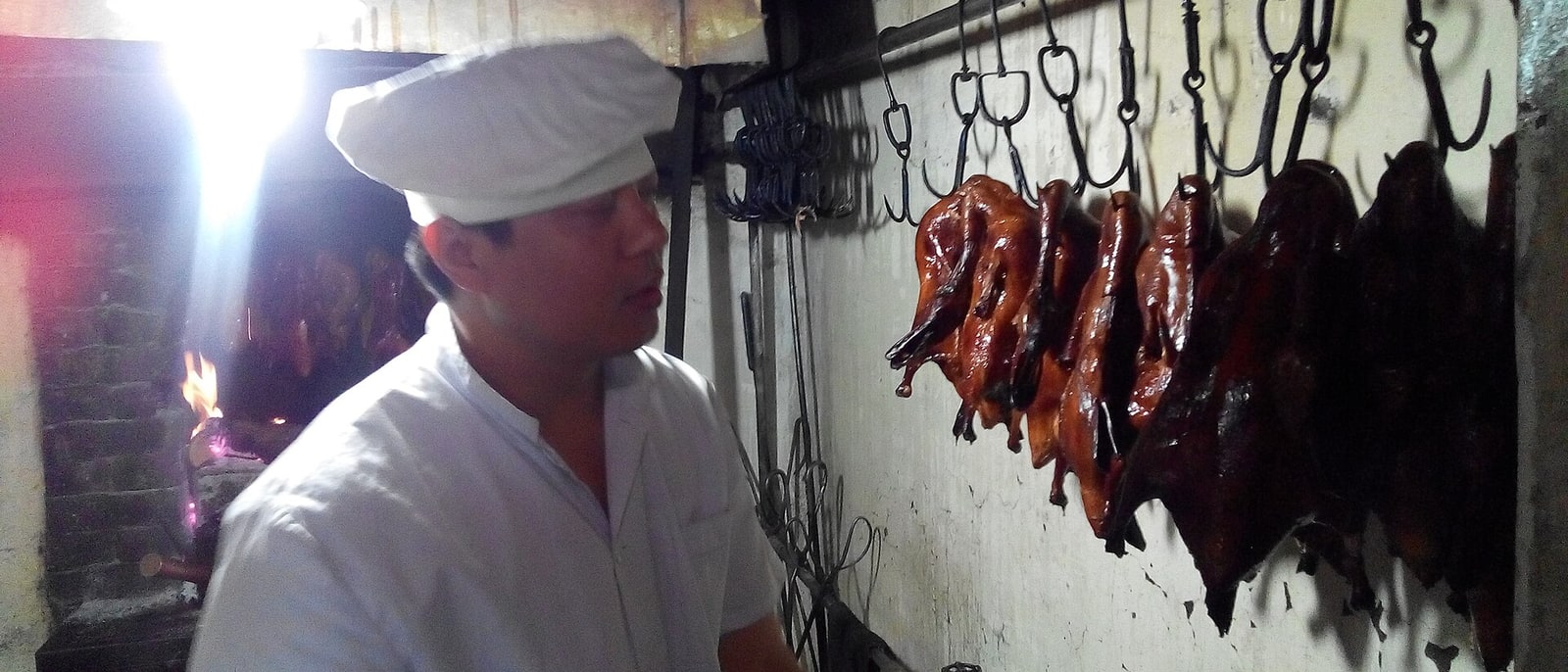
But Beijing food isn’t just the dish in the photograph. This is northern China: there’s no rice as a base here, there’s wheat (noodles, breads, dumplings) because the climate wouldn’t support paddies. And there’s a Mongol layer on top, from centuries of frontier, which explains the lamb and the hotpot. Breakfast, on top of that, is eaten on the street and standing up, and it’s one of the best reasons to come.
The route, stop by stop
5 STOPS- 01
The duck: closed oven or open
The old method, menlu: the oven is fired first with sorghum straw, the fire is put out, the ducks go in and they roast on the heat of the brick walls alone. The duck never sees a flame. It comes out juicier and the skin is finer. It’s been done this way since 1416: before the Forbidden City was finished.
The modern method, gualu: the duck hangs from a hook over an open fire of pear or date wood, turning, and the smoke gets into the meat. The skin is crisper and tastes of smoke. It’s from 1864 and it’s the one that won abroad.
Neither is better: they’re two different dishes with the same name. If you’re eating it once, try the old one, which is the rare one. If twice, compare.
- 02
Breakfast on the pavement
Beijing has jianbing for breakfast, and watching it made takes thirty seconds: grain batter spread on a hot disc with a wooden rake, an egg cracked on top and flattened, sauce, coriander, spring onion and a crisp fried cracker in the middle. It’s folded in four, wrapped in paper, and eaten walking.
The carts are outside the subway entrances from six and vanish around nine: it’s food for people going to work, and by ten it doesn’t exist. Same with baozi, the steamed buns, sold in stacked baskets steaming in the doorways of neighbourhood shops.
Having breakfast in your hotel in Beijing is wasting the best food in the city, and also the cheapest.
- 03
The lamb hotpot
Beijing hotpot has nothing to do with the Sichuan one you know: there’s no chilli here. The broth is clear, almost just water with ginger and spring onion, served in a brass pot with a charcoal chimney in the middle keeping it boiling on the table. It’s Mongol in origin and it came in with centuries of northern frontier.
The lamb is sliced paper thin, almost transparent, and cooks in seconds: you pick it up with chopsticks, walk it through the broth until it changes colour, and dip it in sesame sauce. The point is that the neutral broth hides nothing, so everything depends on the quality of the lamb, which here comes from Inner Mongolia.
It’s winter food and Beijing’s winter is real: it drops below minus ten here without breaking a sweat.
- 04
Zhajiangmian
Beijing eats this every day and it appears in no guidebook: thick wheat noodles with a heavy salty sauce of fermented soybean paste fried with minced pork, and around it half a dozen little plates of raw vegetables cut in julienne (cucumber, radish, bean sprouts, celery) which you add to taste and mix into the bowl.
It’s brown, it’s ugly, and it’s what this city eats. The point is that each person builds it: the sauce is deliberately very salty so the vegetables cut it, and you set the balance. You order it in any neighbourhood noodle place and it costs what it costs.
It’s the exact opposite of the duck: the duck is the ceremony and this is Tuesday.
- 05
How you pay
This needs saying on the food page because this is where it will happen to you: in China you pay with your phone, with Alipay or WeChat Pay, and cash has all but disappeared from daily life. It isn’t a trend, it’s the current state of things: the jianbing cart on the pavement has its QR code taped to the trolley.
Both apps now let you link foreign cards, so it’s solvable, but do it before you leave home and not in the breakfast queue: verification asks for your passport and takes time. By law they always have to accept cash, and in practice the problem isn’t that they refuse it, it’s that they have no change.
Arriving in Beijing without either app set up is the fastest way to make your trip difficult.
Frequently asked
What’s the difference between the two Peking ducks?
Closed oven (since 1416): the oven is fired with straw, the fire is put out and the duck roasts on the heat of the walls, never seeing a flame, it comes out juicier. Open oven (since 1864): the duck hangs over fruitwood and the smoke gets into the meat, the skin is crisper. They’re two different dishes with the same name.
Can you pay cash in China?
By law they have to accept it, but in practice almost nobody uses it and the problem is they have no change. You pay by phone, with Alipay or WeChat Pay, right down to the breakfast cart on the pavement. Both apps take foreign cards, but set it up before you leave home: verification asks for your passport and takes time.
What do you eat in Beijing besides the duck?
Jianbing for breakfast on the pavement before nine, zhajiangmian (noodles with fermented soybean paste and raw vegetables) as everyday food, and lamb hotpot in winter, Mongol in origin and with no chilli. This is northern China: it’s wheat, not rice.