Beijing: practical tips
5 stopsUpdated July 2026
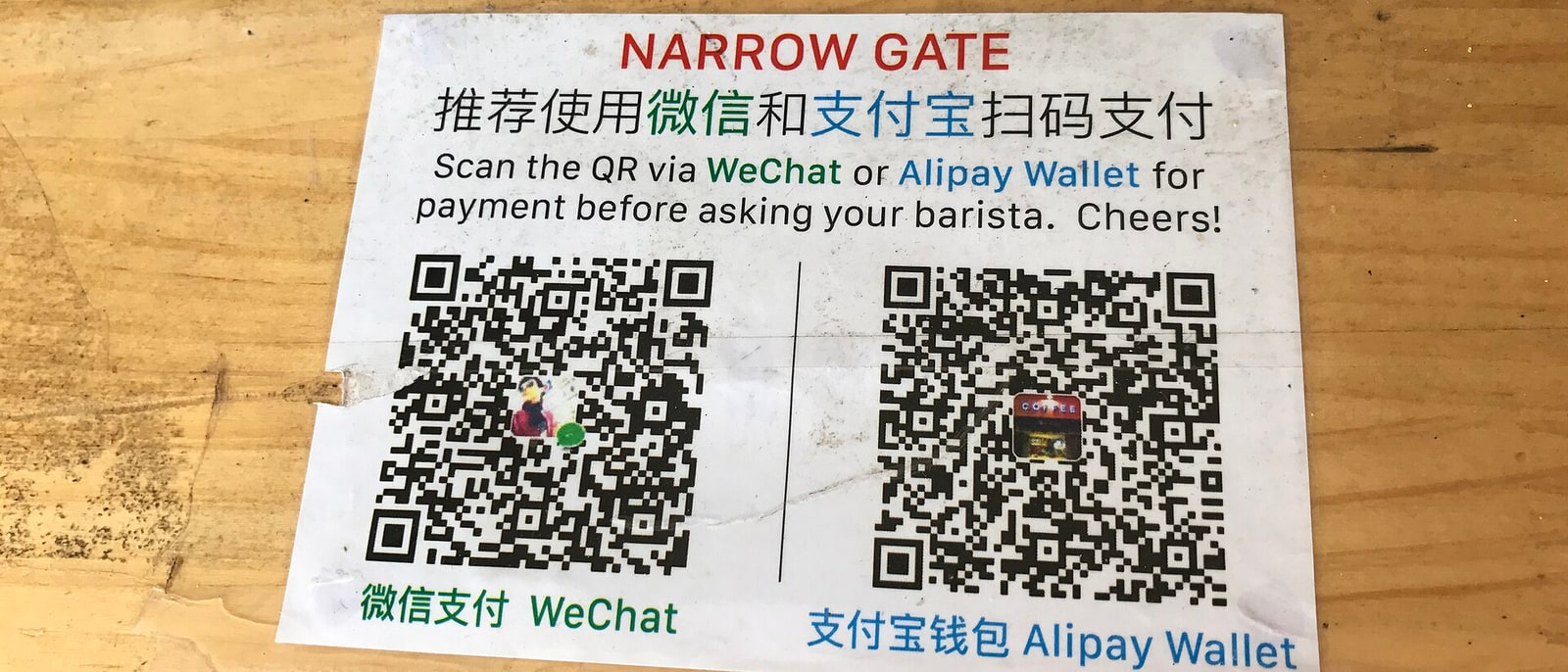
Cash barely exists here. It isn’t a trend or an exaggeration: in China you pay by phone, with Alipay or WeChat Pay, and the pavement cart has its QR code taped on. Both apps now take foreign cards, but verification asks for your passport and takes time, so you do it on your sofa at home and not in the breakfast queue.
And there’s a second thing to have sorted before landing: nearly everything that needs a ticket is booked in advance and in your name, with your passport number. The Forbidden City sells out days ahead. Tiananmen needs a booking and a check. This is a city where improvising doesn’t work, and accepting that is half of having an easy time.
The route, stop by stop
5 STOPS- 01
Alipay and WeChat Pay
China skipped the credit card and went from cash straight to the phone, and today Alipay and WeChat Pay are the country’s entire payment infrastructure: the taxi, the subway, the restaurant, the fruit stall, the temple. Everything has its QR. A foreigner arriving with neither is outside the system in the literal sense.
Both have allowed foreign cards to be linked for a while now and it works well, but you have to do it before the trip: they ask you to upload your passport, verify your identity and wait. Do it at home with time to spare. By law they always have to take cash and in a big hotel there’ll be no problem, but on the street the issue isn’t that they don’t want it, it’s that they can’t change a large note.
With the apps, Beijing is easy. Without them, it’s a different and worse trip.
- 02
Everything is booked, and with your passport
In China, tickets to the big sites are in your name: bought with your passport number, non-transferable, and you carry the same passport to get in. The Forbidden City sells out days ahead and closes on Mondays. Tiananmen requires a booking and a security check. Many museums too.
This has a practical consequence that throws independent travellers: getting up and deciding what to do doesn’t work here. You book the important things before you leave home, with fixed dates. It’s inconvenient and that’s how it is.
The flip side: because everything is capped, inside there’s never the crush you expect, and the sites are far more enjoyable than in Rome or Paris.
- 03
The climate, and why autumn
Beijing sits at Madrid’s latitude but has an extreme continental climate: in winter it drops below minus ten with dry Siberian wind, and in summer it passes thirty-five with humidity. There’s no middle ground, and on the wall or in the Forbidden City, which are stone with no shade, it multiplies.
Autumn, September and October, is the good season and that isn’t an opinion: it’s when the sky is clear, the temperature is pleasant and the park trees turn. Spring has a phenomenon almost nobody mentions: the dust storms that arrive from the Gobi and leave the city yellow for days.
If you can choose, autumn. And avoid the national holiday weeks, when the entire country is on the move.
- 04
The subway, and the scanner
Beijing’s subway rivals the largest in the world, costs small change, is signed in English and reaches everything you’ll want to see. It is by a distance the best way to move: this city’s surface traffic is famous, and a taxi at rush hour can take three times as long as the train.
The quirk to accept: at every station, without exception, your bag goes through an X-ray scanner and sometimes they run a detector over you.
It isn’t an occasional check, it’s at every single entrance, every day. Add a couple of minutes per trip and plan with that. You pay by phone, like everything, so it’s the apps again.
- 05
Mobile data
In Beijing your phone doesn’t work as a convenience but as infrastructure: it’s how you pay, how you show your address in Chinese characters, how you translate a menu and how you call a car. Running out of data here isn’t an inconvenience, it’s being unable to buy a bottle of water. It’s the city on this list where arriving with connectivity sorted matters most.
And there’s a Chinese particularity worth understanding before travelling: many services and apps you use daily aren’t reachable from a local connection. A roaming eSIM routes your traffic through its home operator’s network, outside the country, which is why it tends to behave as though you were at home.
We promise nothing on anyone’s behalf: check your specific case before leaving, and carry the city map downloaded and the hotel address saved, just in case.
Frequently asked
How do you pay in Beijing?
By phone: Alipay or WeChat Pay, right down to the breakfast cart. Cash is barely used and the problem isn’t refusal, it’s that they have no change. Both apps take foreign cards, but set them up before you leave home: verification asks for your passport and takes time.
When is the best time to go to Beijing?
September and October: clear skies, pleasant temperatures and the parks turning. Winter drops below minus ten with dry wind, summer passes thirty-five with humidity, and spring brings dust storms off the Gobi. Avoid the national holiday weeks too.
Do you need to book tickets in Beijing in advance?
Yes, and they’re in your name: bought with your passport number, and you carry the same passport to get in. The Forbidden City sells out days ahead and closes on Mondays. Tiananmen needs a booking and a check. The upside is that, because of the cap, inside there’s never the crush you expect.