A weekend in Beijing
20 h route4 stopsBest: Autumn. In winter the wall freezes and in summer there’s no shadeUpdated July 2026
The Great Wall takes a whole day and there’s no arguing: it’s an hour and a half or two out of the city depending which stretch you pick, and getting back in time to do something else doesn’t happen. So the weekend is simple: one wall day and one imperial day. Any attempt to fit both into one day ends in a van.
And the first thing to dismantle is the myth almost everyone brings: the Great Wall is not visible from space. It’s enormously long but it’s between four and nine metres wide, less than a motorway, and from low orbit you can’t make it out with the naked eye. A book said so in 1938, before anyone had been up there, and it got repeated for eighty years. China’s own astronauts have said it isn’t true.
The route, stop by stop
4 STOPS- 01
Saturday: the Great Wall, and which stretch
First, what it is: there is no single Great Wall. There are centuries of different walls, built by different dynasties on different alignments over two thousand years, some of rammed earth and some of brick. What you visit, the one in the photos, is the Ming wall of the fifteenth and sixteenth centuries, which is the last and the best built. Adding it all up it’s over twenty thousand kilometres. Standing and in good condition, far less.
And which stretch. Badaling is the closest, the most restored and the most crowded: there’s a train from the city and there are days you can’t move. Mutianyu is a bit further, equally restored, has a cable car and half the people: it’s the sensible choice for almost everyone.
And if you have the appetite and the legs, there are unrestored stretches like Jinshanling, where the wall is half fallen with vegetation on top and there’s nobody.
Watch out for one thing they don’t mention: the wall follows the mountain ridges, so it isn’t a walk, it’s stairs, and some of the steps are half a metre high.
- 02
Saturday night: the duck
Peking duck has two schools and they’ve failed to agree for six hundred years. The old one, closed-oven, has been done since 1416: the duck never touches the fire, it roasts on the heat of the walls of an oven previously fired with sorghum straw, and it comes out softer.
The modern one, open-oven, is from 1864: the duck hangs over fruitwood and the smoke gets into the meat.
What to know to order it: you order the whole bird and share it, and they carve it in front of you into about a hundred slices. The good part is the skin, and the local move is to dip a piece of crackling skin in sugar and eat it on its own, before anything else. Then you build the pancakes with spring onion, cucumber and sauce.
And they’ll make you a soup from the carcass at the end if you ask, which is what everyone here does and almost no foreigner.
- 03
Sunday: the Summer Palace
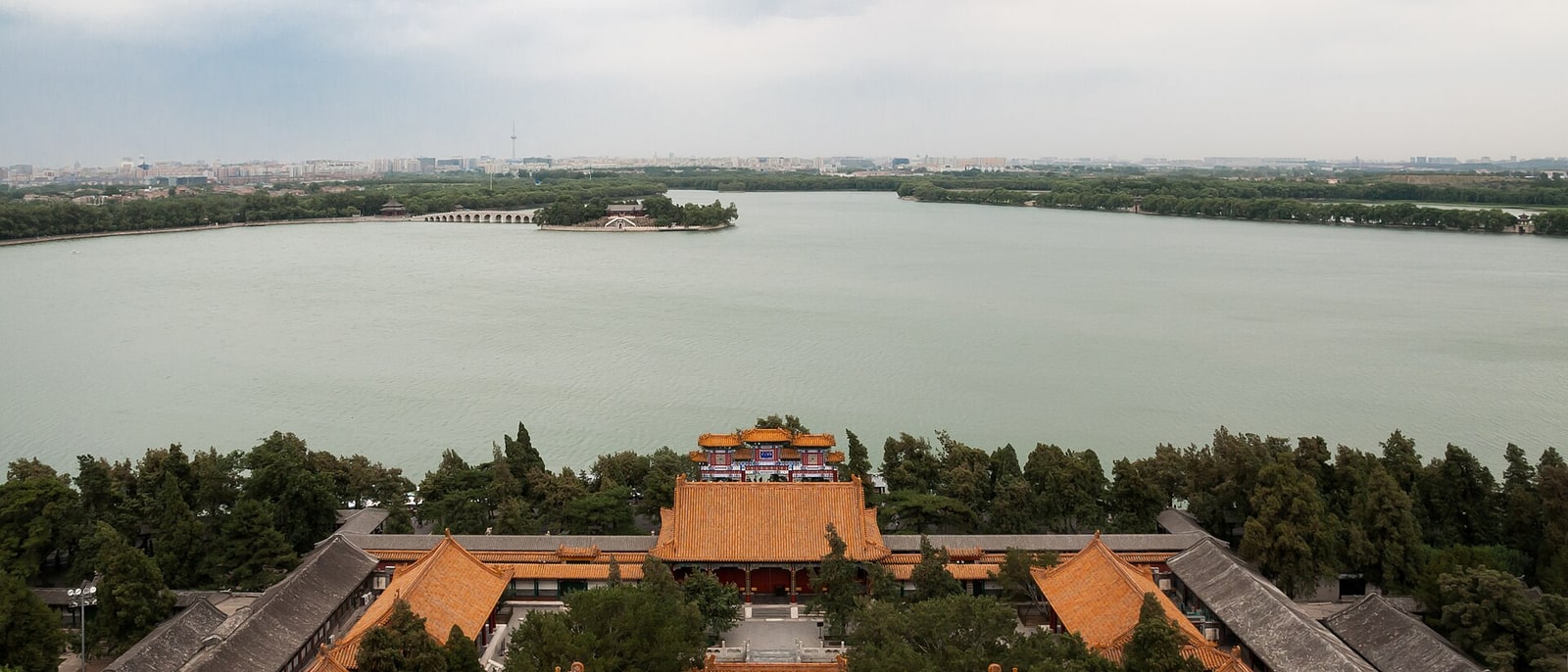
Of the surviving imperial gardens this is the largest, and it’s enormous: three quarters of it is Kunming Lake, which isn’t natural. It was dug by hand, and the earth they took out is the hill behind it. The emperors came here to escape the heat of the Forbidden City, which is a stone courtyard with no shade.
The piece to see, because it tells half of China’s story, is the Marble Boat: a stone boat at the lake’s edge that obviously doesn’t sail. The dowager empress Cixi had it rebuilt at the end of the nineteenth century, and the accusation, which historians qualify but which everyone in China repeats, is that she used money earmarked for modernising the navy on it and on the rest of the palace.
Shortly afterwards, that navy was destroyed by Japan in 1894. A marble boat that doesn’t float, paid for with the money for the boats that were supposed to.
- 04
Sunday: the 798
The 798 began as a complex of military electronics factories designed and built by East German engineers in the fifties, when China and the Soviet bloc were friends. That’s why it has Bauhaus-style halls, with curved roofs and north-facing skylights for constant light, which is exactly what an artist’s studio needs.
When the factories closed in the nineties, artists took the halls because they were cheap, and today it’s Beijing’s gallery district.
What’s interesting is that they haven’t cleaned it up: the revolutionary slogans painted on the beams in the sixties are still there, next to a contemporary art gallery. It’s the only part of Beijing where the twentieth century is visible without a filter, and it fills a Sunday.
Frequently asked
Which stretch of the Great Wall is best from Beijing?
Mutianyu for almost everyone: restored, with a cable car and half the crowds of Badaling, which is the closest and the most overrun. If you want unrestored wall with nobody on it, Jinshanling. Careful: the wall follows the ridges, so it isn’t a walk, it’s stairs.
Can you see the Great Wall from space?
No. It’s enormously long but it’s four to nine metres wide, less than a motorway, and from low orbit you can’t make it out with the naked eye. The myth comes from a 1938 book written before anyone had been to space, and China’s own astronauts have said it isn’t true.
How do you eat Peking duck?
You order the whole bird and share it. They carve it in front of you into about a hundred slices. The good part is the skin, and the local move is to dip a crisp piece in sugar and eat it on its own before building the pancakes with spring onion, cucumber and sauce. They make soup from the carcass if you ask.