Day trips from Tokyo
9 h route4 stopsBest: Fuji shows in winter, not summer: in August it’s hiddenUpdated July 2026
Tokyo sits at the centre of the best rail network in the world, so day trips are easy: you leave from a central station and an hour later you’re somewhere else, no car and no planning.
And a warning that saves money: the JR Pass went up by around 70% in October 2023 and stopped being an automatic purchase. For a trip that’s only Tokyo and its surroundings, it doesn’t pay: individual tickets come out cheaper. The pass only makes sense if you’re doing several long bullet-train journeys, Tokyo-Kyoto-Hiroshima style. Do the maths before buying it, because plenty of people buy it out of habit and lose money.
The route, stop by stop
4 STOPS- 01
Kamakura · 1 h
The trip to do if you only do one. Kamakura was Japan’s military capital in the 13th century and today it’s a coastal town with dozens of temples among wooded hills, and a beach.
The star is the Great Buddha: 13 metres of bronze, cast in 1252, sitting in the open air. It wasn’t always: it had a wooden temple over it, but typhoons took that twice and a tsunami in 1498 took it again, and after that they decided to leave him outside. He’s been sitting there for 500 years taking whatever comes. You can go inside the statue, which is hollow.
Around it, the Hase-dera temple and a trail route between temples that fits in the day.
- 02
Nikkō · 2 h
Tokugawa Ieyasu is buried here, the shōgun who unified Japan and whose dynasty ruled it for 250 years, and his mausoleum is the antithesis of the Japanese aesthetic you know: instead of bare wood and emptiness, it’s an explosion of lacquer, gold leaf and coloured carving, every centimetre decorated. The Japanese themselves consider it excessive, and that was the point: it was a demonstration of power.
The three monkeys are here (see no evil, hear no evil, speak no evil) carved on the stable, which is where the symbol you know from the emojis comes from. It’s up in the mountains among enormous cedars, so it’s a long trip: leave early. In autumn the colour of the trees is a reason in itself.
- 03
Mount Fuji · 2 h
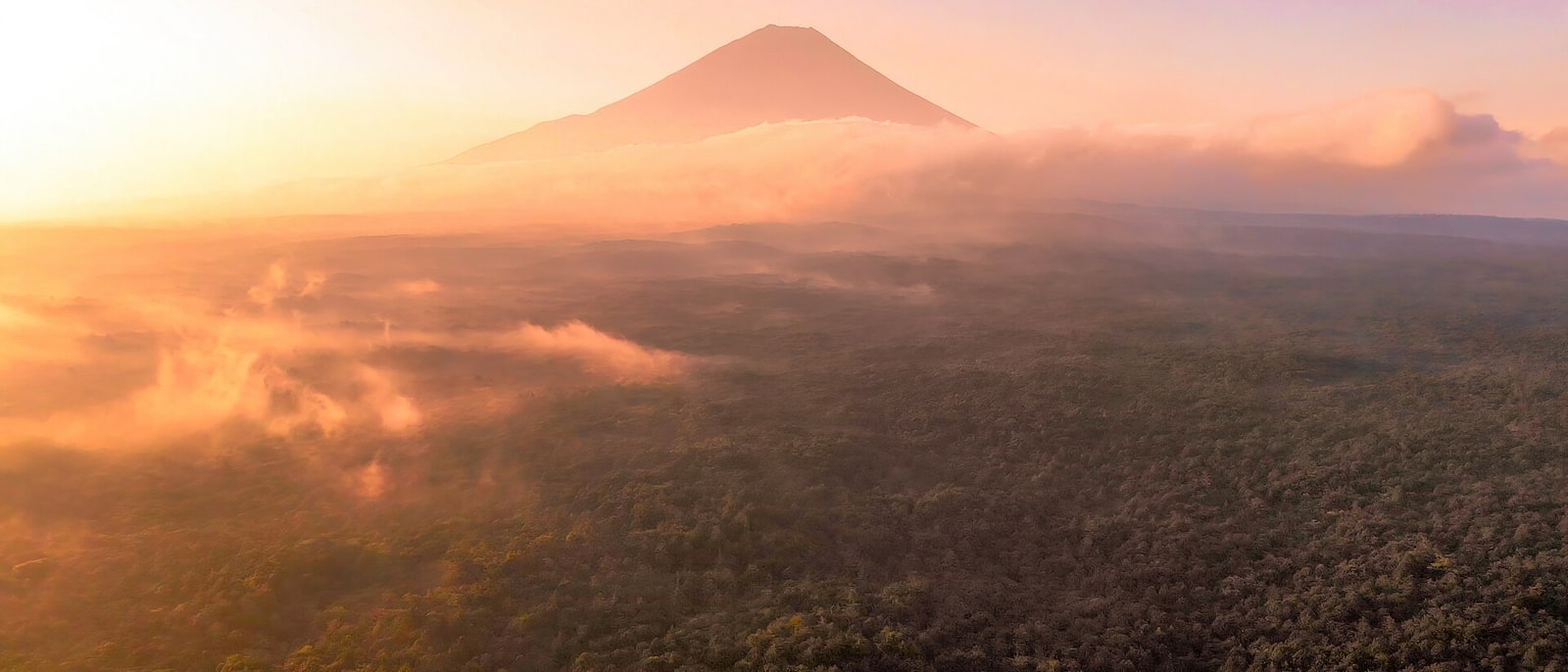
Expectations need managing before you spend a day on this: Fuji is shy. It’s covered by cloud most of the year, and the irony is that in summer (when you can climb it, July and August) is when it’s least visible, because humidity hides it. It shows best in winter, with dry air, and always better first thing in the morning than in the afternoon.
If you’re going to look at it rather than climb it, the area is the Five Lakes, with Kawaguchiko as a base, and there’s a direct bus from Shinjuku. Check a webcam the same morning before setting off: if it’s covered, don’t go, because there’s no plan B.
And if you only want it from afar, on a clear winter day you can see it from the free observatory at Shinjuku city hall.
- 04
Yokohama · 30 min
Half an hour by train gets you to Japan’s second city by population, and no trip comes easier. Yokohama was the first port Japan opened to foreigners in 1859, after two centuries of isolation, and that marked it: almost everything Western arrived here first. It has Japan’s largest Chinatown, a waterfront with converted brick warehouses and a port atmosphere Tokyo doesn’t have. It’s half a day and a good afternoon plan if the day has gone wrong: it’s so close it barely counts as a trip.
Frequently asked
Is the JR Pass worth it for Tokyo?
No. It rose by around 70% in October 2023 and stopped being an automatic purchase: for a trip that’s only Tokyo and its surroundings, individual tickets are cheaper. It only pays with several long bullet-train journeys, Tokyo-Kyoto-Hiroshima style. Do the maths first.
When can you see Mount Fuji from Tokyo?
In winter, in the morning, when the air is dry. The irony is that in summer, when you can climb it, is when it’s least visible because humidity hides it. Check a webcam the same morning before spending the day: if it’s covered, there’s no plan B.
What’s the best day trip from Tokyo?
Kamakura, an hour away: Japan’s 13th-century military capital, with dozens of temples among hills and the Great Buddha, 13 metres of bronze cast in 1252, in the open air since a tsunami took its temple in 1498.