Tokyo in a weekend
48 h route4 stopsBest: March-April and October-November. August is a humid ovenUpdated July 2026
A weekend in Tokyo forces an uncomfortable decision: giving things up. The city has twenty-three districts that work as independent cities, and moving between two extremes costs forty minutes on the train however perfect the train is. Anyone trying to see it all ends up seeing platforms.
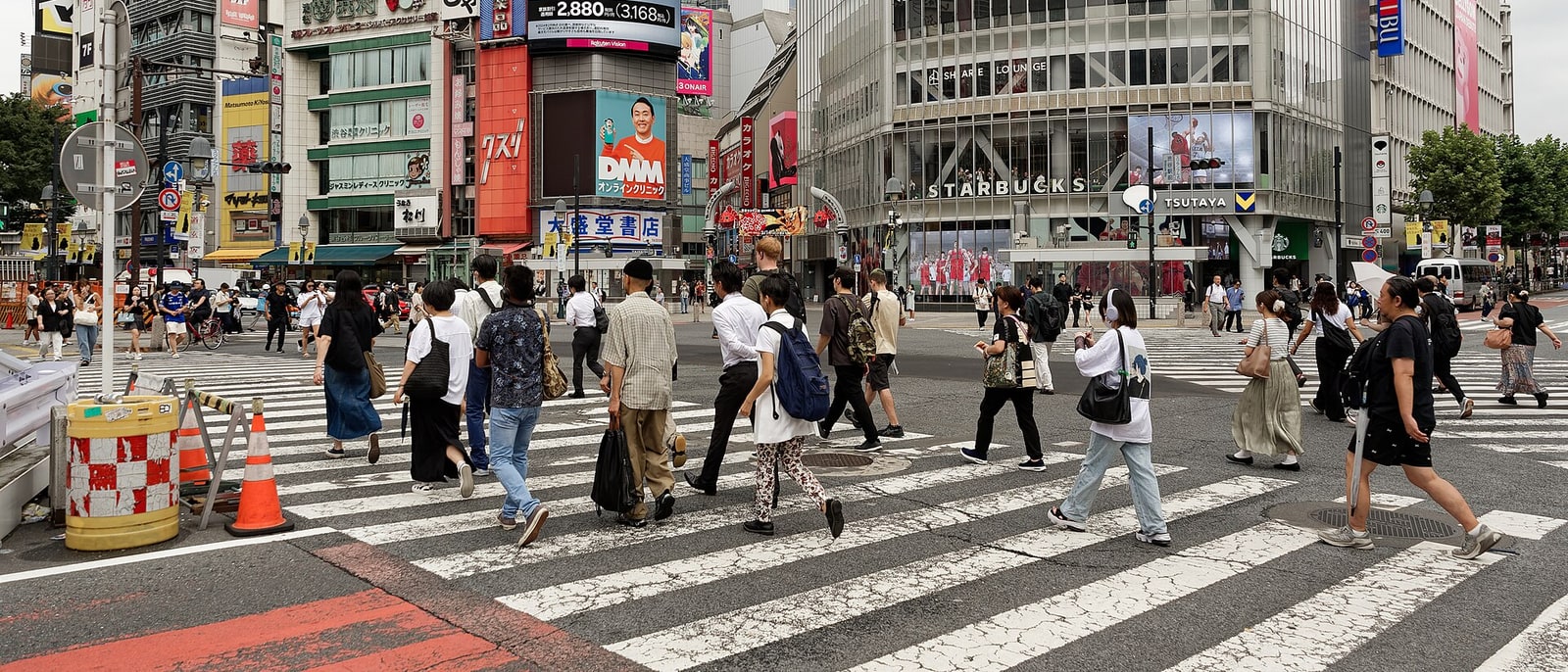
The formula that works: Saturday in the west (Shibuya, Shinjuku, Harajuku, the modern city) and Sunday in the east: Asakusa, Ueno, the river, old Tokyo. Two zones, two days, zero zigzag. And if you’re an early riser, there’s one thing you can only do at five in the morning and it’s worth the alarm.
The route, stop by stop
4 STOPS- 01
Friday night: izakaya under the tracks
The first night goes where Tokyo eats: an izakaya, the Japanese tavern, you order small things gradually and you drink, and the best are under the railway, in the arches of the Yūrakuchō and Shinbashi viaducts. Yakitori smoke, office workers in shirtsleeves at eleven at night and a train passing overhead every three minutes.
How it works: they seat you, they bring an appetiser you didn’t order (the otōshi, which is charged and functions as a cover, not a scam) and you order as you go. Yakitori, edamame, karaage.
And you don’t tip: it isn’t done in Japan and it can make people uncomfortable. Here the service is in the price and in the culture.
- 02
Saturday: the modern west
The big day of the Tokyo you’ve seen in photos: the hand-planted forest of Meiji Jingū, the Harajuku-Omotesandō contrast, Shibuya crossing and Shinjuku with its free observatory.
It all falls on the Yamanote line or within a walk, so there are no awkward changes.
Start at eight: the shrines are empty and beautiful at that hour, and by eleven they aren’t.
- 03
Sunday, early: Toyosu, not Tsukiji
The fact to get right: the tuna auction IS NO LONGER AT TSUKIJI. The wholesale market moved to Toyosu in 2018, and that’s where the tuna are auctioned before dawn, seen from a glazed visitor gallery. For the lower deck, the good one, you apply in advance and there’s a ballot.
What remains at Tsukiji is the outer market, still alive and excellent: food stalls, knives, Japanese omelette, sea urchin and breakfast sushi.
Very much worth it, but don’t go looking for the auction because it isn’t there. It’s one of the most repeated errors in Tokyo guides.
- 04
Sunday: Asakusa, Ueno and old Tokyo
The east day: Sensō-ji, the temple from 645, with its stall street, Ueno park with the National Museum, the one to see if you only enter one, and, if you have an afternoon left, Yanaka.
Yanaka is the gem: a district of low houses, alleys, cats and an enormous cemetery that escaped both the 1923 earthquake and the 1945 bombing. It’s one of the few places where you can see what Tokyo was like before it had to be rebuilt twice in twenty years.
There are no monuments: there’s a city.
Frequently asked
Where is the Tokyo tuna auction?
At Toyosu, not Tsukiji: the wholesale market moved in 2018 and many guides still haven’t updated. You watch from a glazed gallery, and for the lower deck you apply in advance and there’s a ballot. Tsukiji still has its outer market, alive and worth it.
Do you tip in Japan?
No, and it can cause awkwardness: service is in the price and leaving extra money reads as strange, not generous. In izakaya you’ll be charged an otōshi, an appetiser you didn’t order: that isn’t a scam, it’s the cover charge.
How many days do you need for Tokyo?
Four or five to avoid rushing, and you’ll still miss things: it’s twenty-three districts that work as cities. With two you do one line in the west and one in the east, giving up the rest, and it works.