Tokyo’s neighbourhoods
6 h route4 stopsBest: Two districts a day. Three means seeing platformsUpdated July 2026
Understanding why this city has no centre is understanding the whole of it, and the answer is twofold. First: the twenty-three special wards were independent towns and cities that gradually fused, each with its own station and its own life. And second, and harder: Tokyo has been destroyed twice in twenty years. The 1923 earthquake and the 1945 bombing levelled almost everything, so the city you see is mostly post-1950.
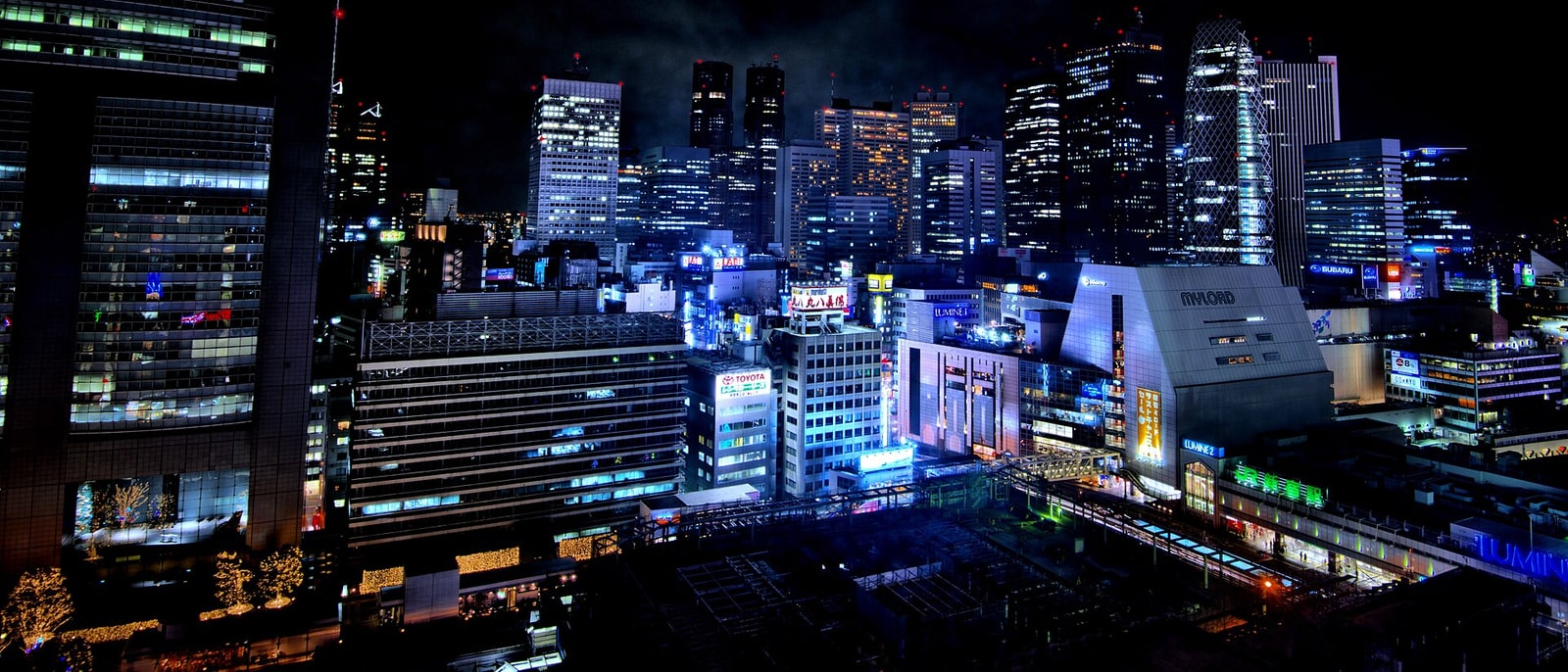
That explains its look, which throws anyone expecting a historic capital: here the old parts are exceptions, specific places that survived. And they’re the most interesting ones.
The route, stop by stop
4 STOPS- 01
Yanaka
The district to see and the one almost nobody sees. Yanaka is one of the very few areas of Tokyo that survived both the 1923 earthquake and the 1945 bombing, and so it keeps something the rest of the city doesn’t have: low wooden houses, narrow alleys, small temples, old shops and cats everywhere.
There’s nothing to “see” in the monument sense. There’s an enormous cemetery full of cherry trees, a shopping street, Yanaka Ginza, with croquette stalls, and a rhythm that isn’t the rest of the city’s. It’s a two-hour walk and it’s the only way to get a sense of what Tokyo was before it had to rebuild from nothing, twice.
- 02
Shimokitazawa
Tokyo’s young district and the most pleasant to walk: narrow streets that barely fit a car, hundreds of second-hand clothes shops, roaster cafés, small gig venues and pocket theatres. It’s where twenty-year-olds who don’t want Shibuya’s neon go. A few years ago they buried the railway that cut it in two and left a long promenade on the surface with new premises, which has changed the district without destroying it. It’s flat, it’s small and there’s nothing to visit: it’s one of the few places in Tokyo where the plan is to waste time.
- 03
Shinjuku
The district has everything at once and that’s why it overwhelms: the busiest station in the world, with around 3.5 million people a day and more than two hundred exits, the Guinness record, office towers, the city hall with its free observatory, the Shinjuku Gyoen garden, the department stores.
And at night it changes: Kabukichō is Japan’s largest nightlife district, with its neon and its reputation, Golden Gai is six alleys with two hundred tiny bars, and Omoide Yokocho, “memory lane”, is a passage of post-war taverns where you barely fit sideways. All in one district, ten minutes apart on foot.
A serious practical warning: at that station you need to know your exit before you leave the train, because taking the wrong one can cost you twenty minutes.
- 04
Yanaka, Nezu and Sendagi
Two more districts attach to Yanaka, Nezu and Sendagi, and together they’re called Yanesen. It’s the oldest area still standing and you can walk all of it in an afternoon. Best of all: Nezu shrine, from 1705, which has a passage of red torii lined up on a slope, like Kyoto’s Fushimi Inari but small and, this is the point, with no queue, no groups and nobody taking photographs for twenty minutes. It’s one of the loveliest things in Tokyo and it appears on no essentials list.
Frequently asked
Why doesn’t Tokyo have an old town?
Because it was destroyed twice in twenty years: the 1923 earthquake and the 1945 bombing levelled almost everything, so the city is mostly post-1950. The old parts are exceptions that survived, like Yanaka.
Which Tokyo district should you see besides Shibuya?
Yanaka, to the north: it escaped the 1923 earthquake and the 1945 bombs, and keeps low wooden houses, alleys and small temples. It’s the only way to see what Tokyo was before rebuilding twice. Next to it is Nezu shrine, from 1705, with red torii and no queues.
What’s the biggest station in Tokyo?
Shinjuku, which is also the busiest in the world: around 3.5 million people a day and more than two hundred exits, Guinness record included. Know your exit before you leave the train: getting it wrong costs twenty minutes.