OZU /AUSTRALIA /MELBOURNE /GUIDE
Where to eat in Melbourne
3 h route4 stopsBest: Book for weekend dinner: this city genuinely eats outUpdated July 2026
The dim sim was invented in Melbourne in the forties and it isn’t dim sum, however much the name suggests it. A local Chinese cook made it by adapting siu mai to local tastes and pockets: bigger, rougher, more meat and made to be eaten standing in the street. Seventy-odd years later it’s still sold on every corner and it’s as much this city’s as the coffee.
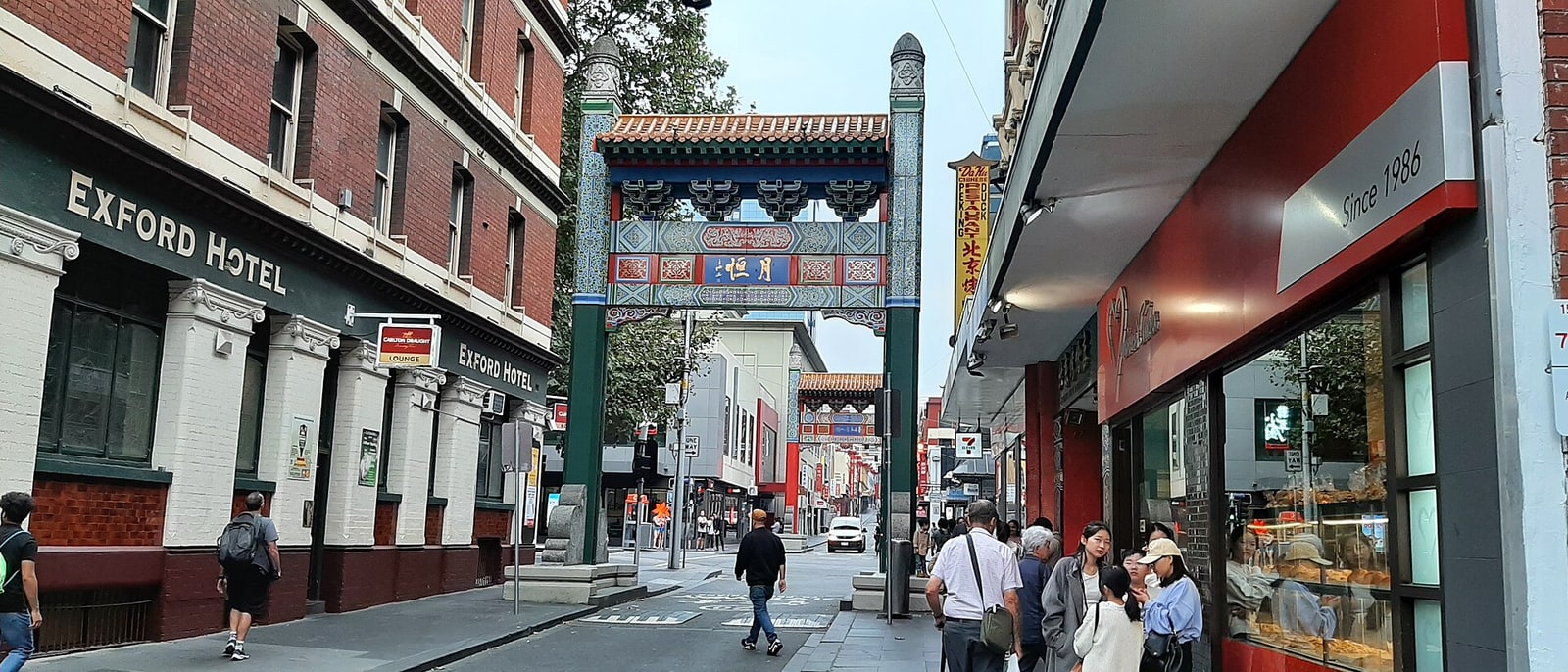
That story, a Chinese thing remade here until it turned local, is exactly how food works in Melbourne. This city took waves of immigration that changed its cooking for good: Italians and Greeks in the fifties, Vietnamese from the seventies, and everything else behind them. There’s no Melbourne cuisine: there are whole suburbs where you eat somebody else’s cooking, made by people from there, better than you expect.
The route, stop by stop
4 STOPS- 01
Chinatown, which dates from 1850
Melbourne’s Chinatown lines up along Little Bourke Street, inside the grid, and its merit lies in the date: it formed in the 1850s, when thousands of Chinese miners arrived for the Victorian gold rush, and it hasn’t stopped since. It’s one of the oldest continuous Chinese settlements in the Western world.
That means there’s no themed quarter staged for visitors here: there are a hundred and seventy years of layers. Old-school Cantonese restaurants, modern Sichuan places, dumpling halls, and midday yum cha with the trolleys going between the tables.
The history behind it isn’t always pretty: those miners had to pay taxes nobody else paid and suffered racist laws that ended in the White Australia policy. That the quarter is still here, on the most central street, is the answer.
- 02
The Greek and the Italian
Melbourne has one of the largest Greek communities of any city outside Greece, and that isn’t trivia: it’s why this city eats and drinks the way it does. Postwar Greek and Italian immigration was massive and brought two things that stayed for good: espresso machines and the idea that eating out is a way of living, not an expense.
Lygon Street, in Carlton, is the Italian street: restaurants with tablecloths, gelato and waiters at the door. It’s heavily trodden and it’s still true. The Greek side is on Lonsdale Street, in the centre, with its cake shops and tavernas.
The deeper tip is another: don’t come to Melbourne to eat “Australian food”, because you won’t find it. Here the local cooking is whatever each group brought, and it’s been made with local produce for seventy years.
- 03
Footscray and Richmond: the Vietnamese
Ten minutes by train from the centre there are suburbs where you eat Vietnamese better than almost anywhere outside Vietnam. Footscray, to the west, and Victoria Street in Richmond, to the east, aren’t themed streets staged for anyone: they’re suburbs where the Vietnamese community that arrived in Australia from the late seventies lives, and where the markets sell fresh herbs you won’t find in a supermarket.
What to do there is simple: a pho, or a banh mi, which here is a baguette roll, French colonial legacy, with pâté, pork, coriander and chilli, costing about what a coffee costs.
The places have no charm whatsoever: fluorescent lights, formica tables and enormous plates. That’s the point. Melbourne rewards anyone who takes a fifteen-minute train instead of staying inside the grid.
- 04
The parma, and the argument about the name
The Australian pub dish par excellence is a crumbed chicken breast, covered in tomato sauce, ham and melted cheese, with chips and salad beside it. It’s Italian-American in origin, went local decades ago and is on the menu of virtually every pub in the country.
And it carries a territorial war that’s taken half seriously here: in Victoria it’s called a parma. In the state next door, a parmi. The argument is constant, there are newspaper articles and polls, and saying the wrong word in a Melbourne pub identifies you instantly as an outsider.
What’s interesting for a visitor isn’t the dish, which is merely fine: it’s that this country has a very live pub culture and that an Australian pub at six in the evening, with people coming off work, is the fastest way to see how the city actually works.
Frequently asked
Where do you eat best in Melbourne?
Outside the grid. Little Bourke’s Chinatown has run since the 1850s gold rush. Lygon Street in Carlton is the Italian side and Lonsdale the Greek, the Greek community here is among the largest outside Greece, and Footscray and Victoria Street in Richmond are genuine Vietnamese suburbs, ten minutes by train. Don’t look for “Australian food”: here the local cooking is whatever each group brought.
What is a dim sim?
A Melbourne invention from the forties, and it isn’t dim sum however much it looks like it: a local Chinese cook adapted siu mai to local tastes by making it bigger, rougher and meatier, to be eaten standing in the street. It’s still sold on every corner and it’s as much this city’s as the coffee.