Day trips from Athens
10 h route4 stopsBest: The Saronic boats run all year. Winter seas have the last wordUpdated July 2026
The islands start an hour away by boat from the port of Piraeus, and that’s what almost nobody works out properly when planning Athens. You don’t need an internal flight or an overnight crossing: the Saronic Gulf is right there, and in the time it takes to cross a big city you’re on a real island, with a harbour, fishermen and clean water.
Around Athens there are three kinds of trip and it pays to know which is yours. The Saronic islands, which are the quick way out to sea. The great sanctuaries of antiquity (Delphi, Mycenae, Epidaurus) which are two to three hours away and explain the Greek world better than Athens does. And Cape Sounion, with its temple leaning over the Aegean, which is half an afternoon and a sunset. With two days, you can do one of each.
The route, stop by stop
4 STOPS- 01
Hydra
A couple of hours by boat from Piraeus and you reach an island with no cars. It isn’t that there are few or that they’re restricted in the centre: there are none, on the entire island, and you can’t bring one. Transport is mules, donkeys and boats, and everything coming in or out of the harbour (the shopping, the furniture, the suitcases) goes on an animal’s back.
The result is an island in silence, with an amphitheatre of stone houses around a horseshoe harbour, and an atmosphere like nothing else. It was a very rich port in the eighteenth century, which is why the houses are grand rather than fishermen’s. You climb to the monastery, you walk to the coves, because there’s no other way, and you eat at the harbour watching the boats come in.
Note one practical thing: in winter the Saronic sea gets rough and there are days when the boats don’t sail. Check before committing to return the same day.
- 02
Delphi
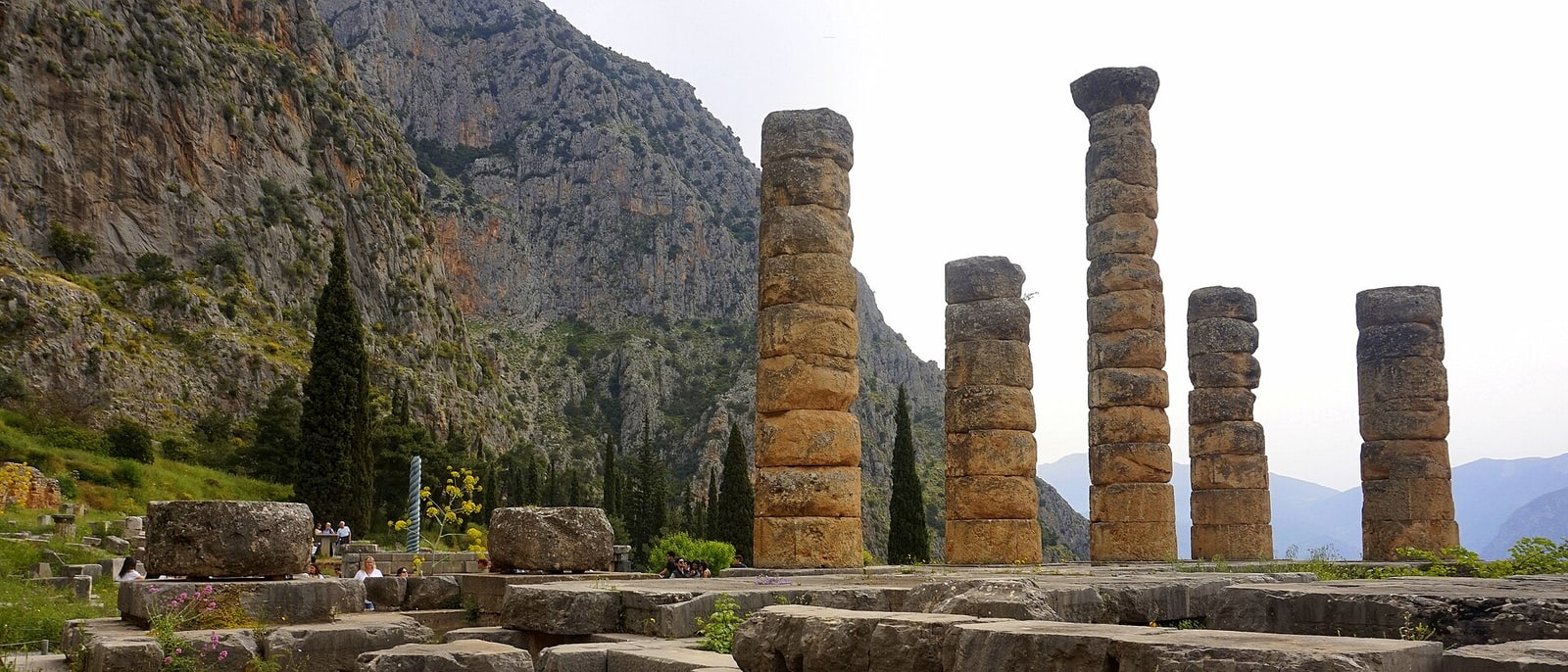
Two and a half hours from Athens, hung on the flank of Mount Parnassus with an endless olive valley below, is the place the Greeks reckoned the exact centre of the world. The myth says Zeus released two eagles from the ends of the earth and they met here. A stone was set to mark the point, the omphalos, the navel, and it’s still there.
The oracle was here, and it wasn’t a folkloric matter: it was the most influential institution in the Greek world. Entire cities, kings and generals came to ask before founding a colony or starting a war, and the answer came from a priestess in a trance, in ambiguous language that then had to be interpreted. With the offerings they brought, all of this was built: treasuries, temples, a theatre and a stadium, hung off the mountain. The setting is among the most spectacular there is.
It’s a hammering of a day, but it’s the trip that will explain most about what you saw in Athens.
- 03
Epidaurus and Mycenae
Two places in the same day, two hours from Athens. The first is the theatre of Epidaurus, fourth century BC, with fourteen thousand seats on the slope, and its fame isn’t visual but acoustic: from the back row you hear what’s said in the centre of the orchestra with no amplification. People test it constantly, with coins, paper and whispers, and it works. Modern studies put it down to the geometry of the stone seats, which filter low background noise and let the voice through.
The second is Mycenae, and there you change era: this is a thousand years earlier than the Parthenon, from the Bronze Age Mycenaean civilisation, the one in the Iliad. You enter through the Lion Gate, see the circular graves and a monumental vaulted tomb chamber.
Schliemann excavated here in the nineteenth century and pulled out a gold mask he announced as Agamemnon’s. It isn’t, it’s centuries older, but the name stuck. It’s in the museum in Athens.
- 04
Cape Sounion
At the southern tip of Attica, on a cliff dropping into the Aegean, stands a white marble temple of Poseidon from the fifth century BC. Fifteen columns are still up. It was there so sailors would see it as they rounded the cape: it was the first thing of Athens visible from the sea, and the last on leaving.
It’s this region’s sunset spot, no argument, and you should go with that in mind: arrive in daylight, wait and watch the sun drop into the sea behind the columns.
The other thing to do is hunt for the most famous graffiti in Greece: Lord Byron, who came through in the early nineteenth century, carved his name into one of the columns and it’s still there, visible, protected. The poet who ended up dying in the Greek war of independence left his signature cut into a two-and-a-half-thousand-year-old temple. Nobody is consistent.
Frequently asked
Which islands can you visit in a day from Athens?
The Saronic Gulf ones, from the port of Piraeus: Aegina is an hour away, and Hydra and Poros a couple. Hydra is the most special because there are no cars on the entire island, transport is mules and boats, which leaves it silent. Note for winter: there are rough-sea days when the boats don’t sail, so check before committing to return the same day.
Is Delphi worth it from Athens?
Yes, though it’s two and a half hours each way and a long day. It hangs on the flank of Parnassus over an olive valley, and it was the place the Greeks reckoned the exact centre of the world: the stone marking it, the omphalos, the navel, is still there. The oracle was the most influential institution in the Greek world, and the sanctuary was built with the offerings of those who came to ask.