A weekend in Athens
20 h route4 stopsBest: Spring or autumn. In August Athenians leave and many places shutUpdated July 2026
Athens was a village of around ten thousand when it was made capital of Greece in 1834. A village with glorious ruins beside it, chosen for what it meant rather than what it was: it had no proper port of its own, no industry and hardly any people. Everything you see today between the ancient stones (the blocks, the avenues, the millions of people) has been built since, and most of it after 1950.
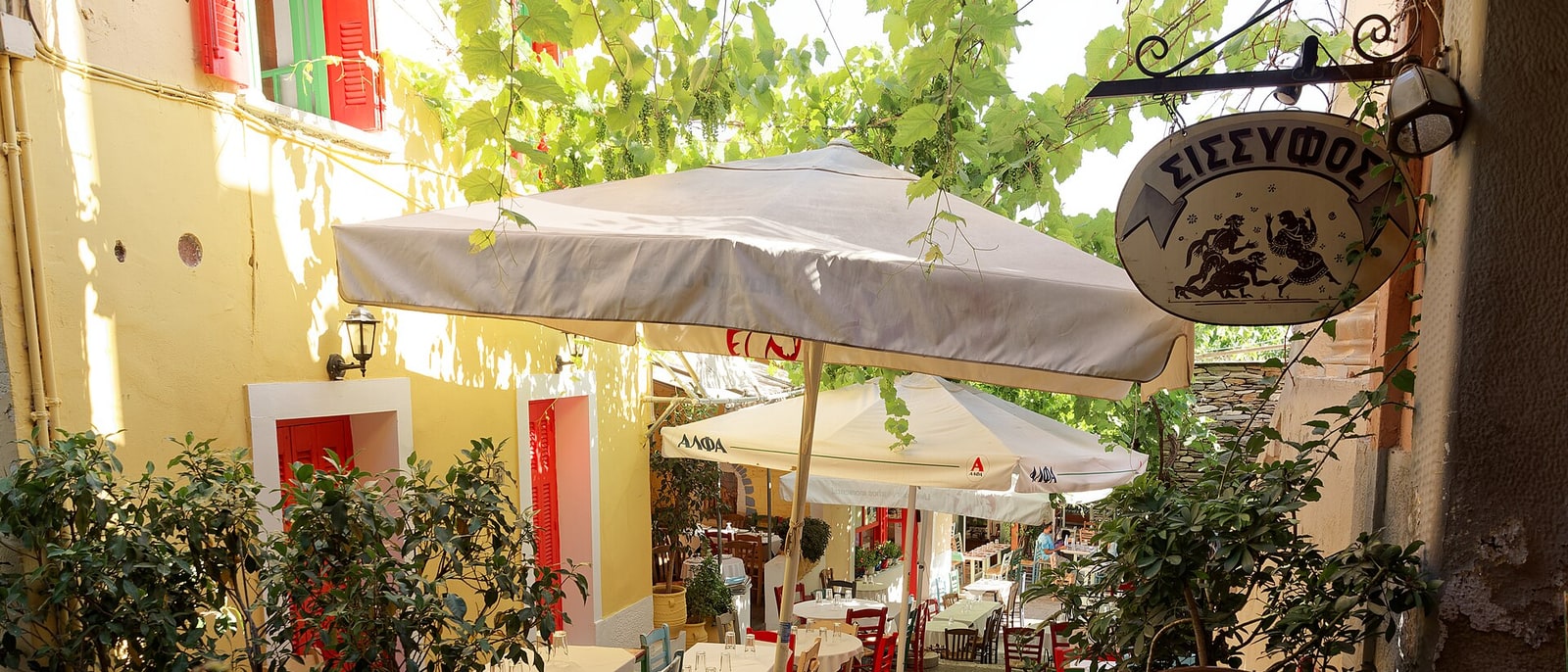
That explains the first impression, which is usually hard: a lot of concrete, a lot of aerials and little urban beauty between one monument and the next. And it explains how to build a weekend: ancient Athens is dealt with in one long day, because it’s all together at the foot of the rock. The second day is for the other city, the later one, which is the one having a good time: food quarters, street art, rooftops and, if you fancy, a boat.
The route, stop by stop
4 STOPS- 01
Saturday: the rock and what’s under it
Saturday goes to ancient Athens, with a huge advantage worth using: it’s all next to each other. The Acropolis, its museum, the Agora, the Temple of Olympian Zeus, Hadrian’s Arch and the ancient Kerameikos cemetery fit into one walk, with no transport. Start at the top and early, which is when it’s possible.
One detail that orders the day: the Temple of Olympian Zeus, those giant columns in a bare lot that almost everyone glances at in passing, took some six hundred and thirty-eight years to build.
It was begun in the sixth century BC and finished by the emperor Hadrian in the second century AD. Six-odd centuries of work stopped, resumed and stopped again. Seeing it knowing that turns a five-minute stop into half an hour.
- 02
Saturday night: Psyrri and the rooftops
Psyrri sits a ten-minute walk from Monastiraki and does the opposite of Plaka: it was a quarter of workshops and warehouses, it’s ugly from outside, it’s covered in street art and it has the highest concentration of good places to eat and drink in the centre. Nobody stands at the door inviting you in, and that alone is a filter.
What needs adjusting is your clock. In Athens dinner is at ten at night, or later, and this isn’t flexible: sit down at eight and you’ll be alone in the room with the place half asleep. The city switches on when the sun drops, especially in summer, for obvious climatic reasons.
And for the time before, the rooftops: half of Athens has bars on the roofs with the floodlit Acropolis behind. Have one up there and go down to eat afterwards.
- 03
Sunday: the archaeological museum
The National Archaeological Museum falls far from the rock, in a charmless quarter, and so plenty of people skip it. That’s a big mistake: it’s one of the best museums in the world at what it does and it holds things that exist nowhere else.
Go straight to one specific case: the Antikythera mechanism. It’s a bronze artefact full of gears, recovered from a shipwreck in 1901, made around the first or second century BC, used to calculate astronomical positions and predict eclipses. An analogue computer from antiquity. What makes it hard to digest is that nothing of that mechanical complexity appears again for over a thousand years, in medieval Europe.
It’s an object that breaks the timeline, and it’s there, in a museum nobody visits on a Sunday.
- 04
Sunday afternoon: an island, or the cape
The day allows two good endings. One is the sea: from the port of Piraeus boats leave for the Saronic Gulf islands (Aegina, Hydra, Poros) and a couple of hours’ sailing puts you in another world. Hydra has a quirk that makes it special: there are no cars, none, and the transport is mules and boats.
The other is Cape Sounion, at the tip of Attica, where a white marble temple of Poseidon hangs over a cliff with the Aegean below. It’s this region’s sunset place and has been for centuries. There’s a detail people love hunting for: Lord Byron, who was here in the early nineteenth century, carved his name into one of the columns. It’s still there.
That the Romantic poet who died fighting for Greek independence should have graffitied an ancient temple is a contradiction good enough to justify the trip.
Frequently asked
What to do on a weekend in Athens?
One day for ancient Athens, which is all together at the foot of the rock and done on foot: the Acropolis first thing, its museum, the Agora and the Temple of Olympian Zeus, which took some 638 years to build. And another for the modern city: the National Archaeological Museum, home of the Antikythera mechanism, Psyrri for dinner at ten and, if time allows, a Saronic island from Piraeus or Cape Sounion.
What time is dinner in Athens?
Ten at night or later, and it isn’t flexible: sit down at eight and you’ll be alone in the room. The city switches on when the sun drops, for obvious climatic reasons. Use the time before on a rooftop: half of Athens has bars on the roofs with the floodlit Acropolis behind.