Where to eat in Athens
3 h route4 stopsBest: Lunch at three, dinner at ten. Earlier you’ll find nobodyUpdated July 2026
The frappé was invented in 1957 at a trade fair, and by accident. A rep for an instant coffee brand wanted one on his break, couldn’t find hot water anywhere, and ended up putting the coffee into cold water with ice inside a toy shaker from the neighbouring stand. It foamed. Seventy years later, that emergency invention is Greece’s national drink.
That story says a fair amount about how people eat and drink here: without solemnity and with an enormous capacity for keeping whatever works. The Greek cooking of Athens is shared-table, plates in the middle, good vegetables, oil poured freely and cheese in almost everything. And it has a timetable rule that isn’t negotiable: lunch is late and dinner is very late. Fighting that is the fastest way to eat badly in this city.
The route, stop by stop
4 STOPS- 01
Coffee, and its rules
The frappé was born in 1957 for want of hot water and today it has a descendant that has dethroned it: the freddo. Freddo espresso is espresso shaken with ice, and freddo cappuccino is the same with cold milk foam on top. You order them stating the sugar level up front: no sugar, medium or sweet. Learn those three words and you’ll order properly.
But the important part isn’t the drink, it’s the use. In Greece coffee isn’t a three-minute errand: it’s a unit of social time. People sit on a terrace with a freddo and stay there two hours talking, and that is a complete activity, not the prelude to something else. Nobody will hurry you or put the bill in front of you.
If you want to see how this city works, sit on any square at six in the evening and do nothing for two hours. That’s Athens.
- 02
Souvlaki and gyros: not the same
Athens’ fast food wraps meat in pita bread with tomato, onion, yoghurt sauce and, this throws foreigners, chips inside. And there are two different things people confuse: souvlaki is meat on a skewer, done over coals. Gyros is meat cut from a vertical rotating spit, like döner. You order them differently and they taste different.
The complication is that in Athens the whole package is called souvlaki even when it has gyros inside, so you have to learn to order. The useful formula: ask for gyros or souvlaki, then “in pita” if you want it wrapped to take away, or “on a plate” if you want the meat served with sides.
And the deeper tip: the best places are narrow rooms with a queue of locals, no tables or four of them, doing only this. The big places with six-language menus around Monastiraki, no.
- 03
The taverna, and how it works
The Greek taverna has a logic you have to grasp or you’ll eat badly. You don’t order a starter and a main each: you order plates for the middle to share, and everyone eats from everything. Vegetables, salads, cheeses, some fish, some meat, and bread for mopping. That’s called meze and it’s the correct way.
A couple of specifics. One: a real Greek salad has no lettuce in it. Tomato, cucumber, onion, olives, oregano and a block of feta on top, with oil. If it has lettuce, it’s for tourists. Two: order the vegetables. It’s the best section of Greek cooking and the one foreigners order least, going for the meat: stewed beans, aubergine, wild greens boiled with lemon.
And three: the oil is an ingredient, not a dressing. Here it’s poured in quantities that frighten people elsewhere.
- 04
The central market
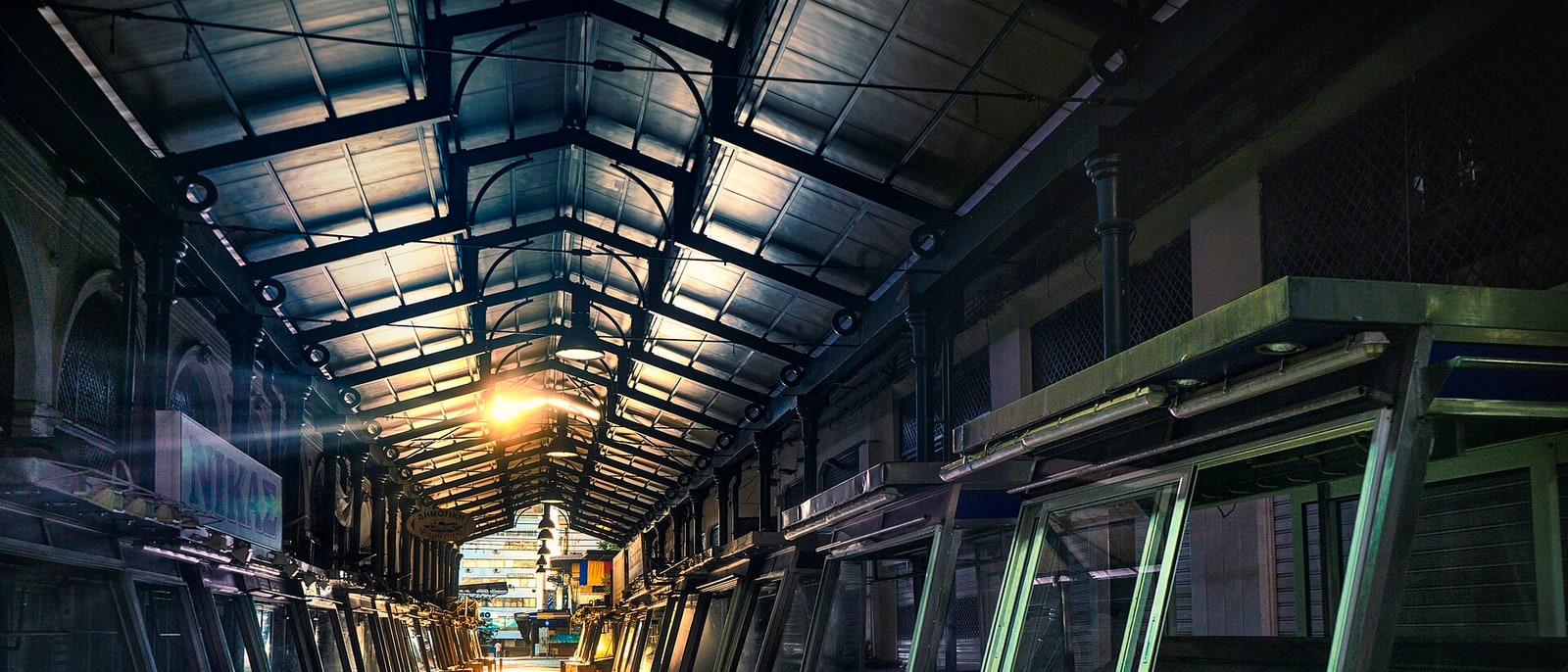
Athens’ central market, on Athinas street, is a nineteenth-century hall of butchers and fishmongers, loud, pungent and making no concession to visitors. This is where the city shops. Around it are the fruit stalls, the spice shops and the ones selling nuts and pulses loose, which are a spectacle of their own.
The thing to know is the timetable, because it’s wonderfully odd: inside the market there are eating rooms that open before dawn and serve patsás, tripe soup, at five in the morning.
It began as food for the people working there, and over time became the compulsory stop for anyone coming out of a club at four.
Butchers and clubbers sharing a table over a bowl of soup. There’s no better place in Athens to see the city with no pose at all.
Frequently asked
What do you eat in Athens?
In a taverna, everything in the middle to share: vegetables, the best section of Greek cooking and the one foreigners order least, cheeses, a real Greek salad (no lettuce: tomato, cucumber, onion, olives and a block of feta), fish and meat. And for the quick version, souvlaki or gyros in pita. Lunch is at three and dinner at ten.
What’s the difference between souvlaki and gyros?
Souvlaki is meat on a skewer done over coals. Gyros is meat cut from a vertical rotating spit, like döner. In Athens the whole thing wrapped in pita is called souvlaki even when it has gyros inside, so ask for the one you want and add “in pita” to take away or “on a plate” with sides. And yes, the chips go inside the bread.