Athens: practical tips
1 h route4 stopsBest: April-June or September-October. July and August are another matterUpdated July 2026
In recent summers, the Acropolis has closed during the middle hours of the day in heatwaves. That isn’t a meteorological curiosity: it’s the most useful piece of information anyone can give you about this city. Athens in July and August is a hard place, the rock is marble and there isn’t a scrap of shade up there, and the shape of your day depends entirely on that.
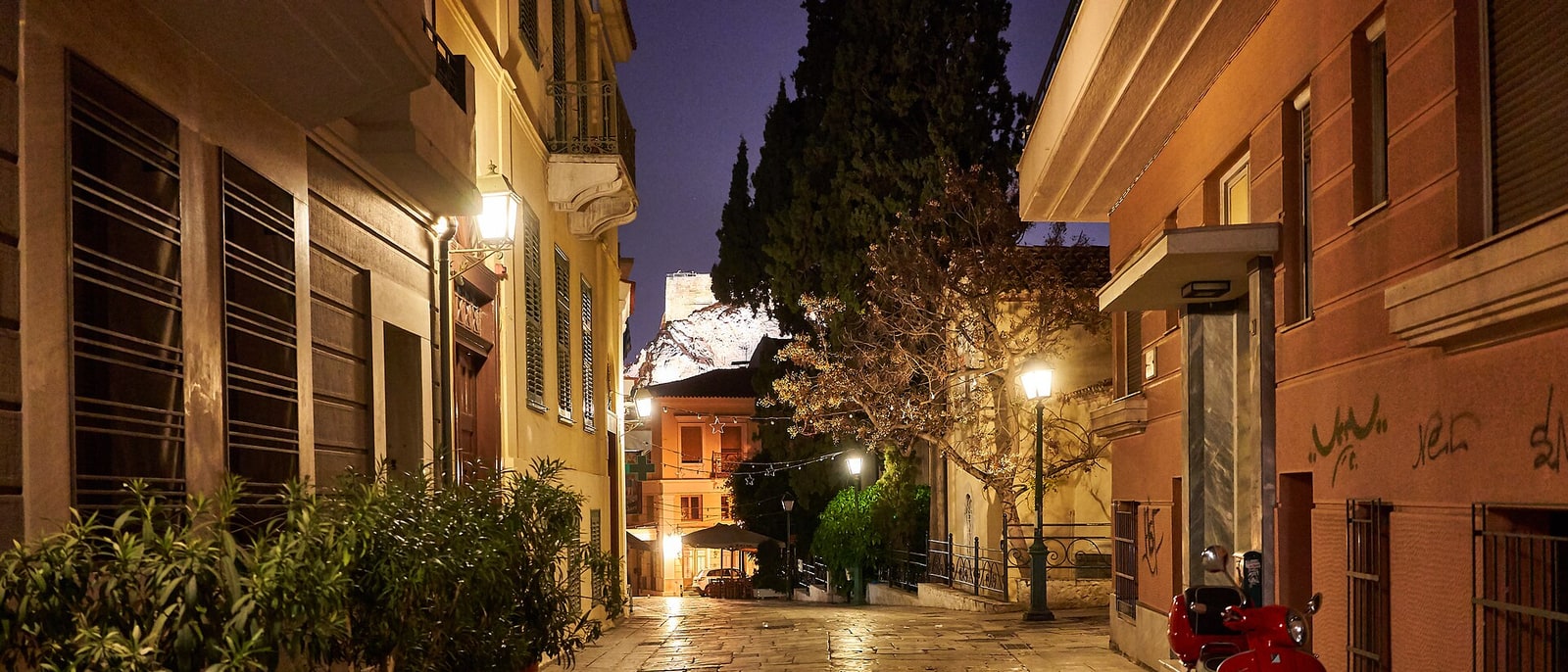
The rule is simple and everyone who lives here follows it: early morning, siesta or an air-conditioned museum at midday, and life from six onwards. Nobody sightsees in Athens at three in the afternoon in August. And from there, a few local things are worth knowing beforehand: the holiday calendar, how money works and what happens to this city in August.
The route, stop by stop
4 STOPS- 01
The heat, and how the day is organised
Athens sits in a basin ringed by mountains, so the hot air stays inside and the city works as a stone oven. In summer forty degrees is routine and heatwaves are increasingly common. In the worst of them, the authorities have gone as far as closing the Acropolis during the middle hours, simply because up there is nowhere to shelter.
So the day is organised the opposite way to how you’d do it at home: at eight in the morning you’re already on the rock, at two you’re indoors with air conditioning, the archaeological museum is vast and cool, and from six or seven you go back out. Dinner is at ten because before that you can’t be outside.
Carry water, there are public fountains, and wear shoes with grip: the Acropolis marble has been polished by footsteps for two thousand years and it’s slippery as ice.
- 02
August: the city leaves
In August Athenians leave, and that isn’t a figure of speech: the city empties and plenty of neighbourhood restaurants, shops and businesses close for weeks. The peak is around the 15th of August, one of the most important religious holidays of the Greek year, and in those days half the country is on its home island.
What that means for you has two sides. The bad: precisely the good places are shut, the neighbourhood ones that don’t live off tourists, and you’re left with what opens for visitors, which is the worst of it. The good: the city is calm and walks well.
And there’s another holiday worth checking: Orthodox Easter, which doesn’t fall on the same date as the Catholic one and which is THE festival of the Greek year, bigger than Christmas. If you coincide, you’ll see the city at its best, but with everything shut on the Sunday and reduced transport.
- 03
Money and tipping
Greece uses the euro and belongs to the European Union, so there’s nothing exotic to solve. Cards are accepted practically everywhere, but carrying some cash is still sensible for small tavernas, markets, taxis and above all if you leave Athens for villages or small islands.
Tipping doesn’t work as it does in America: there’s no expected percentage and nobody will look at you badly. You round up the bill, or leave some loose change if you enjoyed it, and that’s that.
In tavernas it’s common to be given a little dessert or a shot of something at the end without asking: that’s the house’s courtesy, not a billing error, and you don’t pay for it.
And one thing that throws people: in many places the bread and cover are charged separately, as a line on the bill. It isn’t a scam, it’s how it’s done here.
- 04
Things specific to this city
Four loose things that save grief. One: there’s a combined ticket covering the Acropolis and several central sites (the Agora, the Temple of Zeus, Kerameikos and one or two more) and it works out far better than paying separately, because you’ll end up going into several anyway. Ask for it at the ticket office.
Two: buy it online or go very early, because the Acropolis queues in season are the kind that ruin a morning. Three: the metro is clean, modern and works well, but always validate your ticket at the machines by the entrance even if nobody is watching. Inspectors exist and so do fines.
And four: Athens is a big ordinary city, with its pickpockets in the crowded parts of the centre and on the airport metro line, which is where most of them are because they know who has just arrived. Nothing dramatic, but wear your bag on the front at Monastiraki.
Frequently asked
When is the best time to visit Athens?
April-June or September-October. In July and August the city goes past forty degrees, it sits in a basin ringed by mountains, and in recent heatwaves the Acropolis has closed during the middle hours of the day. Besides, in August Athenians leave and the good neighbourhood places shut for weeks, leaving you only what opens for tourists.
What time should you go up the Acropolis?
First thing, with the gate just open, or last thing. It isn’t comfort advice: the rock is marble, there isn’t a scrap of shade up there and at midday in summer it’s a punishment. You also get half an hour almost without crowds. Take water and shoes with grip: the marble has been polished by footsteps for two thousand years and it’s slippery.