A weekend in Delhi
20 h route4 stopsBest: February-March or October. It’s a narrow window and there are reasonsUpdated July 2026
Delhi is seven cities and that isn’t brochure rhetoric: seven distinct capitals, founded by seven different powers across a thousand years, each on a slightly different spot of the same plain. When an empire fell, the next one didn’t rebuild on top: it moved a few kilometres away and started another. That’s why there are monumental ruins spread across the whole map today, and some of them are in the middle of a roundabout.
That’s the key to building a weekend here, because Delhi is enormous and you don’t walk from one place to the next. Don’t try to make a geographic route: make a chronological one. One day for the Mughal and pre-Mughal, which is in the south. Another for Shah Jahan’s Delhi and the British one, which are north and central. And the metro in between, which is what makes this possible.
The route, stop by stop
4 STOPS- 01
Saturday morning: the south, the oldest part
South Delhi holds the oldest part: the first cities stood here. The Qutub Minar is the obvious stop (the tallest brick minaret in the world, the mosque built from demolished temple stones, the iron pillar that doesn’t rust) and you have to see it.
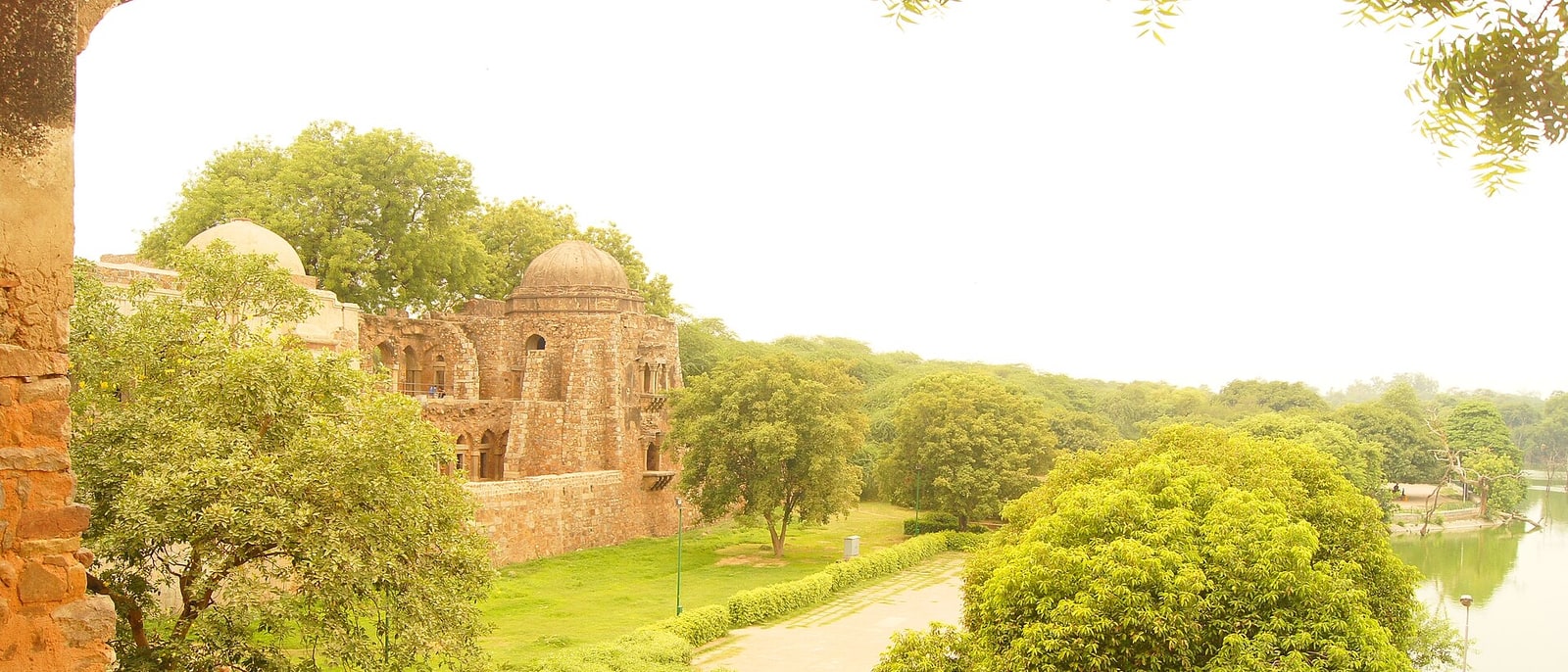
But what almost nobody does is what’s right beside it, and it’s the best thing in this city: the Mehrauli archaeological park. It’s an urban forest with over a hundred monuments inside (tombs, mosques, a stepwell, small palaces) from a thousand years of different periods, ruined, unrestored, unfenced, unticketed and with practically nobody there. You walk among them as if strolling through an ordinary park.
After the Qutub Minar queue, crossing over there and being alone in a thirteenth-century tomb is a contrast you don’t forget. Go early in the morning.
- 02
Saturday afternoon: Nizamuddin
Beside Humayun’s Tomb, in a maze of narrow lanes that doesn’t look like it leads anywhere, is the Sufi shrine of Nizamuddin, one of the most important living pilgrimage sites in South Asia. It has been running since the fourteenth century, without a break, and there’s the difference from almost everything else on this list: it isn’t a monument, it’s a place of worship full of people praying.
You go in barefoot, with your head covered, and everyone goes: Muslims, Hindus, Sikhs. What to know is the day: on Thursday evenings qawwali is sung, Sufi devotional music, in the shrine’s own courtyard, and it isn’t a show for tourists but the place’s ordinary liturgy.
You sit on the floor for an hour, among the people, listening. Go with respect and without a camera in anyone’s face. Leave an offering if you like.
It’s one of the most intense things you can do in this city and it costs nothing.
- 03
Sunday morning: the kitchen of ten thousand
In central Delhi, a step from Connaught Place, there’s a Sikh temple, the Bangla Sahib, with a tank and golden domes. It’s beautiful, but that isn’t why you go: you go for the kitchen.
The langar operates there, a central institution of Sikhism: a free meal, for anyone who turns up, with no questions about who they are, what religion they follow or whether they have money. Thousands of servings are given here every day, every day of the year, and volunteers do all of it: people peeling garlic in mountains, rolling bread on a production line, scrubbing pots the size of a bathtub. You can go in and watch, you can sit on the floor in a row with everyone and eat, and you can lend a hand if you want.
You enter barefoot and with your head covered: they hand out scarves at the door. It’s probably what you’ll take away from Delhi.
- 04
Sunday afternoon: the gardens and the tombs
In the middle of well-off Delhi, the Lodi Gardens offer a big leafy park, with lawns, paths and people exercising, picnicking and doing yoga late in the afternoon. And in the middle of the grass, just like that, there are five or six monumental tombs from the fifteenth and sixteenth centuries, from the dynasties that ruled here before the Mughals. Enormous, domed, open.
Nobody treats them as monuments, and that’s exactly the charm. There are kids playing cricket beside a five-hundred-year-old tomb, older men taking their walk through the inside of a mausoleum and couples sitting on the steps. In Europe that would be fenced with a twelve-euro ticket. Here it’s the local park.
Go an hour before sunset, which is when it fills with people and when the light hits the red sandstone. It’s the best place in Delhi to do nothing.
Frequently asked
What to do on a weekend in Delhi?
Organise it by period, not geography: one day for the ancient south (Qutub Minar and Mehrauli park, with a hundred monuments and nobody in it) plus the Sufi shrine of Nizamuddin, which has qawwali on Thursday evenings. And another for the centre: the langar at the Sikh temple of Bangla Sahib, where thousands of people are fed free every day, and the Lodi Gardens at dusk.
Why is Delhi said to be seven cities?
Because it literally is: seven distinct capitals founded by seven different powers over a thousand years, each on a slightly different spot of the same plain. When an empire fell, the next didn’t rebuild on top: it moved a few kilometres away and started another. That’s why there are monumental ruins across the whole map, and one or two in the middle of a roundabout.