Eating and drinking in Milan
5 stopsUpdated July 2026
Aperitivo was invented here and it’s worth understanding what it is before you arrive: you order a drink in the late afternoon and food comes with it, sometimes a small plate and sometimes a whole buffet, at no extra charge. It isn’t a promotion or a deal: it’s an institution of this city, born in the nineteenth century in the cafés downtown, and today it’s how half of Milan has dinner on a weekday.
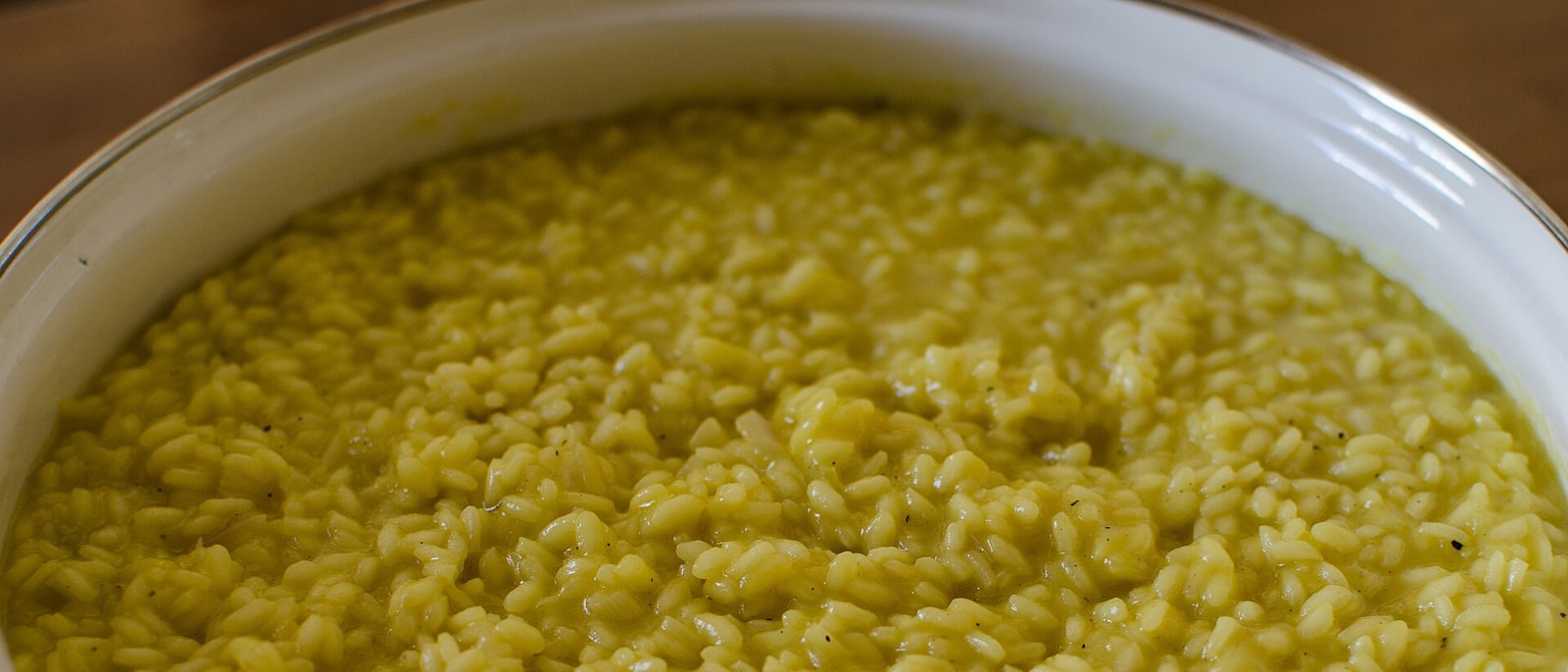
And the rest of Milanese cooking dismantles what you think you know about Italy: there’s almost no tomato here, little pasta, and a lot of butter, rice and saffron, because this is the Po valley and it’s closer to Switzerland than to Naples. Risotto alla milanese, the cotoletta and ossobuco resemble nothing from the south. It’s Italy, but not the one you know.
The route, stop by stop
5 STOPS- 01
Aperitivo
It works like this: between seven and nine you order a drink at drink prices and they put food out without charging for it. Depending on the place, it’s a small plate of olives and crisps or it’s a long table of pasta, rice, cured meat and vegetables that you help yourself to. The second, more generous version is called apericena, from aperitivo and cena, and it’s exactly what it sounds like.
The classic drink is Campari, invented in Milan in 1860 and still made to a secret recipe, the red came from cochineal until a few decades ago, or a negroni, or a spritz. The underlying logic is Milanese to the bone: the city works late, nobody wants to cook, and this settles dinner by nine.
The Navigli and Brera are the zones, and at seven you get a table.
- 02
Risotto alla milanese
Rice, stock, butter, parmesan and saffron, and nothing else. It’s deep yellow and it’s a dish of a richness that doesn’t fit the idea of Italian austerity, because saffron was for centuries the most expensive spice in the world, dearer than gold by weight: it takes about a hundred and fifty thousand flowers for a kilo, and they’re picked by hand.
The legend told here is that a glassmaker working on the Duomo’s windows, who used saffron to tint glass yellow, threw a handful into the rice at a wedding in 1574 as a joke.
It’s probably false and it’s too good to check. What is true is that risotto is served on its own, as its own course, and not as a side to anything: if it turns up under a steak, you aren’t in Milan.
- 03
The cotoletta and the ossobuco
The cotoletta alla milanese arrives as a veal chop with the bone in, breadcrumbed and fried in butter, thick. The difference from a Wiener Schnitzel isn’t a detail: the Viennese one is thin, boneless, pork or veal, and fried in lard. There’s a two-hundred-year argument about who copied whom, with a Milanese document from 1134 mentioning something similar that always gets waved around here.
Ossobuco is the other classic: a cross-cut of veal shank, bone and marrow in the middle, braised for hours with white wine and stock. The point is the marrow, which you dig out with a small spoon at the end and which is the best part. There’s specific cutlery for it.
It comes with the yellow risotto beside it, and that combination is Milan’s dish, with a name of its own: ossobuco con risotto alla milanese.
- 04
Panettone
Panettone was born Milanese and belongs to Christmas, and in this city that’s taken seriously: from November to January the pastry shops downtown compete with theirs, queues form, they’re given as presents the way good wine is, and there’s a chasm between the industrial supermarket one and one a bakery raises with sourdough over three days.
The sourdough is the key and it’s what explains the price: a real panettone needs thirty-odd hours of fermentation and a starter fed daily all year, including in July, when not one is sold.
If you come in December, buy it at a bakery and not a supermarket, and you’ll see it bears no relation. If you come in August, don’t look for it: what you find will be from a factory.
- 05
Coffee, standing and not sitting
As across Italy, coffee has two legal prices: al banco, standing, and al tavolo, seated, and the difference must be posted on a sign by law. It can be double or triple. It isn’t a tourist scam: it applies to the Milanese next to you too, and it’s why the Milanese takes it standing in thirty seconds.
In Milan this also has a character component: this is the Italian city in a hurry, and coffee standing at the bar, without sitting or speaking to anyone, is the most Milanese gesture there is.
The cappuccino rule still holds, it’s a morning thing, though here, which has more foreigners than anywhere in Italy, it no longer raises an eyebrow. Being served without comment doesn’t mean it’s normal.
Frequently asked
What is Milan’s aperitivo?
An institution of the city: between seven and nine you order a drink at drink prices and the food comes with it, from a small plate to a whole buffet you help yourself from. It isn’t a promotion: it’s how half of Milan has dinner on a weekday. The zones are the Navigli and Brera.
What do you eat in Milan?
Risotto alla milanese (saffron rice, yellow and nothing else), cotoletta alla milanese (veal chop on the bone, breadcrumbed and fried in butter), ossobuco with its marrow, and at Christmas, panettone. There’s almost no tomato or pasta here: there’s butter, rice and saffron.
Is the cotoletta the same as a Wiener Schnitzel?
No. The cotoletta alla milanese is thick, bone in, veal, and fried in butter. The Viennese one is thin, boneless and fried in lard. They’ve been arguing about who copied whom for two hundred years, and here a Milanese document from 1134 gets waved around.