Osaka: practical tips
1 h route5 stopsBest: March to May and October to NovemberUpdated July 2026
The escalator is what most quickly gives away someone from Tokyo: there you stand still on the left and overtake on the right. In Osaka it’s exactly the reverse. The usual explanation involves the 1970 Expo, when people were asked to keep one side clear and Osaka standardised on the opposite one.
Beyond that, almost everything else works as in the rest of Japan, with the difference that here people talk more, and more willingly.
The route, stop by stop
5 STOPS- 01
The ICOCA card and the passes
ICOCA serves as this region’s rechargeable card and works on the metro, buses, JR and private trains, vending machines and many shops. It works like Tokyo’s Suica and they’re interchangeable almost everywhere: if you already have one, you don’t need another.
The Japan Rail Pass covers only JR trains. In Osaka that leaves out the municipal metro, the Nankai and the other private companies, of which there are many and they’re very useful.
If you’ll mostly move within the city, the pass isn’t much help. If you’re chaining cities, it is.
- 02
Money and tipping
In Japan you don’t tip anywhere: it isn’t frowned on so much as confusing, and someone may come after you to return it. Service is included and that’s that. In restaurants you usually pay at a counter on the way out, not at the table. Cards are accepted more and more, but street food stalls, temples, small places and some ticket machines are still cash only. Carrying some yen avoids trouble. The cash machines in convenience stores and post offices are the ones that best accept foreign cards.
- 03
Eating while walking, and the bins
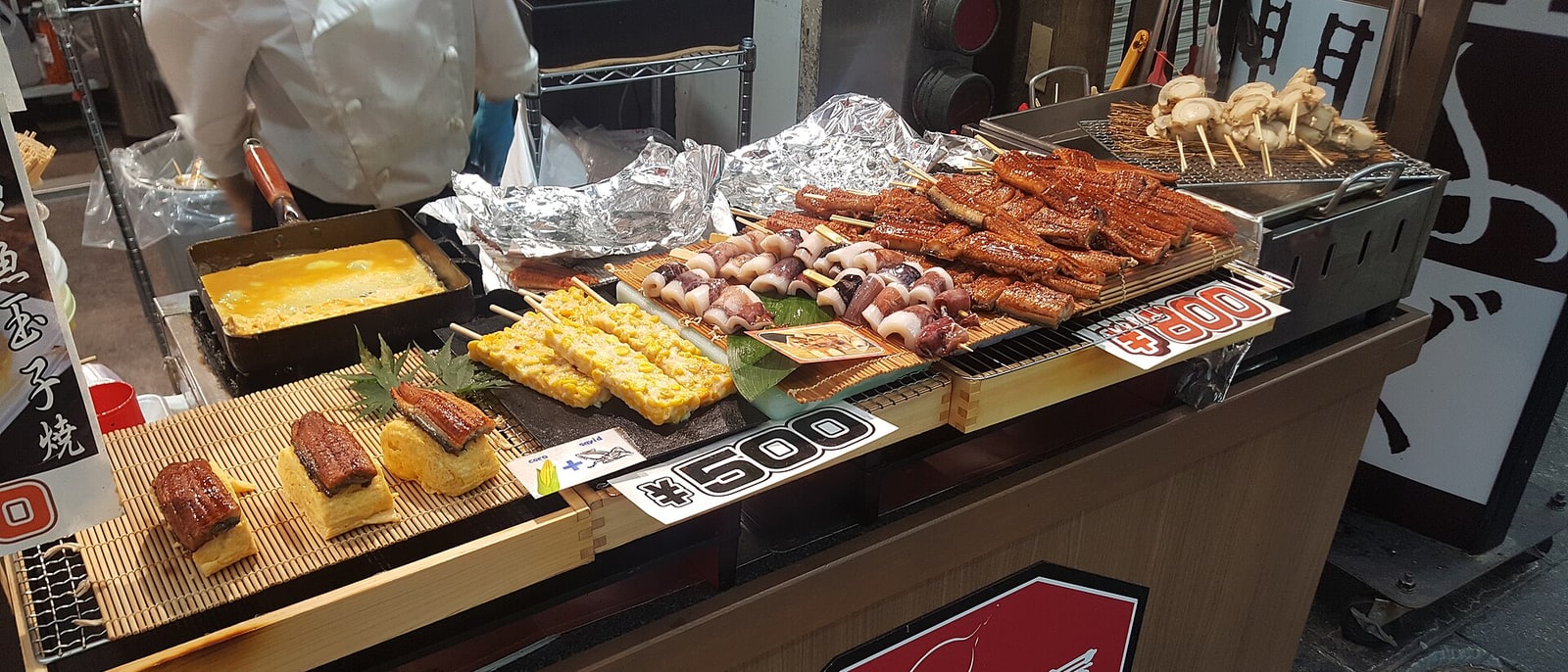
In Japan you generally don’t eat while walking, but Osaka is the tolerated exception: in stall areas like Dotonbori or Kuromon you eat standing beside the stall. What you don’t do is wander down the street eating as you go.
And one detail throws everybody: there are almost no public bins, and the city is spotless. The custom is to keep your rubbish until you find one, and they exist beside vending machines and in convenience stores.
Carrying a small bag helps.
- 04
When to come, and the summer
The best times are spring, March to May, with the cherry blossom in late March or early April, and autumn, October to November, with the red maples. June is the rainy season and July and August bring intense humid heat, with high temperatures and humidity that wear you down. If you come in summer, organise around the heat: start early, retreat into museums or the covered shopping arcades at midday and go out again at dusk, which is also when the city gets interesting.
- 05
Mobile data
Coverage is excellent across the city and in the metro. Getting connected early has a very practical use here: the Umeda and Namba stations are labyrinths with several different companies under the same name, and without a map on your phone you genuinely get lost.
And knowing which train is JR and which is private, which decides whether your pass is valid, takes two seconds in the app.
With an eSIM you leave the terminal already on data and pick the right train first time.
Frequently asked
Which side do you stand on the escalator in Osaka?
On the right, leaving the left free for people passing. It’s the exact opposite of Tokyo and most of Japan, and the usual explanation involves the 1970 Expo. It’s the detail that most quickly marks out a visitor.
Do you tip in Osaka?
No, in Japan you don’t tip anywhere. It isn’t frowned upon, it simply isn’t done, and someone may well come after you to return the money thinking you forgot it. Service is included in the price.
Do you need a visa for Japan?
It depends on your passport and the rules change, so check the official source before travelling. Bear in mind too which airport you arrive at, Kansai or Itami, because getting into the centre is rather different.