A weekend in Osaka
20 h route4 stopsBest: March to May and October to NovemberUpdated July 2026
Osaka is often used as a base camp, and it makes complete sense: it’s cheaper to sleep in than Kyoto, has better food, and sits at the centre of the Kansai region, with Kyoto, Nara, Kobe and Himeji all under an hour away.
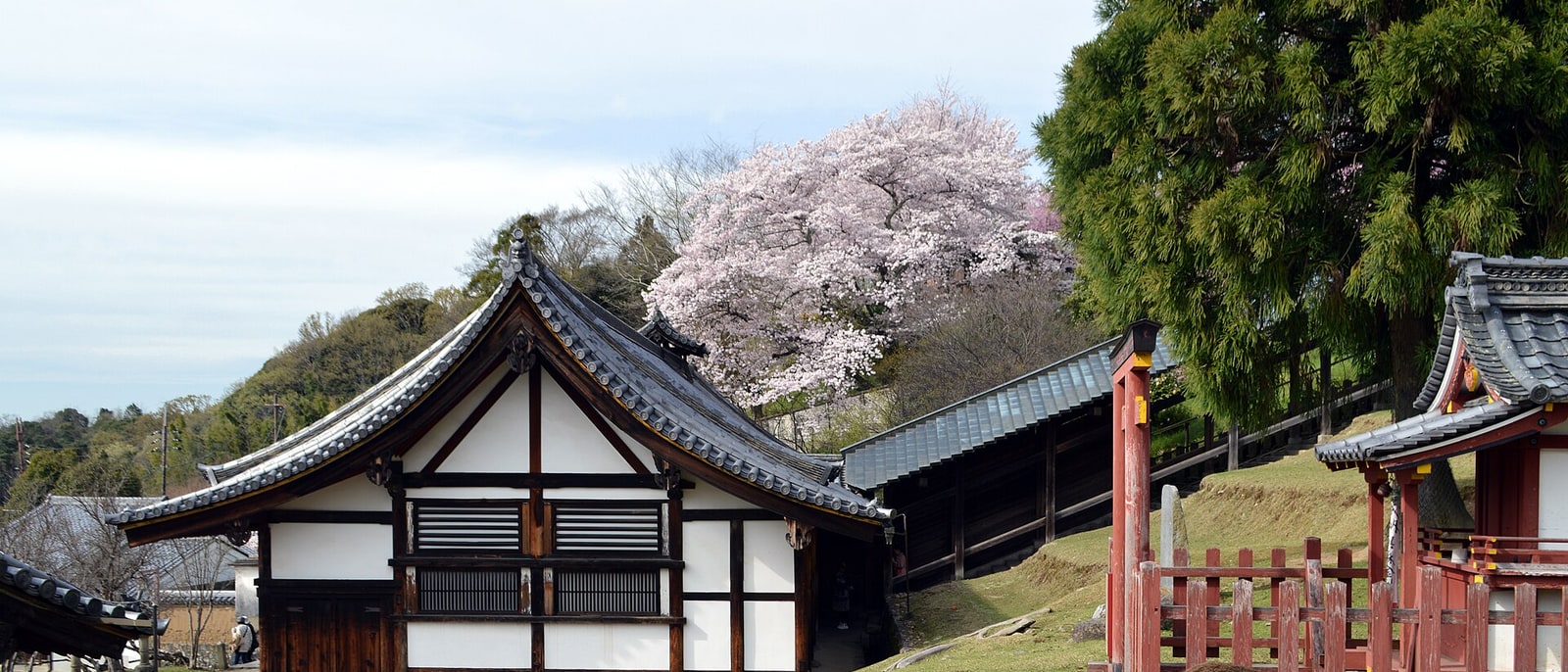
So a weekend divides itself: one day for Osaka (the castle, Dotonbori, the night) and another to head out. The decision isn’t whether to leave, it’s where to.
The route, stop by stop
4 STOPS- 01
Saturday: the city
The one-day route. With two days there’s also room for the Sumiyoshi Taisha shrine early in the morning, among the oldest and least visited things in the city.
- 02
Saturday night: eating in the south
A night in Osaka gets eaten, not toured. Between Dotonbori, Namba and Shinsekai you chain stalls together: octopus balls made on dimpled griddles, cabbage omelettes on the hotplate, battered skewers. You eat a little in each place and move on, which is exactly what kuidaore means.
And there’s a rule to know before sitting down at a kushikatsu counter: the sauce in the pot is communal and you don’t dip a skewer twice.
If you want more, use a piece of cabbage to spoon it on. It’s written on the signs and it’s the first thing they’ll tell you.
- 03
Sunday A: Nara
Nara took on the role of Japan’s first permanent capital in the eighth century, and keeps from then the Todai-ji, a timber temple that for centuries held the title of largest wooden building in the world, with a bronze Buddha some fifteen metres tall inside, cast in 752 using an amount of metal that nearly bankrupted the country.
And there are the deer: more than a thousand, loose in the park and the streets, considered messengers of the gods and protected for centuries. Crackers are sold to feed them, and they’ve learned to bow their heads to ask.
It’s forty minutes by train and takes a long half-day.
- 04
Sunday B: Himeji
If Osaka Castle left you feeling you were looking at a replica, Himeji is the antidote: it survived fires, earthquakes and the bombing of the Second World War, a bomb fell on the keep and didn’t explode, and is the best-preserved original Japanese castle there is. It’s UNESCO-listed.
They call it the white heron for the colour of its render and the wing shape of its roofs. Inside it’s a genuinely defensive timber building, with brutally steep stairs, loopholes and a maze of courtyards designed to lose an attacker in.
It’s under an hour by bullet train from Shin-Osaka.
Frequently asked
Is Osaka a good base for visiting Kyoto?
Very good: Kyoto is about fifteen minutes by bullet train from Shin-Osaka and under an hour on an ordinary train, and Osaka is usually cheaper to sleep in with a better food scene. Nara, Kobe and Himeji are also under an hour away.
What’s the difference between Osaka and Himeji castles?
Himeji is original and Osaka is a reconstruction. Osaka’s keep was rebuilt in reinforced concrete in 1931 and inside is a museum with a lift. Himeji survived fires, earthquakes and bombing intact, is timber-built, and is UNESCO-listed.