Day trips from Osaka
10 h route4 stopsBest: March to May and October to NovemberUpdated July 2026
Kyoto is about fifteen minutes from Shin-Osaka by bullet train and under an hour on an ordinary one. That closeness is the main reason many people stay in Osaka: it’s cheaper to sleep here and the food is better, and the imperial capital is a commuter ride away.
But three more trips compete head to head and almost nobody makes them: Nara, Kobe and, above all, Mount Koya.
The route, stop by stop
4 STOPS- 01
Kioto
The bombing of the Second World War never reached Kyoto, Japan’s capital for over a thousand years, so it keeps what other cities lost: some two thousand temples and shrines, districts of timber houses, and the dry gardens of stone and gravel.
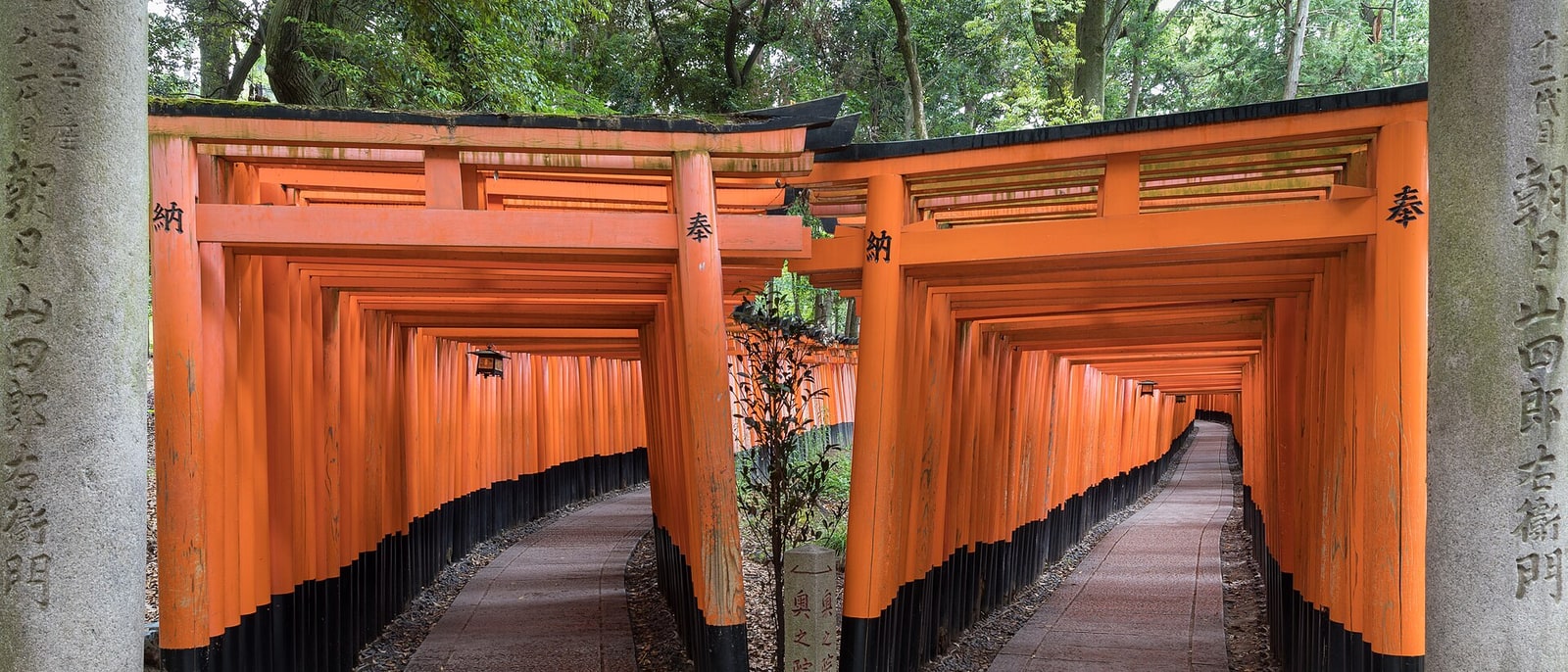
Almost everyone does the same round: Fushimi Inari with its thousands of red torii gates climbing the mountain, the gold-leafed Kinkaku-ji, the Arashiyama bamboo grove and the Gion district.
The only defence against the crowds is starting early. Fushimi Inari never closes, and at seven in the morning you have it almost to yourself.
- 02
Mount Koya
The monk Kukai founded Koyasan in 816, on a plateau ringed by mountains, and out of it grew the centre of the Shingon school of Buddhism. Getting there takes about two hours from Namba on the Nankai plus a funicular. Of the hundred-odd temples, some take in visitors, with monastery vegetarian dinner and morning prayers.
What you don’t forget is Okunoin: a cemetery some two kilometres long among giant cedars, with more than two hundred thousand graves (samurai, feudal lords, modern corporations) leading to Kukai’s mausoleum.
Shingon belief holds that he didn’t die but is in eternal meditation, which is why monks have carried food to him twice a day for over a thousand years. Walking it at dusk, with the lanterns lit, is among the most extraordinary experiences in Japan.
- 03
Kobe
Japan opened Kobe to foreigners in 1868, one of its first ports, and half an hour by train away the marks are still there: Kitano, the district of nineteenth-century Western houses, and the oldest Chinese community in the country alongside Yokohama and Nagasaki.
The beef that carries the name answers to a strict designation: only Tajima cattle raised in Hyogo prefecture meeting set marbling criteria.
It’s eaten teppanyaki, griddled in front of you, and isn’t cheap anywhere. Be suspicious of anywhere it is. The city also has a sober memorial to the 1995 earthquake, which destroyed much of it.
- 04
Nara and its deer
Forty minutes are enough to reach Nara, the country’s first permanent capital in the eighth century. In the Todai-ji stands the Great Buddha in bronze, fifteen metres cast in 752, and one of the temple’s columns has a hole at its base the size of his nostril: squeezing through brings luck, if you are slim enough. The deer are the other half of the visit, more than a thousand loose in the park, protected, coming up without fear and bowing to ask for crackers. Better not to carry visible food or papers in your pocket, because they eat them.
Frequently asked
How long is Osaka to Kyoto?
About fifteen minutes by bullet train from Shin-Osaka, and under an hour on an ordinary train from Osaka station, which is far cheaper. It’s one of the reasons many people stay in Osaka and visit Kyoto on day trips.
What is Mount Koya and is it worth it?
A complex of over a hundred Buddhist temples founded in 816, about two hours from Namba. Very much worth it, above all the Okunoin cemetery, two kilometres among cedars with over two hundred thousand graves. You can sleep in a temple, with vegetarian dinner and morning prayers.