A weekend in Belgrade
20 h route4 stopsBest: June to September: the river barges are a summer thingUpdated July 2026
The clubs are on the river. They’re called splavovi, rafts, and they’re barges moored to the banks of the Sava and the Danube, with the dance floor in the open air over the water: there are around three hundred and they’re of every kind, from the folk music place to the techno club. In summer they all open and the whole city goes down to the water from midnight. There’s nothing like it in Europe.
That’s the reason Belgrade has the reputation it has, and it explains how a weekend organises itself here: you sleep in the morning. With two days, one is history (the fortress, Tito, the whole twentieth century) and the other is river, Zemun and eating slowly. The city doesn’t get up early and there’s no sense fighting it.
The route, stop by stop
4 STOPS- 01
Saturday: the Museum of Yugoslavia
Yugoslavia becomes clear here, and by a very odd route: the presents Tito was given. Hundreds of objects from all over the world, from ceremonial staffs to stuffed animals, because for thirty-five years anyone who wanted something from that country brought something to that man.
The piece that sums it all up is the relay batons: every year, for his birthday, thousands of young people ran across Yugoslavia carrying a baton that ended up in his hands, and every republic, every factory and every school designed its own. There’s a room full of them.
Next door is the House of Flowers, with his grave, a white marble slab with no pomp at all. And on the street there are still older people who come to leave flowers, which says a fair amount about how complicated this subject is here.
- 02
Saturday: New Belgrade
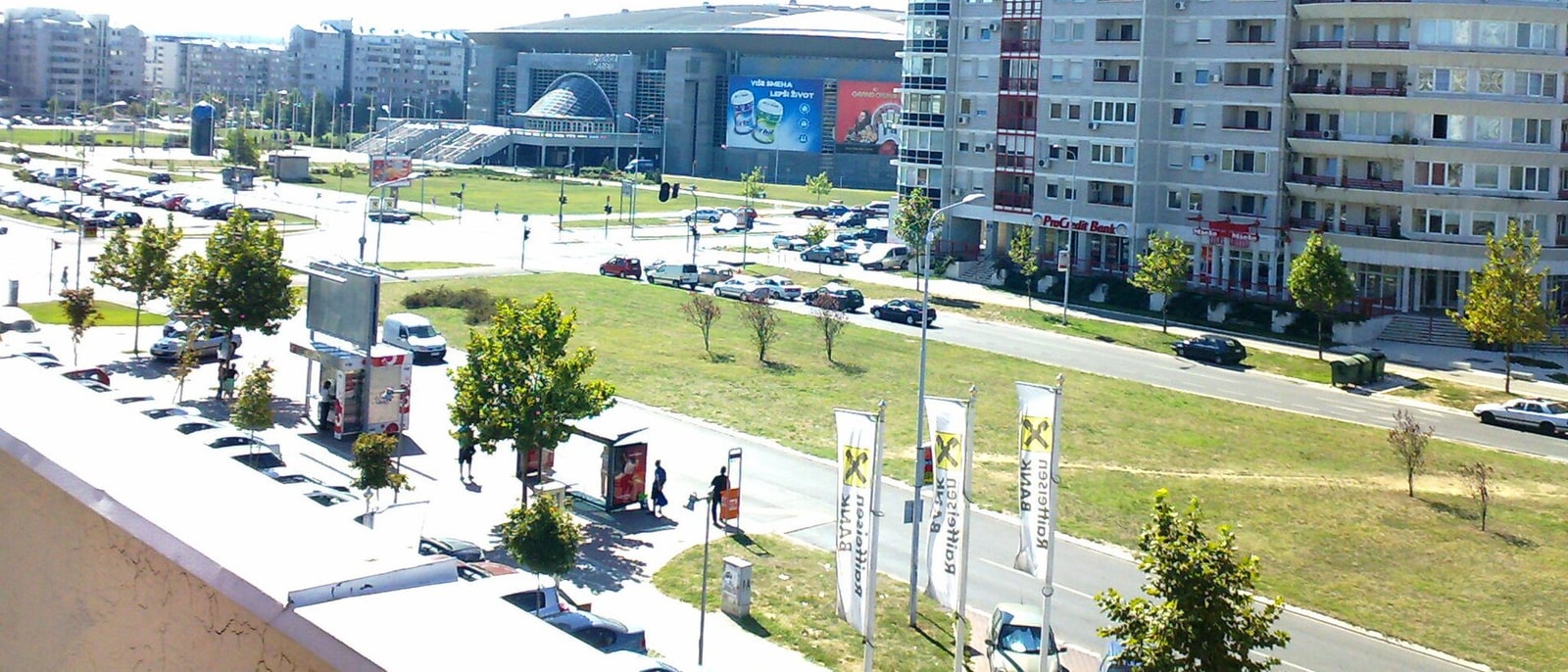
Across the Sava there’s an entire city of socialist blocks, with numbered superblocks (Blok 45, Blok 70) instead of street names. It went up from 1948 on what was a flood swamp, and it was filled by hand, with millions of cubic metres of sand moved by volunteer work brigades of young people from across Yugoslavia. It was the new country’s flagship project.
Today it’s the best ensemble of socialist modern architecture in the Balkans and some people come only for that: enormous blocks with shapes nobody dared attempt anywhere else, and above all the Genex Tower, two towers joined by a bridge at the top with a revolving restaurant, which was called the Western Gate of Belgrade and which is pure brutalism.
It’s half empty and it’s still there. It’s ugly, it’s imposing and it looks like nothing else.
- 03
Saturday night: the splavovi
Belgrade has around three hundred clubs floating on the water. They’re barges moored to the banks of the Sava and the Danube, with the dance floor in the open, the bar inside and the river underneath: in summer they all open and they fill, and in winter many close or move indoors. There’s everything: Serbian turbo-folk, techno, jazz, rock.
The timing throws anyone: you don’t go out at eleven here. At one in the morning things are starting and at three it’s at its peak. Having dinner before ten at night is odd.
And there’s a difference by bank worth knowing: the Sava splavovi, near New Belgrade, are the big ones and the electronic ones. The Danube ones, towards Zemun, are calmer and more about dinner with live music. And they don’t cost what they’d cost in western Europe, not remotely.
- 04
Sunday: Zemun
Zemun belonged to another country. For centuries, the border between the Austrian and the Ottoman empires ran along the river you cross by bus today: Belgrade was Ottoman and Zemun was Austro-Hungarian, with its customs post, its quarantine and its garrison. They weren’t joined to Belgrade until 1934.
And you see it the moment you arrive: low coloured houses, narrow streets, flat-tiled roofs and a central European air the rest of the city doesn’t have. Go up the Gardoš tower, from 1896, which the Hungarians raised to celebrate their thousand years and from which you see the whole Danube.
And then go down to the river promenade to eat fish, which is what people do here on Sundays: there’s a row of restaurants with tables at the water and the whole of Belgrade goes. It’s the best Sunday in this city.
Frequently asked
What are Belgrade’s splavovi?
Clubs floating on the river: around three hundred barges moored to the banks of the Sava and the Danube, with the dance floor in the open over the water. In summer they all open. The timing throws you: at one in the morning it’s just starting. The Sava ones are the big electronic ones. The Danube ones are calmer.
What is Zemun?
A Belgrade district that was another country until 1934: the border between the Austrian and Ottoman empires ran through there, so Belgrade was Ottoman and Zemun Austro-Hungarian. You see it in the façades, which are central European. Go up the Gardoš tower and down to the river to eat fish: it’s the best Sunday in the city.