Belgrade: practical tips
4 stopsUpdated July 2026
Serbia isn’t in the European Union or in Schengen, and that has two practical consequences people assume backwards: there’s a border check going in and coming out even from a neighbouring EU country, and you don’t pay in euros here, you pay in dinars. The cash machines work fine and there are exchange offices on every corner, but arriving thinking you’ll pay the taxi in euros doesn’t work.
In exchange, this is one of the cheapest places in Europe for what it offers, people are hospitable in a way that overwhelms you, you’ll be offered rakija in the first place you walk into, and there’s none of the mass tourism of other capitals. Belgrade is an easy, cheap city with a reputation that doesn’t match the reality.
The route, stop by stop
4 STOPS- 01
The dinar, and the border
Serbia has been an EU candidate for years but isn’t in it, and it isn’t in Schengen either. So there are passport checks going in and coming out, even arriving overland from Hungary or Croatia, and the border queues in summer are genuinely long if you’re driving. By air you notice nothing beyond the stamp.
The currency is the Serbian dinar and euros aren’t accepted in ordinary life: in shops, taxis and restaurants you pay in dinars. There are cash machines everywhere and exchange offices on every corner, with good rates and no visible commission, so don’t change more at the airport than you need for the taxi.
Cards are accepted without trouble in the centre, and in small places and markets they aren’t: carry some cash.
- 02
The hospitality, which is serious
Serbian hospitality shows the moment you walk into a house and it isn’t a cliché: they’ll put a rakija and something to eat in front of you before asking why you came, and if you say you aren’t hungry they’ll put it there anyway.
Refusing the rakija is a small but real slight. If you don’t drink, take the glass, wet your lips and leave it, and that counts.
And there’s an expression you’ll hear that’s worth understanding: “samo malo”, just a little, which is what they say while pouring you double. The underlying logic is that the guest obliges: refusing to give is worse than insisting too much.
In a restaurant this translates into portions that frighten you and into nobody ever pushing you off a table. And in the manner: it’s a country where people will walk three streets with you to show you where something is rather than explain it.
- 03
The two alphabets
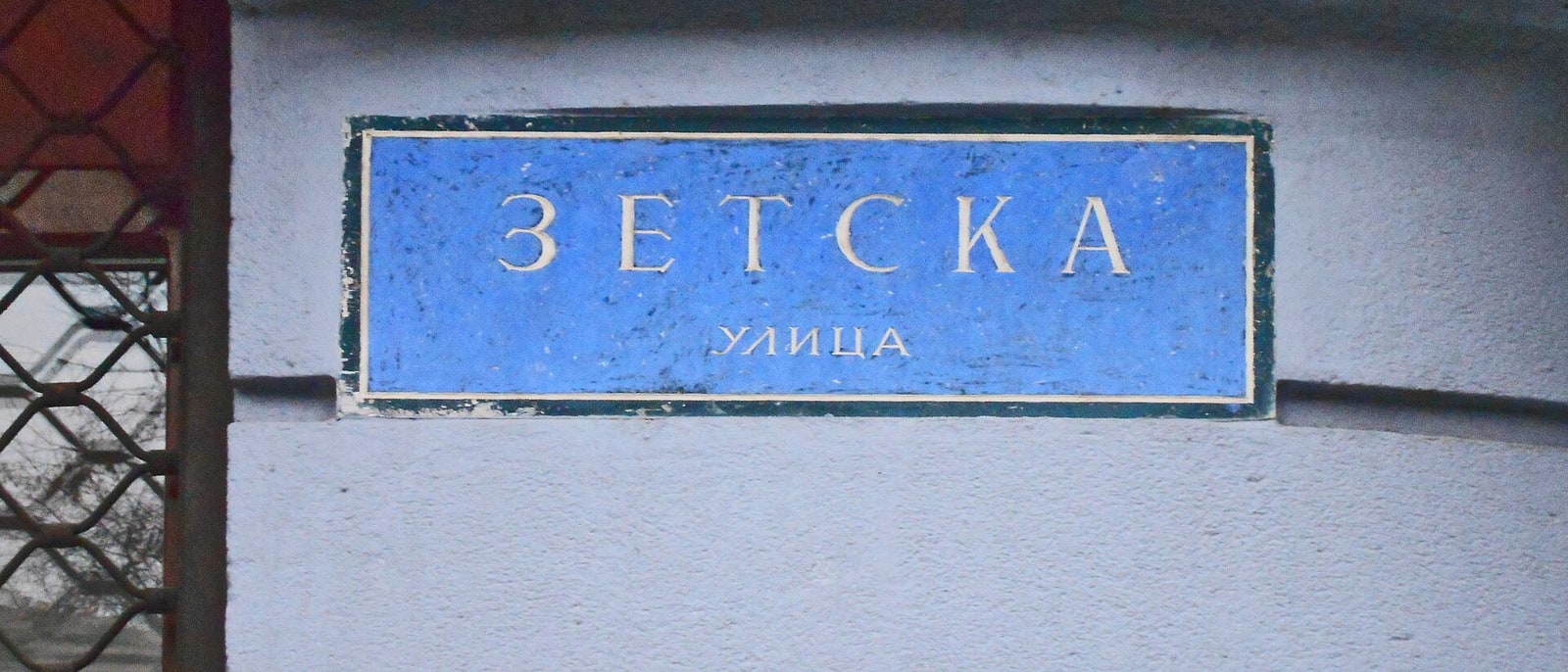
Serbian is written in two alphabets and both are correct: Cyrillic is the official one and Latin is used constantly, often in the same place. You’ll see a street name in Cyrillic on the plaque and in Latin on the sign next to it, and nobody finds it odd. Serbia is one of very few countries in the world with two alphabets in active simultaneous use for the same language.
For you this is easier than it looks: almost everything touristic and commercial is in Latin, and Serbian Cyrillic has thirty letters, each with one sound and always the same one. In a train ride you learn to decipher signage, which is more useful than you think for reading a menu or a bus destination.
And a note: place names in Cyrillic transliterate letter by letter, so Београд is exactly Beograd. There’s no catch.
- 04
Mobile data
The practical warning that prevents the most grief is one almost nobody has in mind: Serbia isn’t in the European Union, so the surcharge-free roaming you have inside the EU doesn’t apply here. Your European tariff, the “use your data as at home” one, ends at the border. And since Belgrade is a hop from Budapest or Zagreb, a lot of people cross without noticing and get the bill afterwards.
There’s a regional agreement that has cut roaming between the Western Balkan countries, but that’s between them: it doesn’t cover you coming from Spain. Check your tariff before crossing, or solve it with an eSIM that covers Serbia, activated before you leave home.
And bear in mind that if you do the Danube trip you’ll be close to the Romanian border: watch out for the network hop, because that one does get charged.
Frequently asked
Can you pay in euros in Belgrade?
No: Serbia isn’t in the EU or the eurozone and you pay in dinars. There are cash machines everywhere and exchange offices on every corner with good rates, so change only what you need at the airport. Cards are accepted in the centre. In small places and markets they aren’t.
Does European roaming work in Serbia?
No: Serbia isn’t in the European Union, so the EU’s surcharge-free roaming doesn’t apply and your “use your data as at home” tariff ends at the border. A lot of people cross from Hungary or Croatia without noticing and get the bill afterwards. Check before crossing or solve it with an eSIM that covers Serbia.
Which alphabet is used in Serbia?
Both: Cyrillic is the official one and Latin is used constantly, sometimes on the same sign. It’s one of very few countries in the world with two alphabets in active use for the same language. Almost everything touristic is in Latin, and Serbian Cyrillic has 30 letters with one fixed sound each: you decipher it in a while.