Eating in Belgrade
4 stopsUpdated July 2026
Ajvar is made in the street. Every autumn, when the red pepper harvest comes in, families bring enormous grills out onto the pavement or into the yard and roast fifty kilos of peppers at once. Then they’re peeled one by one, ground and cooked for hours, stirred with a wooden paddle, and out of that come the year’s jars. It’s done between several people, it takes a whole day and the whole neighbourhood smells of the same thing.
That’s the axis of Serbian food: it isn’t restaurant food, it’s home food and seasonal, and what reaches a tavern table is a version of that. It’s heavy, it’s meat and embers, it comes in quantities that frighten you and it costs very little. And it all starts with a shot of rakija you don’t refuse.
The route, stop by stop
4 STOPS- 01
Rakija
Fruit brandy, and in Serbia it’s plum by default: šljivovica. It’s offered the moment you enter a house, before the coffee and before anything, and refusing is a small slight, so if you don’t drink, try wetting your lips and leaving the glass. It’s taken at room temperature, not cold, in a small tulip-shaped glass, and it’s sipped: it isn’t a shot knocked back, that’s a tourist thing.
And here’s the important part: the good one is homemade. Serbia grows an enormous amount of plum and much of the rakija drunk here has been distilled by someone in the family, in the village, with a copper still. Everyone has an uncle who makes the best in the country.
If someone brings out an unlabelled bottle, that’s the good one and you’re being paid a compliment. And it comes with a real warning: it’s forty to sixty per cent and it doesn’t taste like it.
- 02
Ćevapi and kajmak
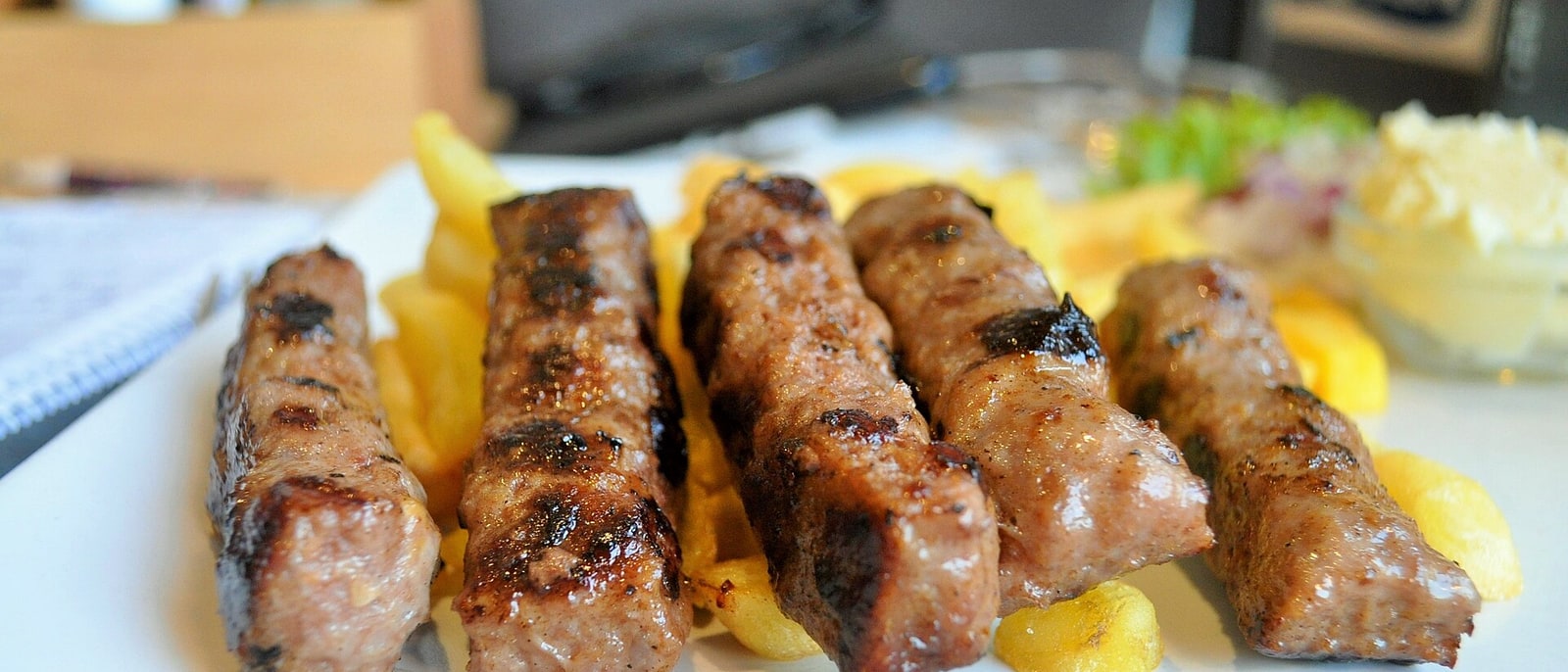
Ćevapi come as fingers of minced meat off the embers, a direct inheritance of the Ottoman kebab, and you order them by number: “pet” is five, “deset” is ten. They arrive in a warm flatbread, lepinja, which soaks up the fat, with chopped raw onion beside. It’s the national food of half the Balkans and here they argue with Bosnia about who makes them better, an argument we won’t referee.
What to order with them is kajmak, and this needs explaining because it doesn’t exist elsewhere: it’s the cream that rises off raw milk when it’s heated, skimmed by hand and left to ferment and salt in a container for weeks. It isn’t butter, it isn’t cheese and it isn’t cream: it’s between the three, it’s white, it’s enormously fatty and it melts on top of hot meat. With the ajvar beside it, that trio (ćevapi, kajmak, ajvar) is Serbia on a plate.
- 03
Burek, and the argument
An enormous spiral of filled filo, made in a round tray and cut into portions, eaten for breakfast with drinking yoghurt to wash it down. It’s what Serbia has for breakfast on the way to work and it costs small change.
And here there’s a regional argument that’s real and not an anecdote: in Serbia and Bosnia, burek is meat and only meat. With cheese it’s called sirnica, with spinach it’s zeljanica and with potato it’s krompiruša. Asking for “a cheese burek” is, to a Bosnian, a category error, and you will be corrected. In Croatia and Slovenia, by contrast, everything is called burek. It’s one of those Balkan arguments that look tiny and have gone a hundred years without resolution.
Ask for sirnica if you want the cheese one and you’ll come off well.
- 04
The kafana
A kafana doesn’t fit restaurant or bar: it’s a Balkan institution with rules of its own. Checked cloths, wooden tables, a short menu of meat and embers, and a band of three or four musicians going from table to table playing whatever you ask for. Dinner is long, rakija is drunk, singing happens, and nobody will bring you the bill unless you ask: the table is yours all night.
The custom to know: the musicians get paid. When they play you a song, you give them a note (traditionally it was stuck on their forehead, which is barely done now) and that’s their wage. If you don’t want them playing at your table, you say so politely and nothing happens.
Skadarlija is full of tourist kafanas, and they’re fine. The real ones are in the neighbourhoods and have no English menu, and that’s where you eat.
Frequently asked
What is ajvar?
A paste of roasted red pepper, peeled by hand and cooked for hours, made in autumn in the street or the yard, by several families at once, for the whole year. It’s eaten with bread, with meat and with kajmak. The homemade is always better than the shop one, and that isn’t argued here.
What is kajmak?
The cream that rises off raw milk when heated, skimmed by hand and left to ferment and salt for weeks. It isn’t butter, cheese or cream: it’s between the three. It melts on top of hot meat and it doesn’t exist outside the Balkans. With ćevapi and ajvar it’s Serbia on a plate.
Does burek have cheese in it?
In Serbia and Bosnia, no: burek is meat and only meat. The cheese one is sirnica, spinach is zeljanica and potato is krompiruša. Asking for “a cheese burek” is a category error and you will be corrected. In Croatia and Slovenia everything is called burek, and that argument has run a hundred years.