What to see in Belgrade
4 stopsUpdated July 2026
The fortress has watched the exact corner where the Sava enters the Danube for two thousand years, and that corner is the reason for everything that has happened to this city. It’s the point where central Europe ends and the Balkans begin, and the place you have to pass through if you want to move armies or goods between the two. That’s why it was fought over by Celts, Romans, Byzantines, Hungarians, Ottomans and Austrians.
And that’s why almost nothing else here is old. What there is to see in Belgrade isn’t a list of monuments: it’s the twentieth century. A church that took eighty-five years to finish because communism wouldn’t allow it. An entire city of blocks raised on a swamp by volunteers. The grave of the man whose funeral thirty-one presidents attended. And some ruins from 1999 that nobody has repaired, in the middle of the street.
The route, stop by stop
4 STOPS- 01
Kalemegdan
The name says it all: kale is “fortress” in Turkish and megdan is “battlefield”, so it’s literally called the fortress battlefield. The Romans put a legionary camp here in the first century, and since then there hasn’t been a quiet century. It’s reckoned to have been destroyed and rebuilt around forty times.
What you walk on is a superimposition: the foundations are Roman, the low walls Byzantine, the tower and some gates Hungarian, the tomb of Damad Ali Pasha and the baths Ottoman, and the great star-pointed bastions are eighteenth-century Austrian, built by military engineers who brought Vauban’s design with them. All in the same compound and in no order.
Today it’s an enormous free park, with basketball courts and people walking dogs over two thousand years of sieges.
- 02
Saint Sava
The foundation stone went down in 1935 and the interior wasn’t finished until 2020. In between: two wars, an occupation and forty years of a communist regime that refused to authorise the works, with the site turned into a car park and an army store. It resumed in the eighties and there was a moment of engineering remembered here: in 1989 the dome, four thousand tonnes, was assembled whole on the ground and lifted with hydraulic jacks to forty metres, over forty days.
The interior, finished in 2020, is four thousand square metres of gold mosaic with Venetian glass tesserae, funded largely by Russia and assembled in panels offsite and fixed inside. Entry is free. And the effect is odd and good: there’s no patina and no centuries of smoke, it’s freshly laid gold and it shines the way Byzantium must have shone on day one.
It’s dedicated to Sava, the saint whose remains the Ottomans burned in 1595 on this same hill.
- 03
The House of Flowers
Josip Broz, Tito, governed Yugoslavia for thirty-five years doing something nobody else did: keeping a communist country outside the Soviet bloc, standing up to Stalin in 1948 and surviving it, and then founding the Non-Aligned Movement. That gave Yugoslavia an impossible position: it talked to both sides and neither controlled it.
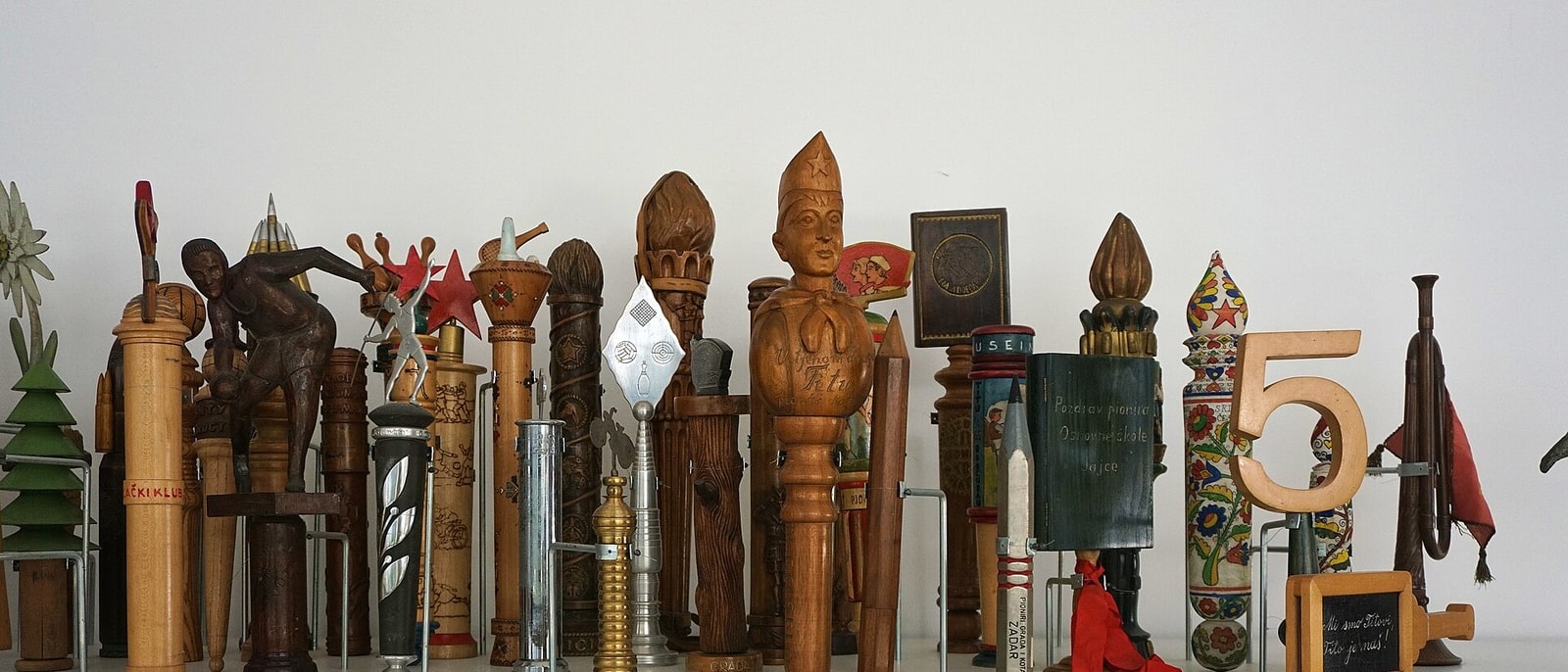
His funeral, in 1980, was the proof: a hundred and twenty-eight countries came, with thirty-one presidents, four kings, six princes and twenty-two prime ministers. At the same ceremony stood Margaret Thatcher, Leonid Brezhnev, Saddam Hussein, Yasser Arafat and Kim Il-sung. It hasn’t happened since. The grave is a white slab in a glasshouse, with no rhetoric, and beside it is the museum with the presents and the relay batons. It’s the visit that explains the Balkans and almost nobody makes it.
- 04
The 1999 ruins
In the middle of the centre, on Kneza Miloša street, there are two large gutted buildings: they were the General Staff and the Ministry of Defence, and they were hit by NATO bombing in the spring of 1999. They’ve stood there for a quarter of a century unrepaired, concrete split, floors hanging, trees growing inside, on an avenue the city bus runs down.
You don’t have to look for them or pay to see them: they’re on the pavement, and people walk past them on the way to work. They’ve been listed as cultural property and there have been years of argument about what to do with them, between demolishing, restoring and leaving them. For now they’re there.
It’s the most uncomfortable thing to see in Belgrade and also the most honest: a city that has rebuilt itself forty times has left this scar in plain sight, on its main street, and doesn’t explain it with signs.
Frequently asked
What is Kalemegdan?
Belgrade’s fortress, on the spur where the Sava enters the Danube. The name literally means “fortress battlefield” in Turkish, and it earns it: it’s reckoned to have been destroyed and rebuilt around forty times. There are Roman foundations, Byzantine walls, Ottoman gates and Austrian bastions, all on top of each other. Today it’s a park and entry is free.
Can you see the buildings bombed in 1999?
Yes: the former General Staff and Ministry of Defence are still gutted on Kneza Miloša street, in the middle of the centre, unrepaired since then. They’re visible from the pavement, with no ticket and no searching, and there have been years of argument about what to do with them. For now they’re there.