Shanghai in a day
9 h route5 stopsBest: October and November: good weather and hairy crab seasonUpdated July 2026
Two skylines stare at each other across the river with seventy years between them. On the west bank is the Bund: fifty-two buildings from the twenties raised by foreign banks and trading houses, with columns, domes and an air of Liverpool. On the east bank is Pudong, which in 1990 was fields and warehouses. You cross in five minutes and the jump is a century.
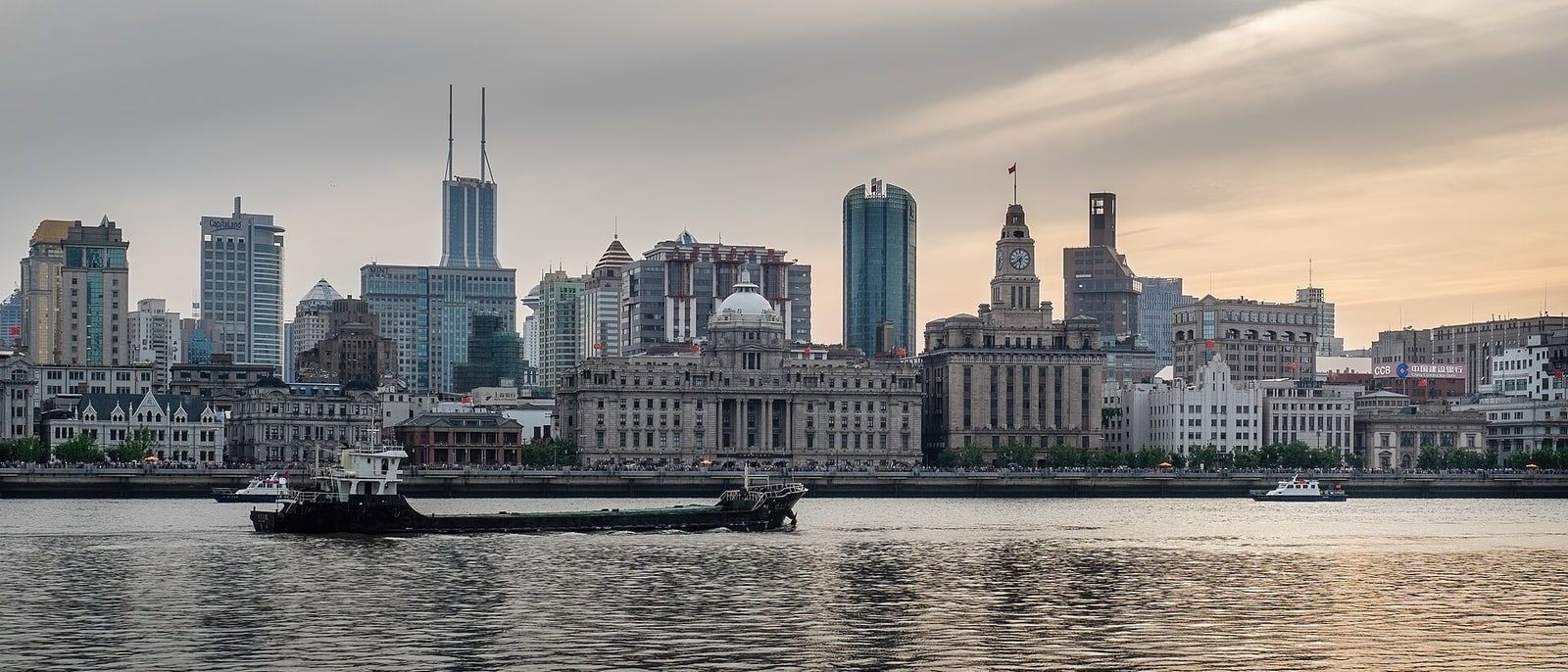
That comparison is the whole of Shanghai and it’s what to do in a day: look at both banks, cross, and come back. In between there’s room for a Ming garden buried in the old town, the plane trees of the former French Concession, and the best dumplings in the world. It’s the easiest China to start with, and you’ll still need your phone to pay for a bottle of water.
The route, stop by stop
5 STOPS- 01
The Bund in the morning
The Bund lines up a kilometre and a half of monumental frontages from the twenties and thirties, and every one of them was raised by someone who wasn’t Chinese: British banks, trading houses, insurers, consulates. Shanghai was then divided into foreign concessions where Chinese law didn’t apply, and this was that anomaly’s face, built to be seen from the river.
Look at the old Hongkong and Shanghai Bank building, from 1923: inside is a dome with a mosaic the bank itself painted over in the fifties so it wouldn’t be destroyed, and which turned up intact forty years later when someone scraped. You can go in and see it.
And the two bronze lions at the door have paws polished by hands: tradition says it’s lucky, and here that’s observed without exception.
- 02
Yuyuan Garden
In the middle of the old town, among towers, there’s a Ming garden from 1559 with ponds, rockeries and pavilions. An official had it built for his father, took almost twenty years over it and spent so much he ruined the family. The father died shortly after it was finished. It’s a garden that exists because of a miscalculated act of filial love.
The logic of a Chinese garden is the opposite of a European one: no long vistas and no symmetry, but walls, round doorways and turns that stop you seeing the whole and force you to discover it in pieces, so two hectares feel infinite.
The rockery in the middle, of yellow stone brought from Lake Tai, is the famous piece. Around it is the bazaar, which is a complete tourist set-up and which has the best soup stall in the city.
- 03
Crossing to Pudong and going up
Facing the Bund, on the other side of the river, in 1990 there were paddy fields, warehouses and shipyards. Today there’s one of the most famous skylines in the world, and the best part is that it reads as a timeline: the Oriental Pearl, the tower with the pink spheres, is from 1994, the Jin Mao, 1999, the one with the rectangular hole at the top, they call it the bottle opener, is 2008, and the Shanghai Tower, the twisted one, 2015 and six hundred and thirty-two metres. Four towers, four decades.
The Shanghai Tower is the second tallest in the world and it’s twisted on purpose: the turn cuts wind load by almost a quarter, which is what made it buildable on soft delta ground. Its lift is one of the fastest on the planet and climbs a hundred and twenty floors in under a minute.
Go up late in the day and you’ll watch the Bund light up opposite, which is the view that sums the city up.
- 04
The former French Concession
West of the centre is a quarter of narrow streets with plane trees forming a tunnel, art deco villas and two-storey houses. It isn’t an aesthetic accident: it was the French Concession between 1849 and 1943, a territory inside the city governed by France where Chinese law didn’t reach. The French planted the trees and they’re still the neighbourhood’s roof.
Here is the local architecture nobody expects: the shikumen, “stone gate”, a strange and perfect hybrid of the British terraced house and the Chinese courtyard, grouped into narrow lanes called longtang. It was how Shanghai lived for a century.
Walk the small streets at dusk and you’ll see washing strung across the lane between the fashionable villas: the two cities share the same pavement.
- 05
The Bund at night, from the other side
Almost everyone makes the same mistake: going to the Bund at night to see the Bund. From the Bund you see Pudong, which is also fine, but the lit-up twenties frontage can only be seen from opposite. So the plan is the reverse: cross to Pudong at dusk and look back.
The promenade on the Pudong side is wide and built for exactly that.
And there’s a better way to cross than the metro: the scheduled ferry, the one locals take to work, costs small change, takes five minutes and puts you in the middle of the river with both banks at once, 1920 on one side and 2015 on the other. It’s the best ride in Shanghai and it appears in no guidebook because it isn’t an attraction: it’s the bus.
Frequently asked
What to see in Shanghai in a day?
The Bund in the morning, the 1559 Yuyuan garden, cross to Pudong and go up the Shanghai Tower at dusk, and the former French Concession. And at night, look at the Bund from Pudong, which is where you see it: from the Bund you see Pudong, not the Bund.
Why does the Bund look European?
Because Europeans built it. Shanghai was divided into foreign concessions where Chinese law didn’t apply, and the Bund was that anomaly’s face: fifty-two buildings from the twenties raised by British banks, trading houses and consulates, to be seen from the river.
How long has Pudong existed?
Since 1990. Before that it was paddy fields, warehouses and shipyards. The skyline reads as a timeline: the Oriental Pearl is 1994, the Jin Mao 1999, the “bottle opener” 2008 and the Shanghai Tower, the twisted one, 2015. Four towers, four decades.